
Loading, please wait...
LOT 0735
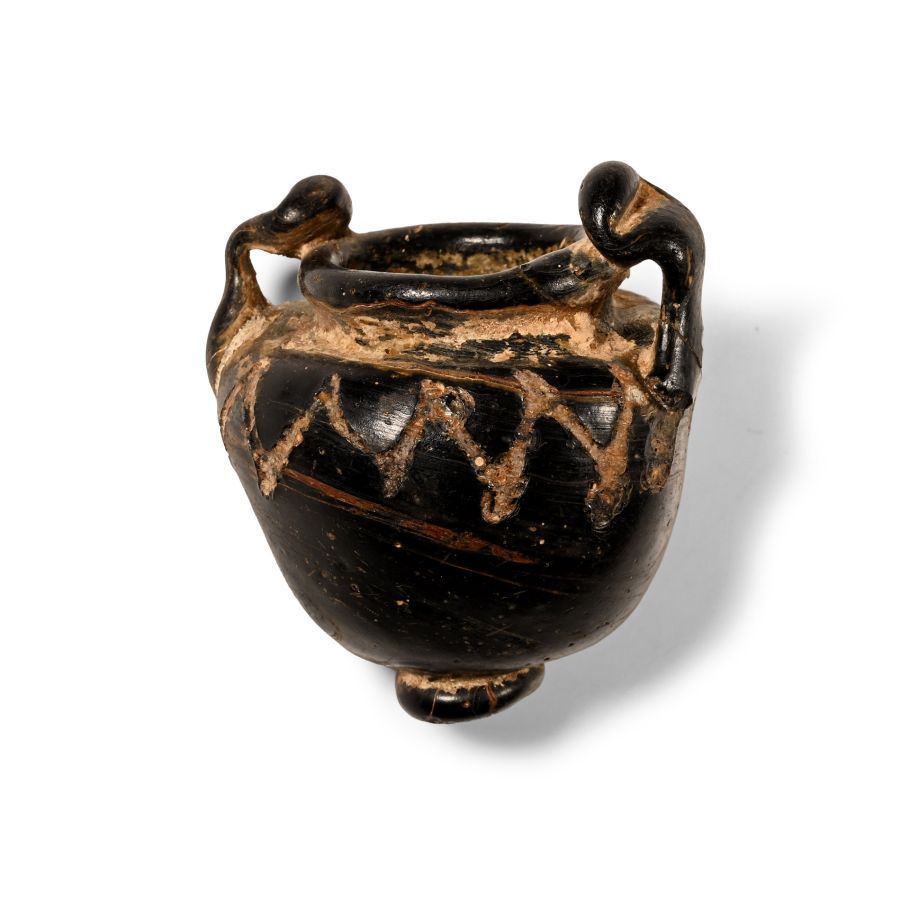
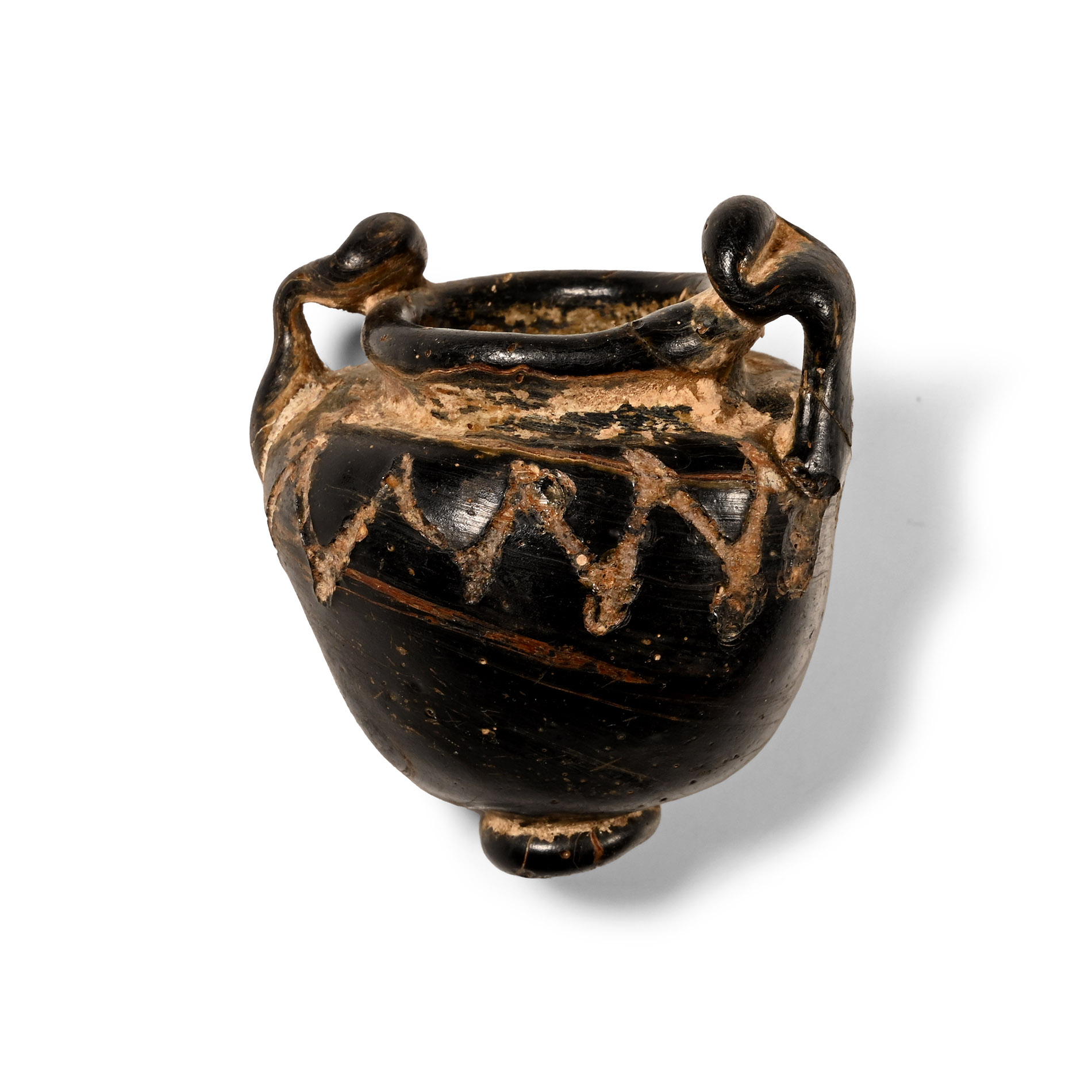
Roman Inlaid Votive Glass Amphora
1ST-4TH CENTURY A.D.
2 1/8 in. (74 grams, 54 mm).
Squat jar with domed foot, deep carinated shoulder, low mouth, two applied trail handles; inlaid zigzag trails to shoulder; repaired. [No Reserve]
ProvenanceFrom a Scottish private collection, Perthshire, 1990s.
CONDITIONTimeLine Auctions follows a vetting process to ensure the authenticity and legality of all items, reinforcing our commitment to integrity and responsible trading. Each antiquity, antique, and coin lot undergoes thorough examination by a vetting committee of at least ten external specialists, professional trade association members, scientists, and archaeologists: Our Vetting Process
AUCTIONS:
TimeLine is a leading auction house specialising in antiquities, ancient art, collectables, natural history, coins, medals, and books. Our auctions offer museums, collectors, historians, and enthusiasts the opportunity to acquire unique and historically significant pieces.
-
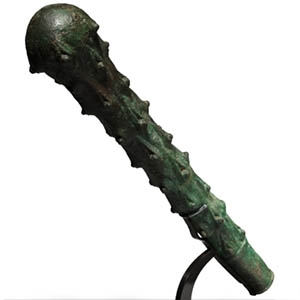
Life-Size Roman Bronze Club from a Statue of Hercules
1st-2nd century A.D.Sold for (Inc. bp): £16,900
Hollow-formed life-size club with tubular handle and flared rim, shank with series of regularly-placed knop projections on piriform pads, domed end; mounted on a custom-made display stand. 4.73 kg total, club: 55 cm
Formerly in North American collection, 1990s. From an Austrian collection, acquired in London from UK collector in early 2000s. From a London gentleman's collection, 2000s. Accompanied by an academic report by Dr Raffaele D’Amato. This lot has been checked against the Interpol Database of stolen works of art and is accompanied by search certificate number no.12345-225411.
Like the famous statue of Hercules in gilded bronze (the so called Hercules from the Forum Boarium), today at the Capitoline Museums (Palazzo dei Conservatori), this club would have come from a temple dedicated to the Greek hero. The Mastai Hercules, at the Vatican Museum, shows a similar club. The presence of a large handle in our piece confirms that the club was held with the right hand in resting position, and that the typology of Hercules was probably one of the two models. -
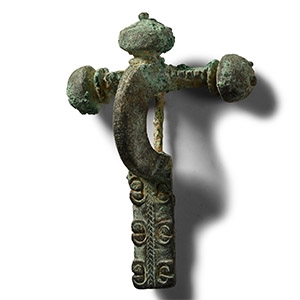
Roman Bronze Brooch
3rd-4th century A.D.Sold for (Inc. bp): £117
With three facetted knops to the crossbar, the upper one with beaded collar, and pierced moulding to the upper face, deep bow, stepped junction with foot, trapezoidal foot with ring-and-dot motifs and integral catch; hinged pin to reverse; Keller Type 4. 47.7 grams, 64 mm
Acquired in the mid 1980s-1990s. Private collection, Switzerland, thence by descent. Private collection, since the late 1990s. -
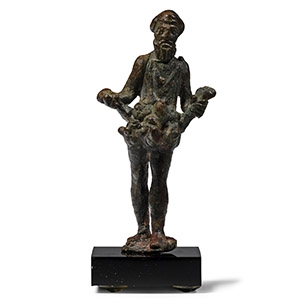
Roman Bronze Standing Figure of Priapus
1st-2nd century A.D.Estimate: £1,200 - 1,700 (+bp*)
Opening Bid: £480
Modelled in the round, standing wearing a paenula, his two hands holding up the hem to support a pile of fruits on his erect penis; mounted on a custom-made stand. 31.7 grams total, 63 mm including stand
From the private collection of Mr K.A., acquired in the 1990s-early 2000s.
