
Loading, please wait...
LOT 0126
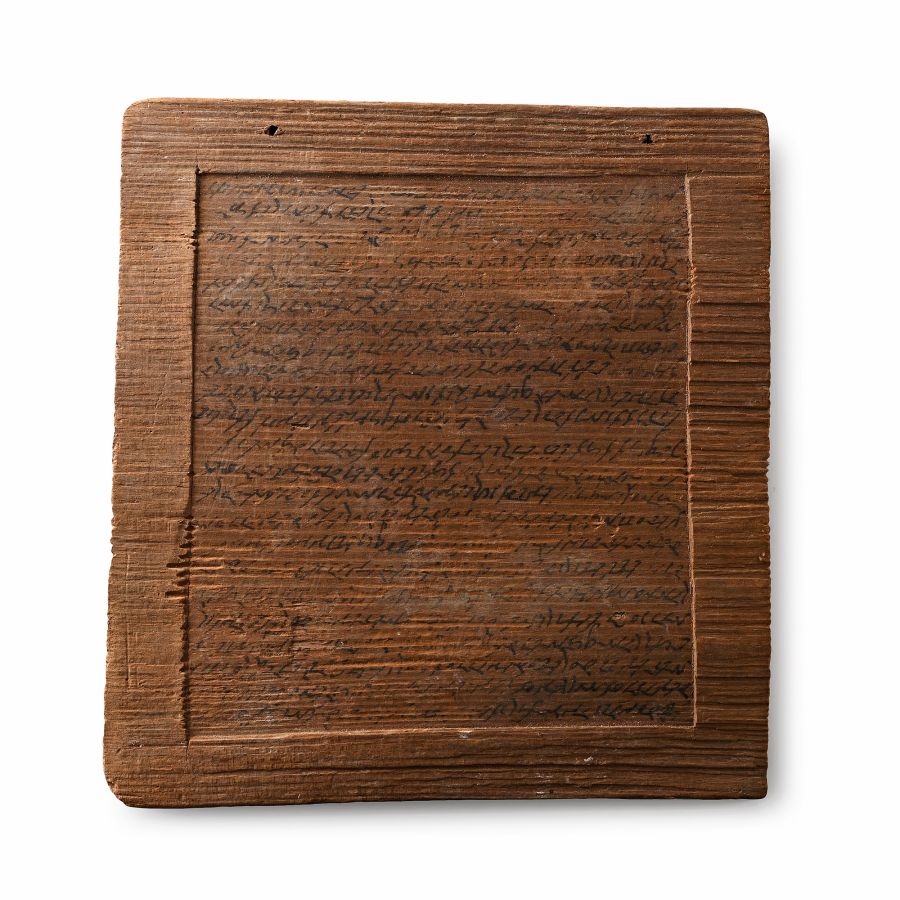
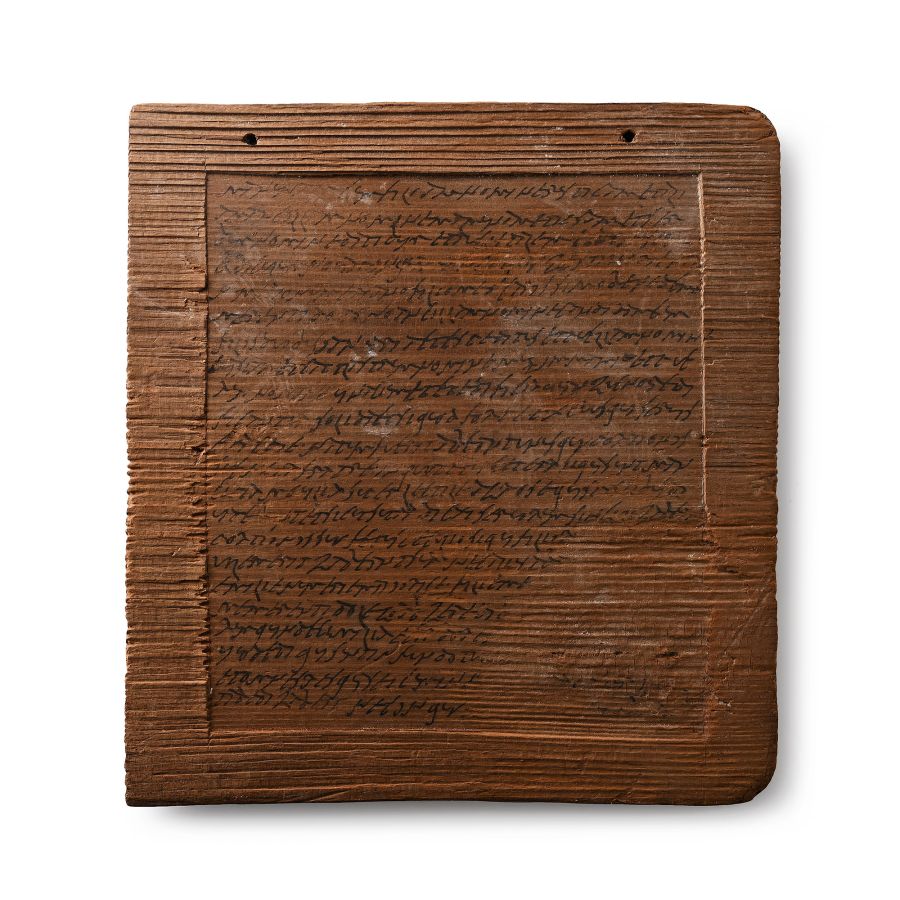
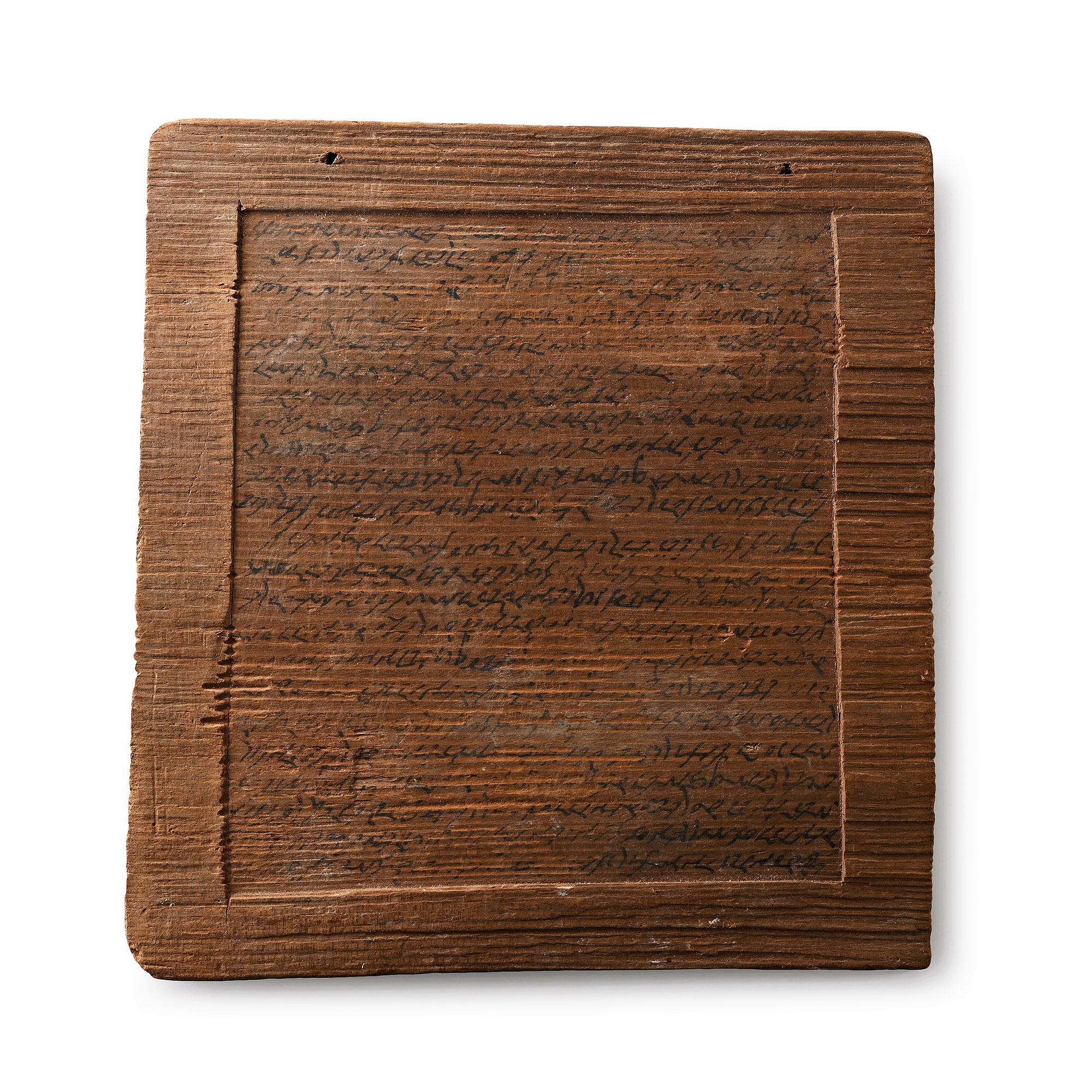
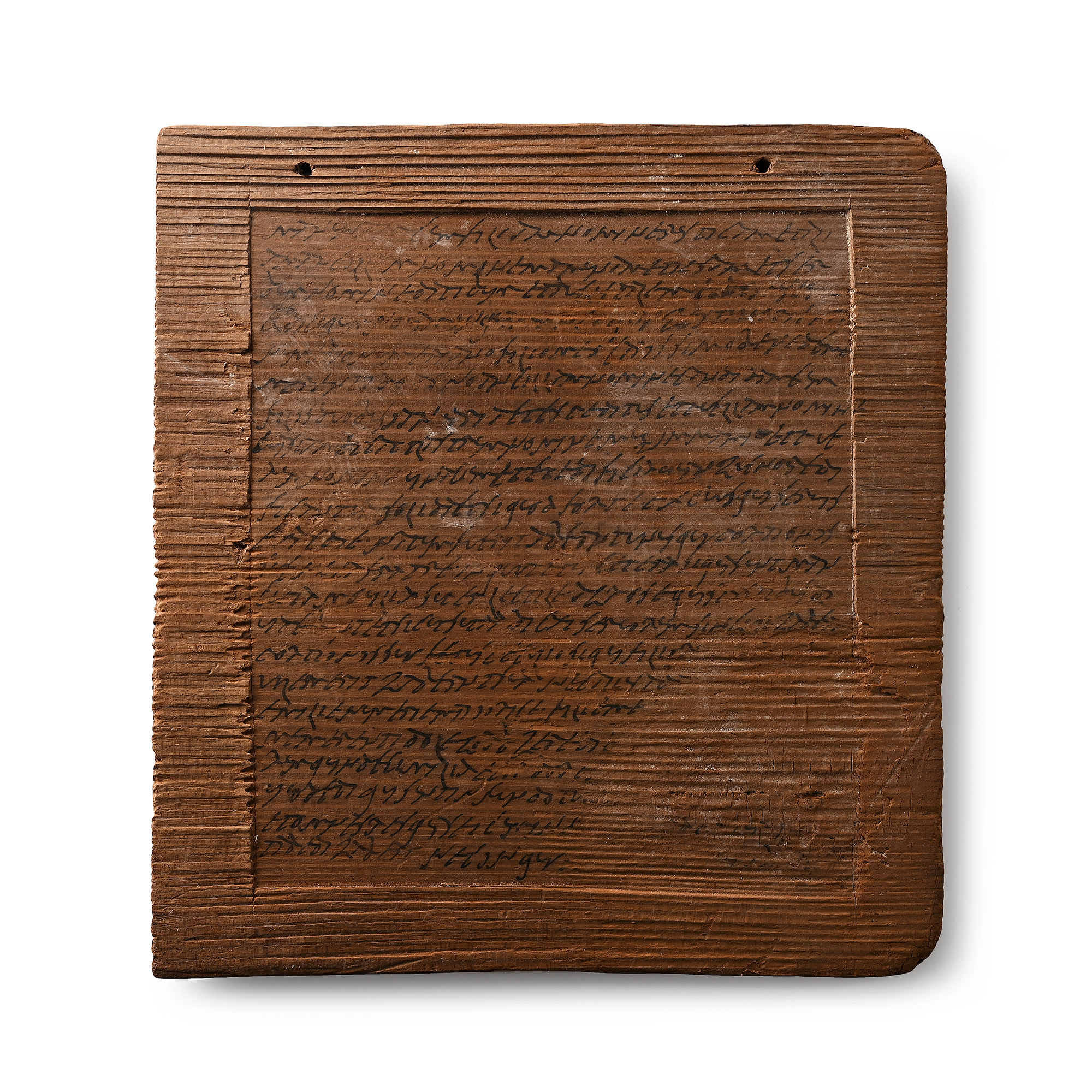
Roman Inked Wooden Tablet with Testamentary Dispositions of Emilius Vernucius
CIRCA 300 A.D.
8 1/4 x 7 5/8 in. (99 grams, 21 x 19.5 cm).
Well preserved square tablet with a recessed panel to each face and two holes to accept thongs, probably the third tablet of a Roman will made by Emilius Vernucius around 300 A.D., two small holes at the upper rim (for binding the tablets of this document together); the text of the inner and first half of the outer face consisting of testamentary dispositions always starting with the verbs do lego, slaves, fields, buildings, and sums of money are mentioned; at the end the mancipatory formula of Roman testaments can be read, mentioned are the familiae emptor and the libripens as well as the first of the witnesses, Emilius Cerealius. [No Reserve]
ProvenanceAcquired by Albert Sfez in the early 1950s.
Formerly the property of Monsieur Alain Sfez, a Belgian collector; acquired by gift from his father Albert Sfez, in 1965.
Acquired by a London dealer in 1973.
From an important London collection since 1975; thence by descent.
Accompanied by a copy of a four page academic report by Professor Dr phil. Peter Rothenhöfer.
Accompanied by a collection of four old black and white photographs of the the tablet.
This lot has been checked against the Interpol Database of stolen works of art and is accompanied by search certificate number no.12599-230809.
This lot has been cleared against the Art Loss Register database, and is accompanied by an illustrated lot declaration signed by the Head of the Antiquities Department, Dr Raffaele D'Amato.
Exhibited at the Harwich Museum, Harwich, Essex, UK, 26th May-15th September 2025; accompanied by a copy of a photograph of the artefacts on display.
LiteratureCf. Rothenhöfer, P., Blänsdorf, Jürgen, ‘Sana mente sanaque memoria testa-mentum feci: Eine testamentarische Verfügung vom 12. April 340 n. Chr.,’ in Gephyra 13, 2016, pp.153-163; Rothenhoefer, P. Bemerkungen zum Testament des Pomponius Maximus aus dem Jahr 371 n. Chr. (Notes on the Testament of Pomponius Maximus from the Year AD 371). Zeitschrift der Savigny Stiftung für Rechtsgeschichte (Romanistische Abteilung) 142, 2025, pp. 200-232; also see Thomas, J. D., Vindolanda: The Latin Writing Tablets, Britannia Monograph Series No 4, London, 1983, for examples of wooden tabulae re-used as writing surfaces; for examples of testamentary documents on wooden tablets that have survived, see FIRA III, p.47, for Anthony Silvanus from 142 AD, also see BGU VII 1695 for Safinnius Herminus; for another from Transfynydd, North Wales, see Arch. Camb. 150, pp.143-156; and see Bowman, A.K., Life and letters on the Roman frontier : Vindolanda and its people, London, 1994, for discussion of the uses of Roman writing tablets; Rothenhoefer, P., Neue römische Rechtsdokumente aus dem Byzacena-Archiv / New Roman Legal Documents from the Byzacena Archive, (forthcoming).
CONDITIONTimeLine Auctions follows a vetting process to ensure the authenticity and legality of all items, reinforcing our commitment to integrity and responsible trading. Each antiquity, antique, and coin lot undergoes thorough examination by a vetting committee of at least ten external specialists, professional trade association members, scientists, and archaeologists: Our Vetting Process
AUCTIONS:
TimeLine is a leading auction house specialising in antiquities, ancient art, collectables, natural history, coins, medals, and books. Our auctions offer museums, collectors, historians, and enthusiasts the opportunity to acquire unique and historically significant pieces.
LOT 0126
Roman Inked Wooden Tablet with Testamentary Dispositions of Emilius Vernucius
Sold for (Inc. bp): £7,280
-
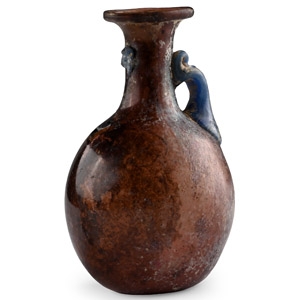
Roman Aubergine Glass Bottle
3rd century A.D.Sold for (Inc. bp): £156
With slightly flattened base and spherical body, tubular neck with flared and rolled rim, one handle absent. 22.77 grams, 77 mm
Ex property of a London collector; acquired 1960s. Property of a North London, UK, lady. This lot is accompanied by an illustrated lot declaration signed by the Head of the Antiquities Department, Dr Raffaele D'Amato. -
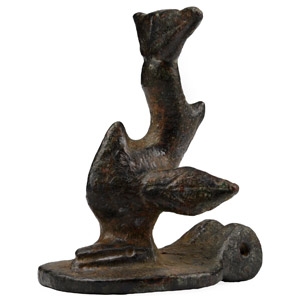
Roman Bronze Oil Lamp Lid with Dolphin
2nd-4th century A.D.Estimate: £150 - 200 (+bp*)
Opening Bid: £75
Discoid lid with hinge plates on the rear edge, stylised dolphin balancing on its elongated snout, large pectoral fins. 49 grams, 43 mm
Ex German art market, 2000s. Acquired from an EU collector living in London. From the collection of a Surrey, UK, gentleman. This lot is accompanied by an illustrated lot declaration signed by the Head of the Antiquities Department, Dr Raffaele D'Amato. -
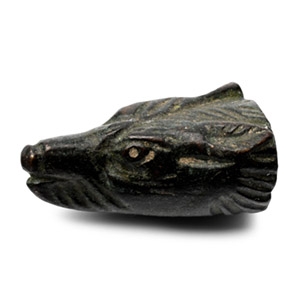
Roman Bronze Wolf's Head Terminal
1st-4th century A.D.Sold for (Inc. bp): £159
Modelled in the round with shallow socket to the reverse, high-relief facial detailing. 17.01 grams, 28 mm
Acquired on the London art market in the late 1980s-1990s. From the family collection of an East London, UK, gentleman. This lot is accompanied by an illustrated lot declaration signed by the Head of the Antiquities Department, Dr Raffaele D'Amato.
