
Loading, please wait...
LOT 0141
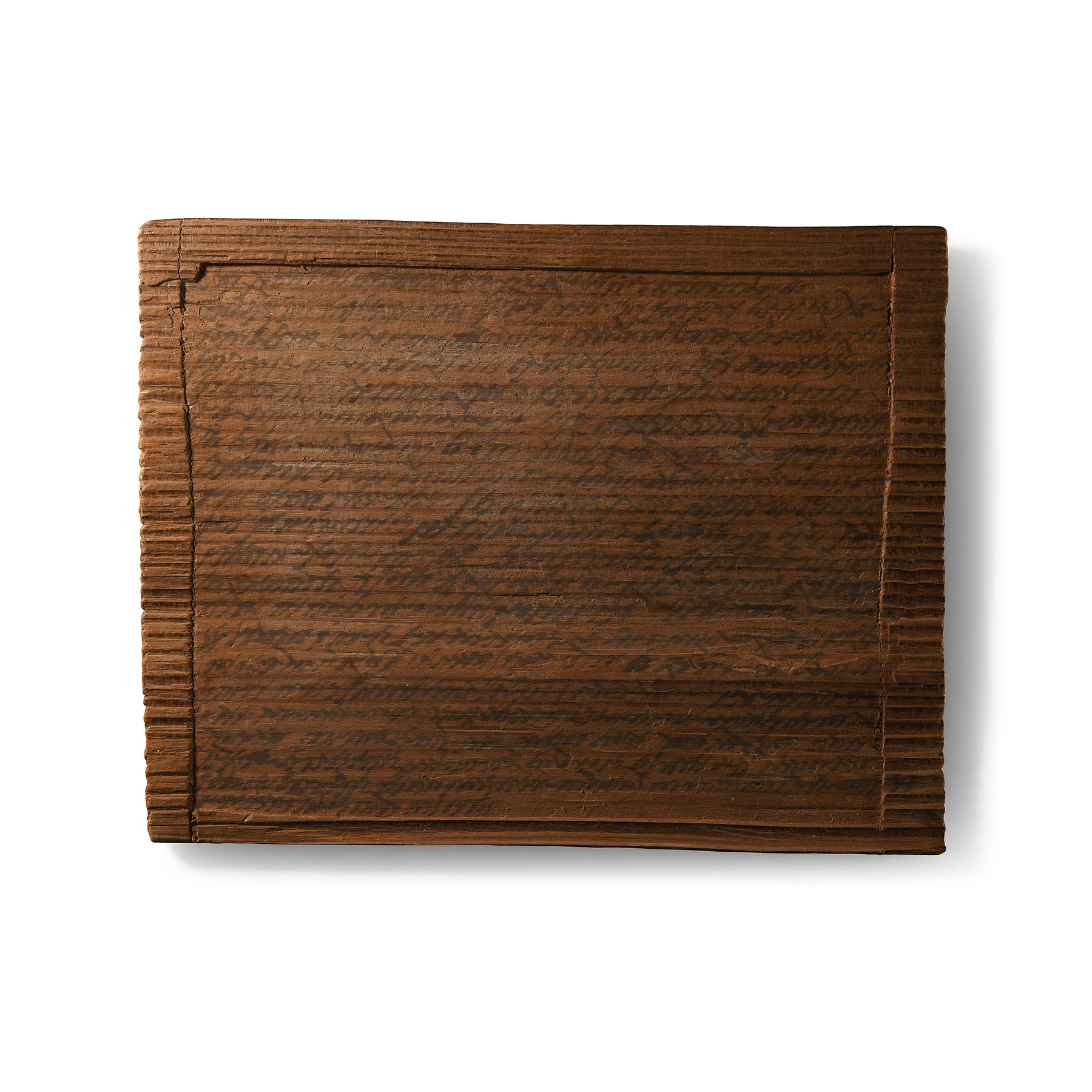
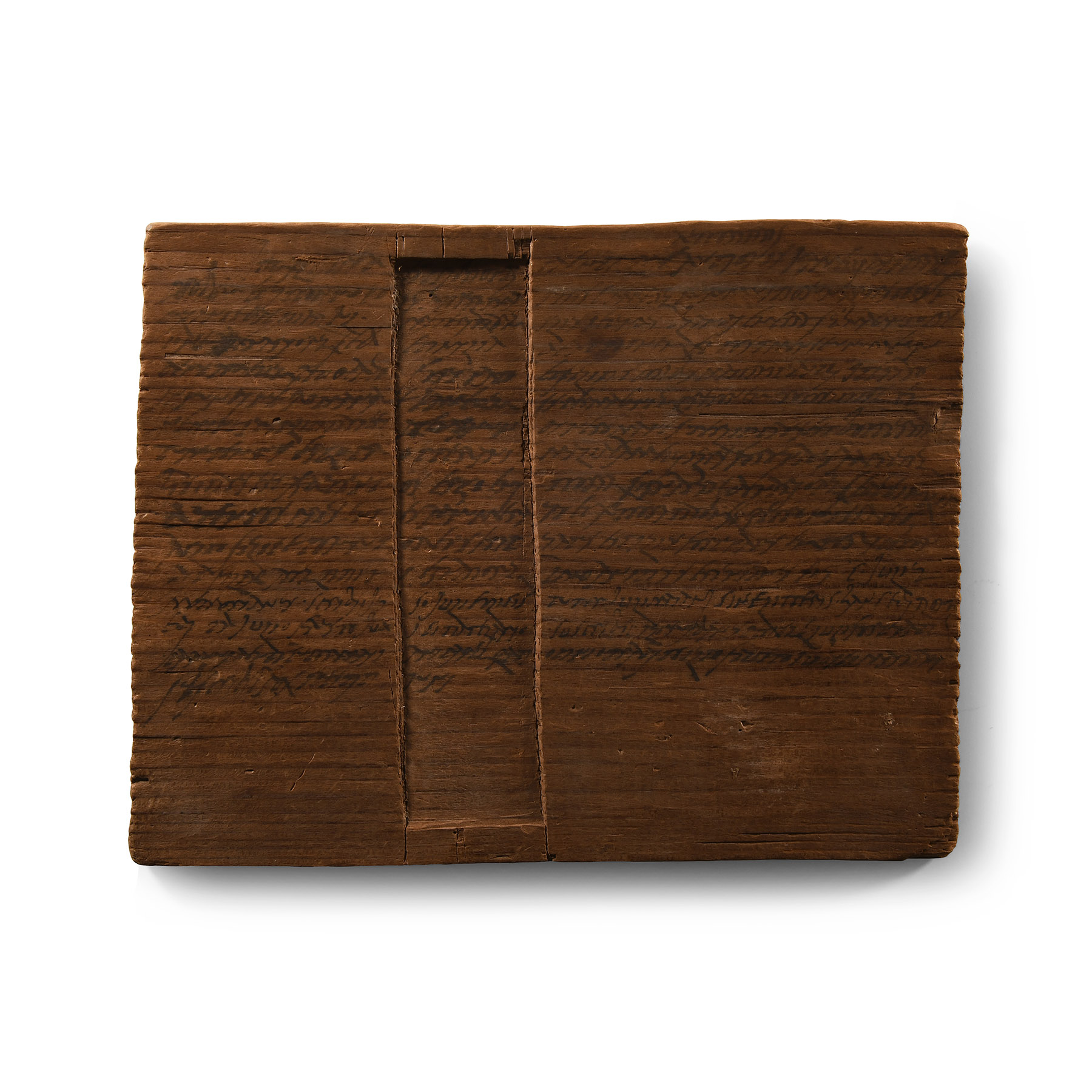
Roman Inked Wooden Tablet for the Tutorship of Iulius Maianus
END OF THE 3RD CENTURY A.D.
9 5/8 in. (110 grams, 24.5 cm).
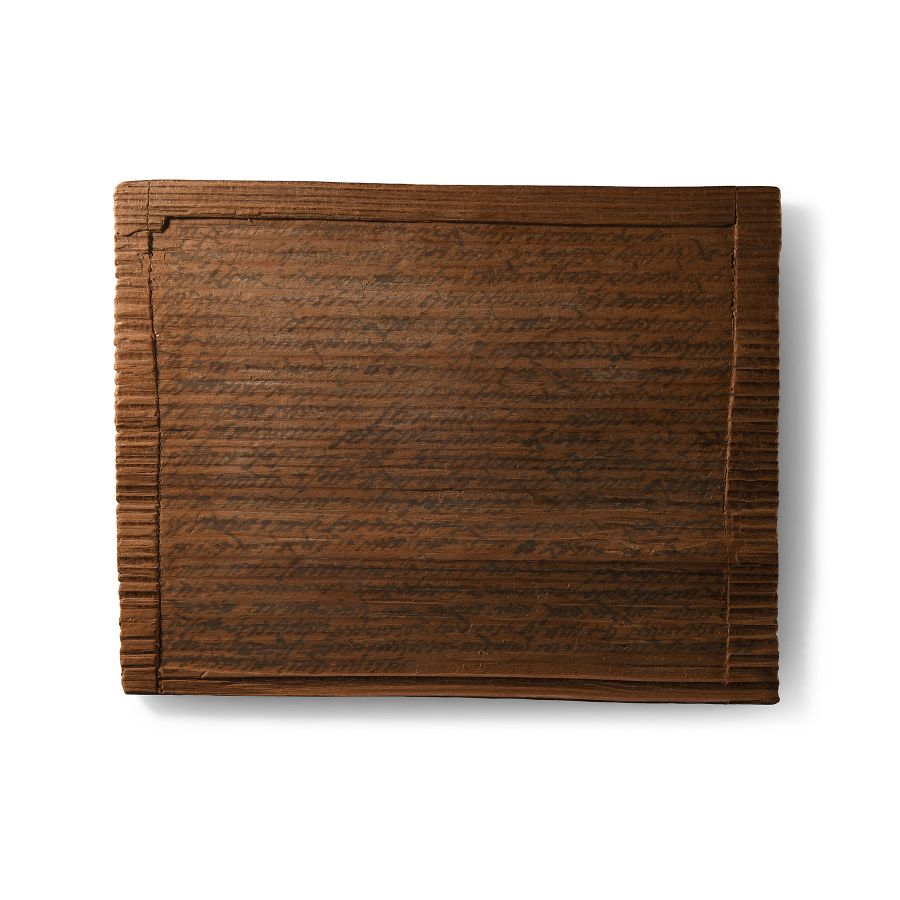
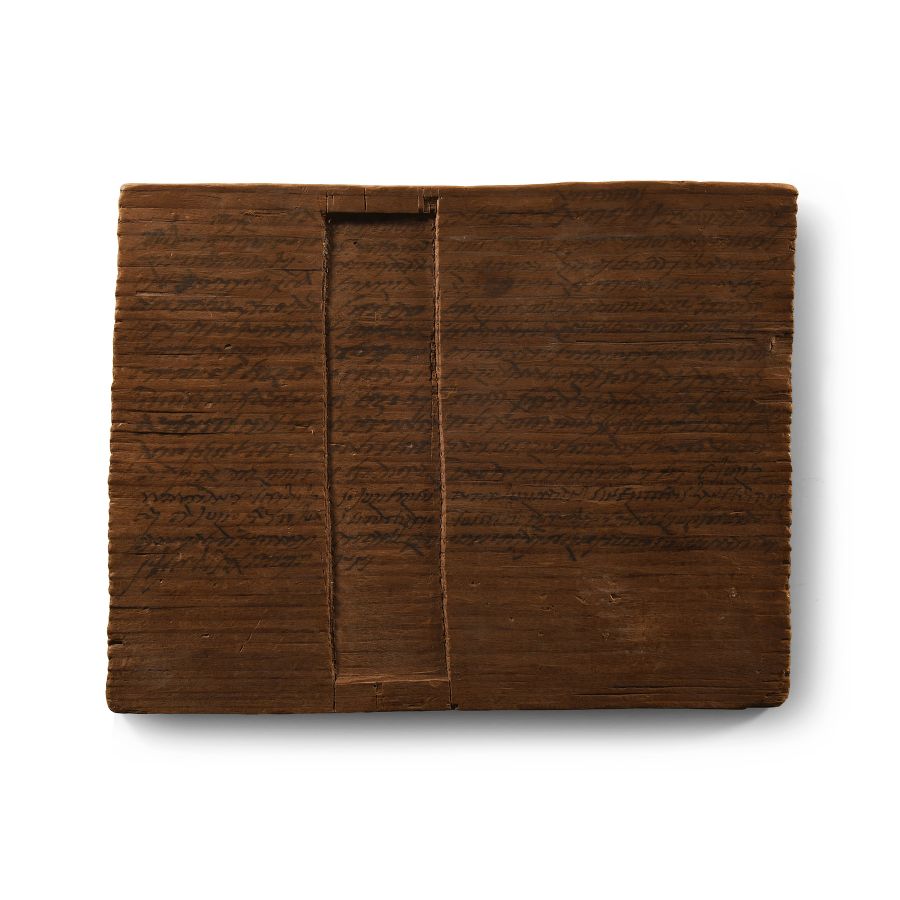
A reused tablet with a recessed writing field on side one, containing twenty-one lines in younger Roman cursive script, the lower edge slightly damaged but not affecting the text; side two with a broad flat-bottomed groove (sulcus), originally containing the cord with which the tablets of a legal document were bound together, the cord was fixed with wax, and on the wax the witnesses’ seals were impressed to certify that the document was not opened, since both the wax and the older text had been removed; this tablet had been reused at least once; the tablet shows similar features (material, use of ink, writing style etc.) like several other similar tablets and as far as can be seen, it was part of a private archive of legal documents probably of a family bearing the nomen gentile Iulius and living in the 3rd and 4th century A.D. in the north African province of Byzacena; this unique tablet is the copy (Latin exemplum, see page 1, line 1) of a document regarding the tutorship of Iulius Maianus, who is well known from several other tabulae, he was the son of Iulius Dontiquus, who died in 282 A.D.; in his will (from 281 A.D.) his father appointed as tutors for his son his two paternal uncles Iulius Felix and Iulius Fortunatus, both are mentioned on this tablet, as well as a specialised judge (iudex tutelarius) Iulius Faustus who was involved with the supervision of the tutorship; Iulius Maianus was at that time still a very young child, unable to write himself (sine litteris). [No Reserve]
ProvenanceFrom an important London collection since 1975.
Accompanied by a copy of an academic report by Prof. Dr Peter Rothenhoefer.
This lot has been checked against the Interpol Database of stolen works of art and is accompanied by search certificate no.11957-209850.
Rothenhoefer, P., Neue römische Rechtsdokumente aus dem Byzacena-Archiv / New Roman Legal Documents from the Byzacena Archive, (forthcoming).
LiteratureCf. Rothenhöfer, P., Blänsdorf, Jürgen, Sana mente sanaque memoria testa-mentum feci: Eine testamentarische Verfügung vom 12. April 340 n. Chr., Gephyra 13, 2016, pp.153-163; Rothenhöfer, P., Neues zum Testament des Pomponius Maximus aus dem Jahr 371 n. Chr., (forthcoming); see also Masi Doria, C., Dal testamento di Pomponius Maximus: prospettive del diritto ereditario tardo antico, in: Isola, L. (ed.), Klauselgestaltungen in Römischen Testamenten, Berlin, 2022, pp.151-175; also see Thomas, J. D., Vindolanda: The Latin Writing Tablets, Britannia Monograph Series No 4, London, 1983, for examples of wooden tabulae re-used as writing surfaces; for examples of testamentary documents on wooden tablets that have survived, see FIRA III, p.47, for Anthony Silvanus from 142 AD, also see BGU VII 1695 for Safinnius Herminus; for another from Transfynydd, North Wales, see Arch. Camb. 150, pp.143-156; and see Bowman, A.K., Life and letters on the Roman frontier : Vindolanda and its people, London, 1994, for discussion of the uses of Roman writing tablets.
FootnotesThis extraordinary document contains references to properties of Iulius Maianus, which were to be administered by his tutors. Among other things, auctoritates agrorum (ownership titles over land) are mentioned. The language is typical for Roman legal documents and contains highly developed legal formula which apparently was well known in Roman North Africa.
CONDITIONTimeLine Auctions follows a vetting process to ensure the authenticity and legality of all items, reinforcing our commitment to integrity and responsible trading. Each antiquity, antique, and coin lot undergoes thorough examination by a vetting committee of at least ten external specialists, professional trade association members, scientists, and archaeologists: Our Vetting Process
AUCTIONS:
TimeLine is a leading auction house specialising in antiquities, ancient art, collectables, natural history, coins, medals, and books. Our auctions offer museums, collectors, historians, and enthusiasts the opportunity to acquire unique and historically significant pieces.
LOT 0141
Roman Inked Wooden Tablet for the Tutorship of Iulius Maianus
Sold for (Inc. bp): £24,700
-
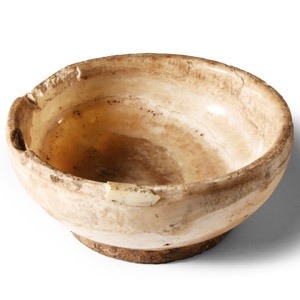
Roman Alabaster Bowl
1st-3rd century A.D.Estimate: £300 - 400 (‡+bp*)
Opening Bid: £150
With convex sidewall and copper-alloy facing to the foot; chipped. 263 grams, 98 mm
Acquired early 1990s. Ex private American collection; thence by descent. Private collection since 1998. -
.jpg)
Roman Putto Gemstone
Circa 2nd-3rd century A.D.Sold for (Inc. bp): £169
Carnelian with intaglio winged putto with a rod in his extended hand; supplied with a museum-quality impression. 0.33 grams, 10 mm
From the collection of a Swiss gentleman formed in Europe from 1970-1980s; thence by descent from the family in London. -
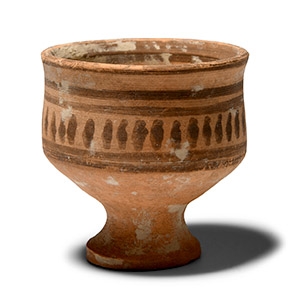
Roman Terracotta Footed Cup
2nd-4th century A.D.Sold for (Inc. bp): £85
With a low foot, carinated bowl with everted rim, the body with painted circumferential lines enclosing a frieze dashes. 58.5 grams, 56 mm high
Acquired in the 1980s-1990s. Property of a Nottinghamshire gentleman.
