
Loading, please wait...
LOT 0109
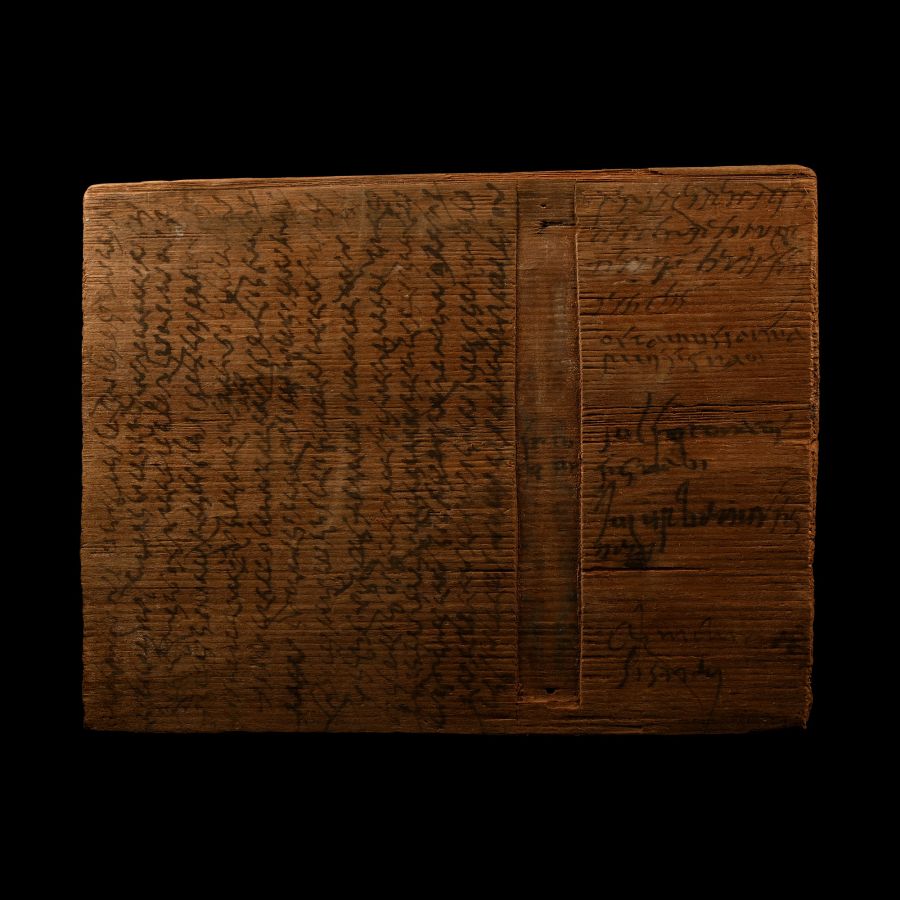
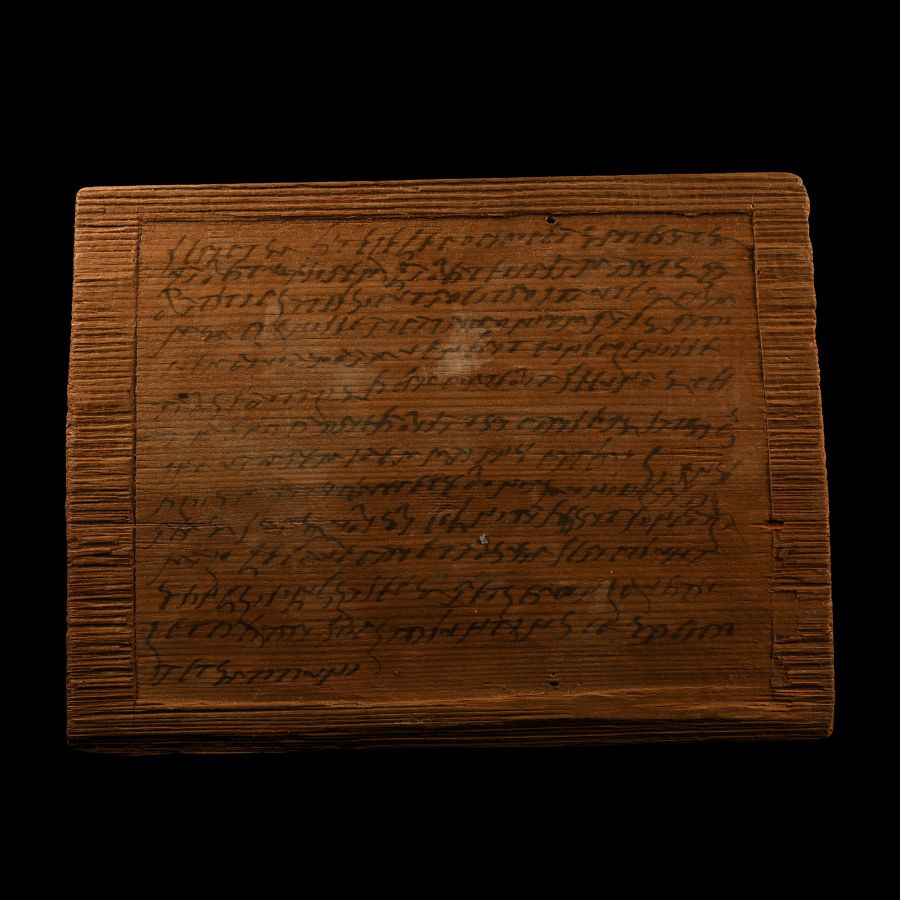
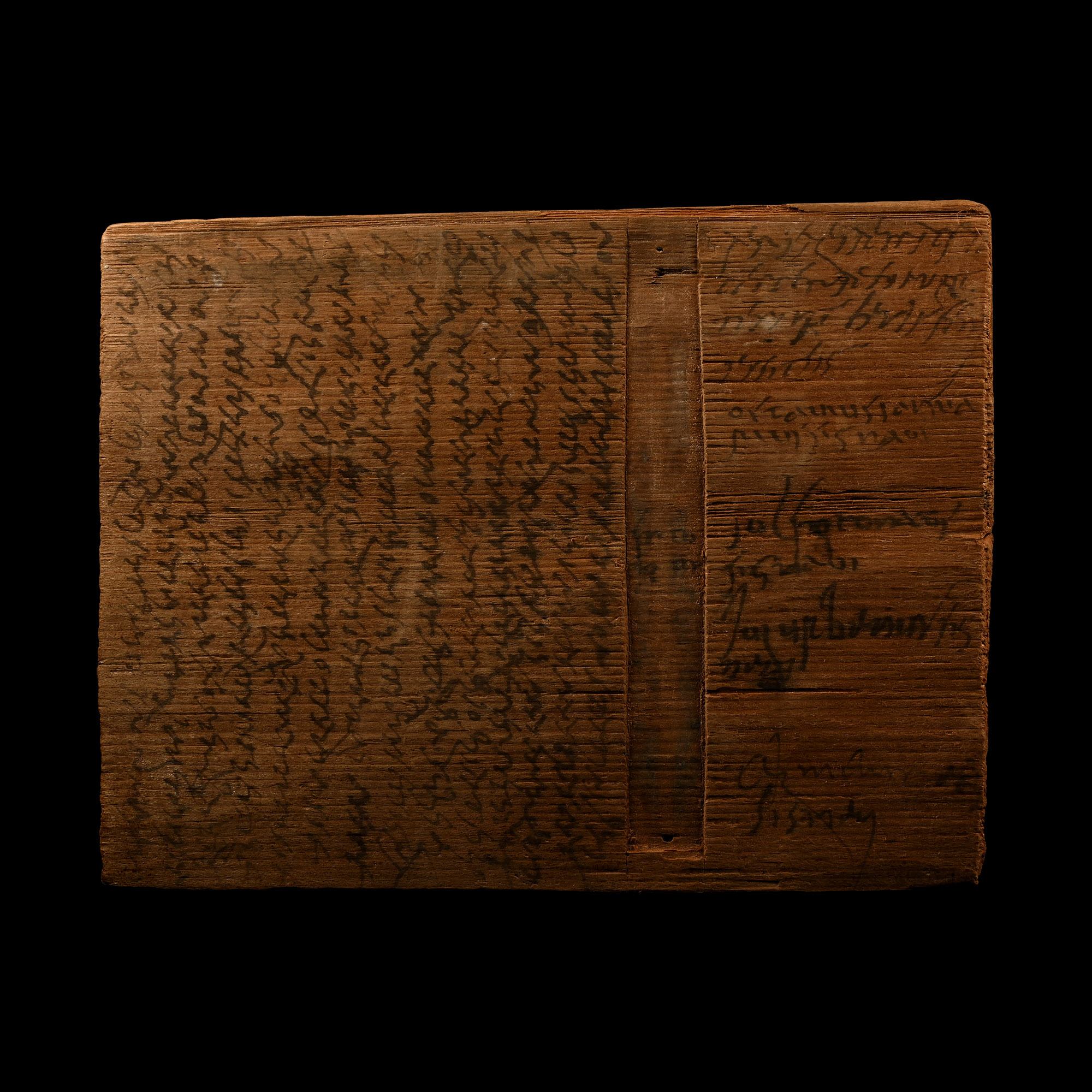
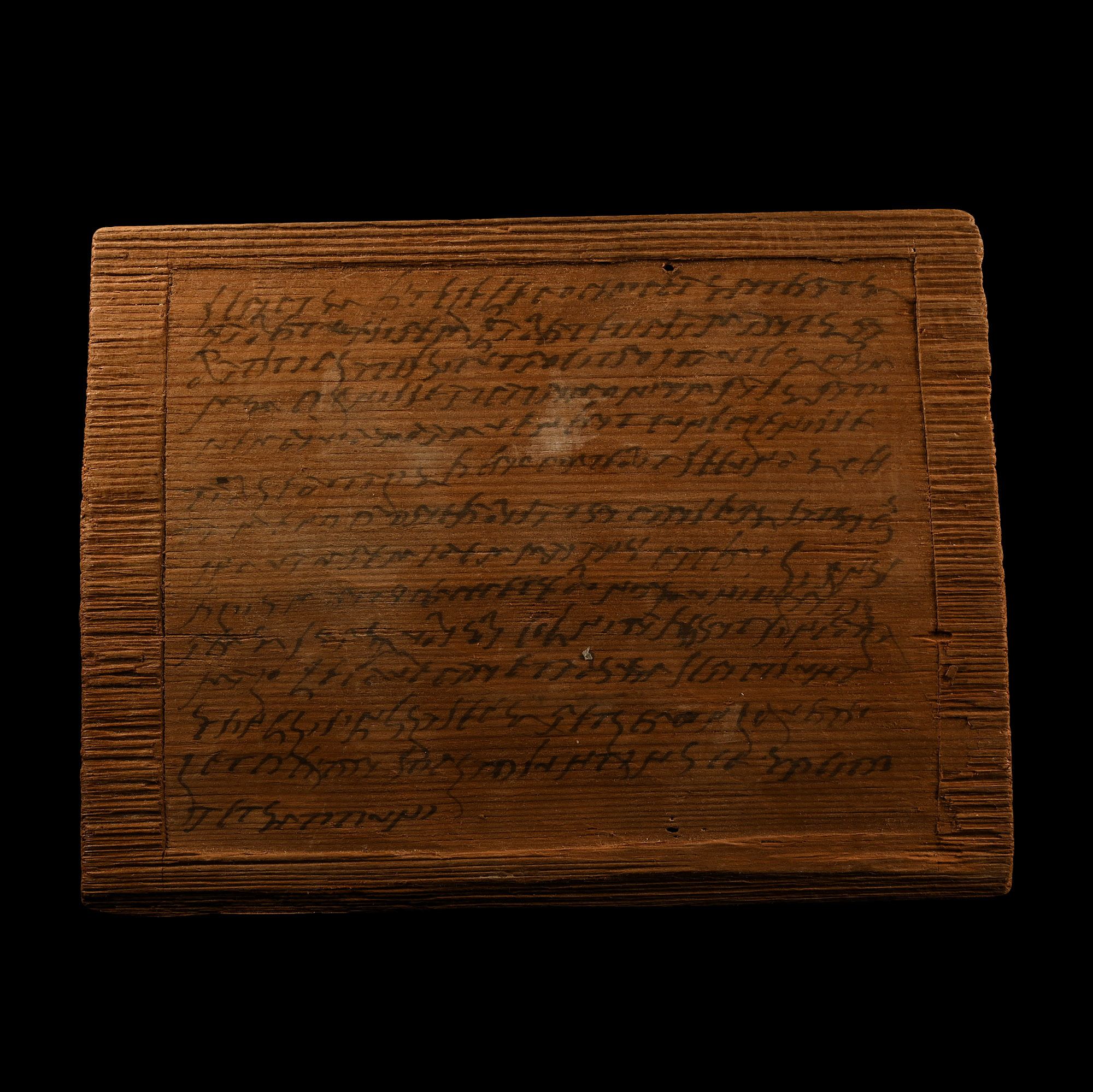
Roman Inked Reused Wooden Wax Tablet For a Contract Negotiated and Agreed at Titiiuni between Maianus and Silvanus
EARLY 4TH CENTURY A.D.
7 1/8 in. (64 grams, 18.2 cm).
Well preserved rectangular tablet inscribed in Roman cursive script, on the outer face the beginnings of a contract and the signatures of witnesses, the inner side with a recessed panel inscribed with fourteen lines of Roman cursive script, on the outer face right of the sulcus the signatures of five witnesses, to the left the beginning of the contract: 'the pactum et conventum was made between Maianus, son of Dontiquus, and a person called Silvanus; Maianus was born shortly before A.D. 281 and reached an advanced age as he is still attested after AD 360'; the text consists inter alia of typical Roman legal formula like stipulatus est … – spopondidit … - testati sunt …, including the note: Actum Titiiuni, which may be understood as ‘negotiated and agreed at Titiiuni’. [No Reserve]
ProvenanceAcquired by Albert Sfez in the early 1950s.
Formerly the property of Monsieur Alain Sfez, a Belgian collector; acquired by gift from his father Albert Sfez, in 1965.
Acquired by a London dealer in 1973.
From an important London collection since 1975; thence by descent.
This lot has been checked against the Interpol Database of stolen works of art and is accompanied by a search certificate number no.12525-230804.
This lot has been cleared against the Art Loss Register database, and is accompanied by an illustrated lot declaration signed by the Head of the Antiquities Department, Dr Raffaele D’Amato.
Rothenhoefer, P., Neue römische Rechtsdokumente aus dem Byzacena-Archiv / New Roman Legal Documents from the Byzacena Archive, (forthcoming).
Exhibited at the Harwich Museum, Harwich, Essex, UK, 21st January-10th March 2025; accompanied by a copy of a photograph of the artefacts on display.
Cf. Rothenhöfer, Peter Jürgen Blänsdorf, Sana mente sanaque memoria testamentum feci: Eine testamentarische Verfügung vom 12. April 340 n. Chr., Gephyra 13 (2016), pp.153-163; Rothenhöfer, Peter - Wang, Weixia Flavius Aelius Victorinus praeses provinciae Numidiae, VDI 2025 (forthcoming); Wang, Wexia, Vibius Flavianus, First Governor of the provincia Valeria Byzacena, VDI 2025 (forthcoming); for examples of testamentary documents on wooden tablets that have survived, see FIRA III, p. 47; for Anthony Silvanus from 142 AD; also see BGU VII 1695 for Safinnius Herminus; for another from Transfynydd, North Wales, see Arch. Camb. 150, pp. 143-156; and see Bowman, A.K., Life and letters on the Roman frontier: Vindolanda and its people, London, 1994, for discussion of the uses of Roman writing tablets.
CONDITIONTimeLine Auctions follows a vetting process to ensure the authenticity and legality of all items, reinforcing our commitment to integrity and responsible trading. Each antiquity, antique, and coin lot undergoes thorough examination by a vetting committee of at least ten external specialists, professional trade association members, scientists, and archaeologists: Our Vetting Process
AUCTIONS:
TimeLine is a leading auction house specialising in antiquities, ancient art, collectables, natural history, coins, medals, and books. Our auctions offer museums, collectors, historians, and enthusiasts the opportunity to acquire unique and historically significant pieces.
LOT 0109
Roman Inked Reused Wooden Wax Tablet For a Contract Negotiated and Agreed at Titiiuni between Maianus and Silvanus
Sold for (Inc. bp): £12,350
-
Roman Mosaic Stone Tesserae Group
1st-4th century A.D.Sold for (Inc. bp): £156
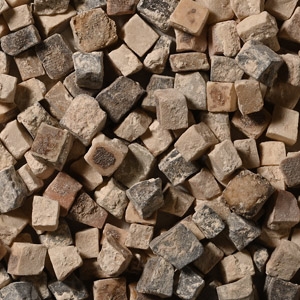
A mixed group of two hundred and fifty single tesserae of various colours and sizes, mostly cuboid. 356 grams total, 7-18 mm
From a collection acquired on the UK art market from various auction houses and collections mostly before 2000. From an important Cambridgeshire estate; thence by descent. This lot is accompanied by an illustrated lot declaration signed by the Head of the Antiquities Department, Dr Raffaele D’Amato. -
.jpg)
Larger Than Life-Size Roman Bronze Sandaled Toes
1st-3rd century A.D.Sold for (Inc. bp): £2,600
Hollow-formed front left sandaled foot with draped hem of a vestis talaris across the rear edge and tiered sole to the footwear, traces of gilding; supplied with a custom-made wooden stand. 847 grams total, 14 cm
Acquired in Germany in 2001. Acquired by the present owner from the above. Accompanied by an academic report by Dr Raffaele D’Amato. This lot has been checked against the Interpol Database of stolen works of art and is accompanied by search certificate number no.12192-222323. This lot has been cleared against the Art Loss Register database, and is accompanied by an illustrated lot declaration signed by the Head of the Antiquities Department, Dr Raffaele D’Amato.
The detailed bronze foot exhibits an incredible rendering of the smallest details; its dimensions suggest that the statue to which it belonged was nearly a human size sculpture, probably a goddess. -
Roman Bronze Tweezers Group
1st-4th century A.D.Sold for (Inc. bp): £286
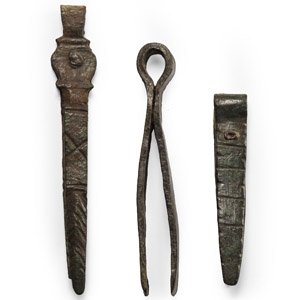
Including one with riveted shank and narrow arms, possibly for medical use. 22.8 grams total, 44-67 mm
Ex German art market, 2000s. Acquired from an EU collector living in London. From the collection of Surrey, UK, gentleman. This lot is accompanied by an illustrated lot declaration signed by the Head of the Antiquities Department, Dr Raffaele D’Amato.
