
Loading, please wait...
LOT 0110
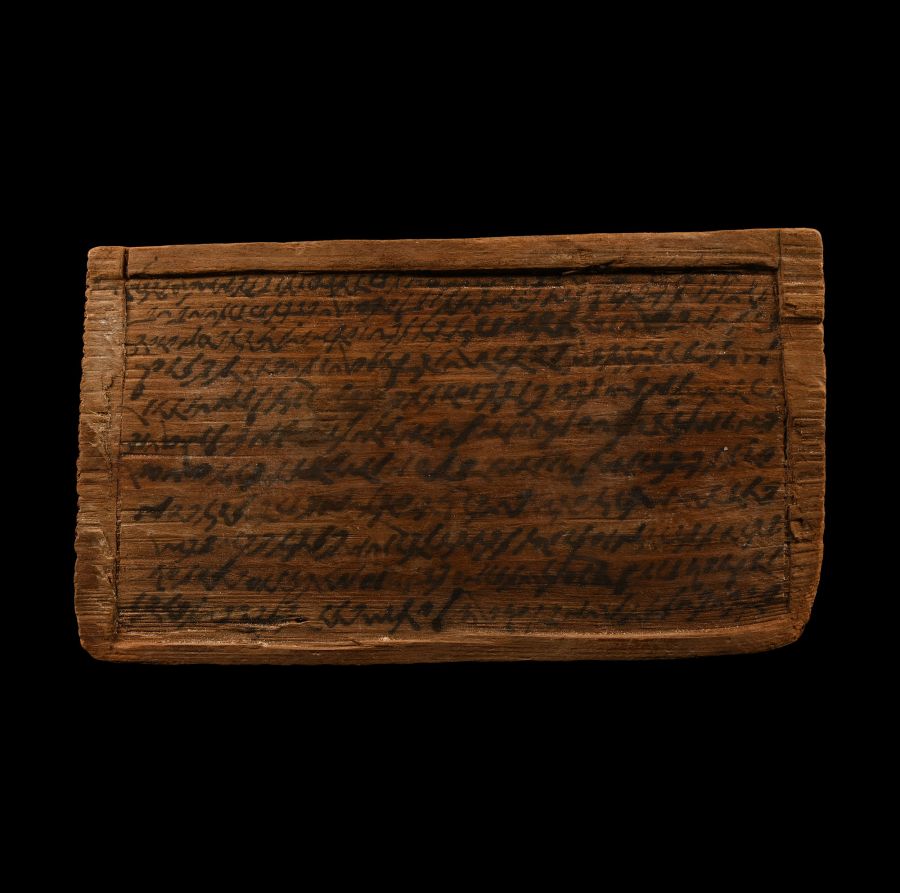
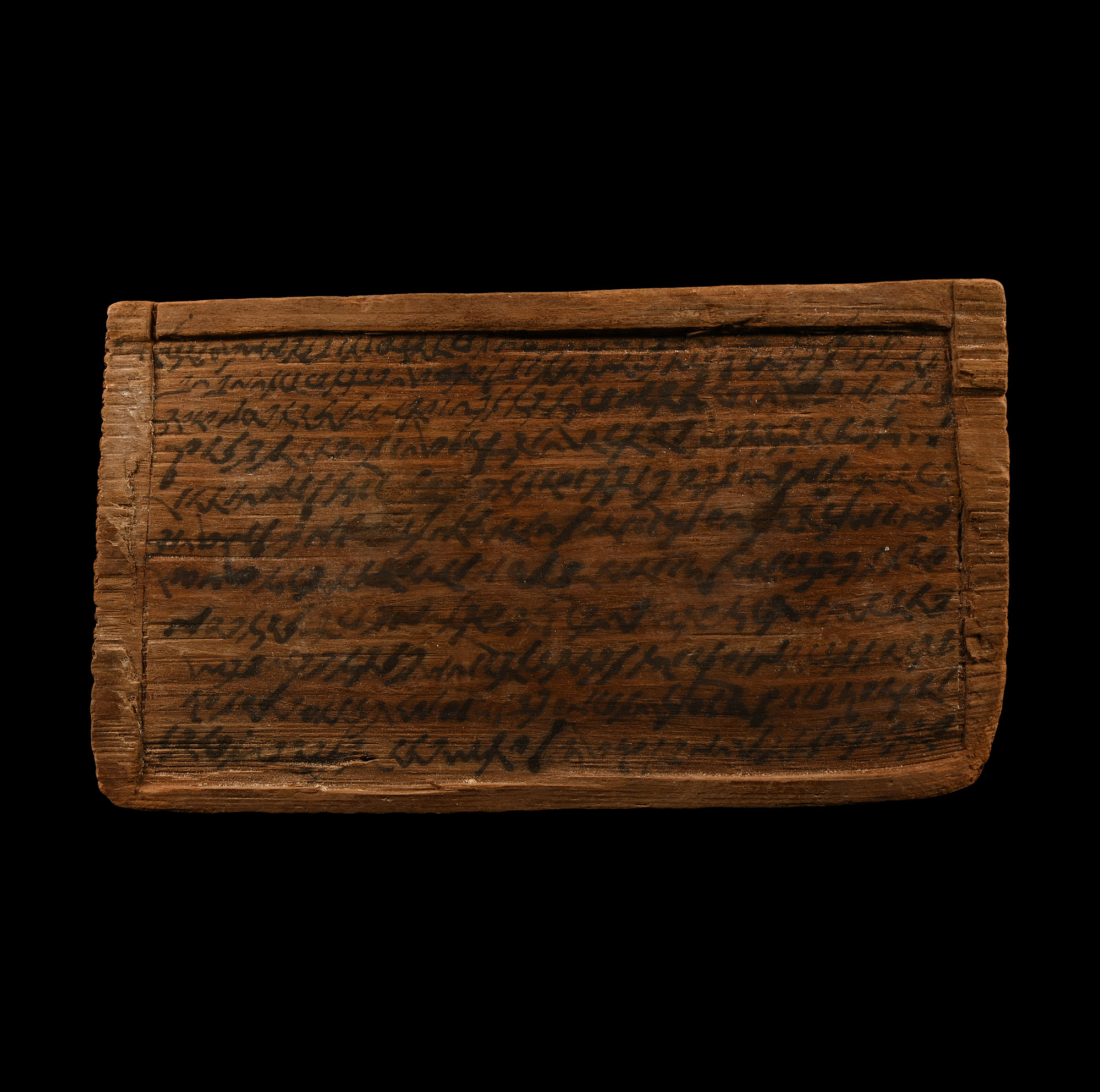
Roman Inked Reused Wooden Wax Tablet For a Contract Between Crescentius and Lanuarius Negotiated and Decided at the Goretiano Estate
EARLY 4TH CENTURY A.D.
5 5/8 in. (27.4 grams, 14.4 cm).
Well preserved rectangular tablet with a recessed panel inscribed with eleven lines of Roman cursive script, no writing on the reverse, the last tablet of a legal contract probably regarding questions of land ownership between a Crescentius and a Lanuarius into which also local elders, seniores, were involved; the text consists of highly developed legal formula, e.g. testati sunt …, and ends with the note: Actum Goretiano, which may be understood as ‘negotiated and decided at the Goretiano estate’; the fundus Goretianos is also mentioned in various other know legal documents. [No Reserve]
ProvenanceAcquired by Albert Sfez in the early 1950s.
Formerly the property of Monsieur Alain Sfez, a Belgian collector; acquired by gift from his father Albert Sfez, in 1965.
Acquired by a London dealer in 1973.
From an important London collection since 1975; thence by descent.
This lot is accompanied by an illustrated lot declaration signed by the Head of the Antiquities Department, Dr Raffaele D’Amato.
Rothenhoefer, P., Neue römische Rechtsdokumente aus dem Byzacena-Archiv / New Roman Legal Documents from the Byzacena Archive, (forthcoming).
Exhibited at the Harwich Museum, Harwich, Essex, UK, 21st January-10th March 2025; accompanied by a copy of a photograph of the artefacts on display.
Cf. Rothenhöfer, Peter Jürgen Blänsdorf, Sana mente sanaque memoria testamentum feci: Eine testamentarische Verfügung vom 12. April 340 n. Chr., Gephyra 13 (2016), pp.153-163; Rothenhöfer, Peter - Wang, Weixia, Flavius Aelius Victorinus praeses provinciae Numidiae, VDI 2025 (forthcoming); Wang, Wexia, Vibius Flavianus, First Governor of the provincia Valeria Byzacena, VDI 2025 (forthcoming); for examples of testamentary documents on wooden tablets that have survived, see FIRA III, p. 47; for Anthony Silvanus from 142 AD; also see BGU VII 1695 for Safinnius Herminus; for another from Transfynydd, North Wales, see Arch. Camb. 150, pp. 143-156; and see Bowman, A.K., Life and letters on the Roman frontier: Vindolanda and its people, London, 1994, for discussion of the uses of Roman writing tablets.
CONDITIONTimeLine Auctions follows a vetting process to ensure the authenticity and legality of all items, reinforcing our commitment to integrity and responsible trading. Each antiquity, antique, and coin lot undergoes thorough examination by a vetting committee of at least ten external specialists, professional trade association members, scientists, and archaeologists: Our Vetting Process
AUCTIONS:
TimeLine is a leading auction house specialising in antiquities, ancient art, collectables, natural history, coins, medals, and books. Our auctions offer museums, collectors, historians, and enthusiasts the opportunity to acquire unique and historically significant pieces.
LOT 0110
Roman Inked Reused Wooden Wax Tablet For a Contract Between Crescentius and Lanuarius Negotiated and Decided at the Goretiano Estate
Sold for (Inc. bp): £11,050
-
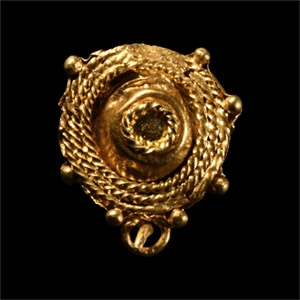
Roman Gold Shield-Shaped Earring
2nd-3rd century A.D.Sold for (Inc. bp): £286
Comprising a plain hoop with hook-and-eye fastener, discoid shield decorated with filigree border of three bands of twisted wire and seven granules; to the centre, a bezel of spirally twisted wire; a broad hoop from previous pendant attachment. 3.31 grams, 18.24 mm
Acquired on the UK art market in the early 2000s. From the David John Dennis collection of ancient jewellery. Property of a Californian, USA, collector. This lot is accompanied by an illustrated lot declaration signed by the Head of the Antiquities Department, Dr Raffaele D’Amato.
David Dennis started collecting items when he was a 10 year old boy during the Blitz in London gathering parts of nose cones from shells and other pieces of shrapnel that had fallen from the skies. After the war he turned his attentions to cigarette cards, postage stamps, bank notes, coins and eventually ancient artefacts, predominately Roman jewellery. Now living in Cumbria with his daughter he decided it was time to part with his collections. -
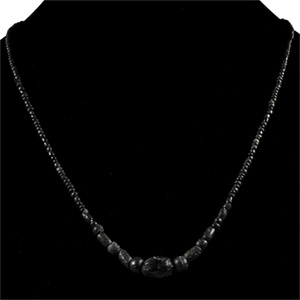
Roman Black Glass Bead Necklace String
1st-4th century A.D. and laterSold for (Inc. bp): £91
Restrung using gently graduating beads, larger beads to the centre with a large barrel-shaped feature bead. 11.4 grams, 48 cm
Acquired 1980-2015. Ex Abelita family collection. This lot is accompanied by an illustrated lot declaration signed by the Head of the Antiquities Department, Dr Raffaele D’Amato. -
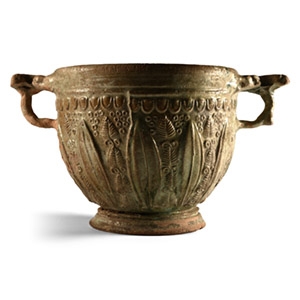
Roman Lead-Glazed Lotus Cup
1st century B.C.Sold for (Inc. bp): £3,900
With vertical leaf detailing to the bowl on a field of pellets with band of egg-and-dart below the ribbed rim, stepped foot; lateral loop handles with T-shaped scrolled panel above. 214 grams, 17 cm wide
Acquired 1979-1999. London collection of the late Mr S.M., thence by descent. This lot has been checked against the Interpol Database of stolen works of art and is accompanied by search certificate number no.12510-231919. This lot has been cleared against the Art Loss Register database, and is accompanied by an illustrated lot declaration signed by the Head of the Antiquities Department, Dr Raffaele D’Amato.
