
Loading, please wait...
LOT 0700
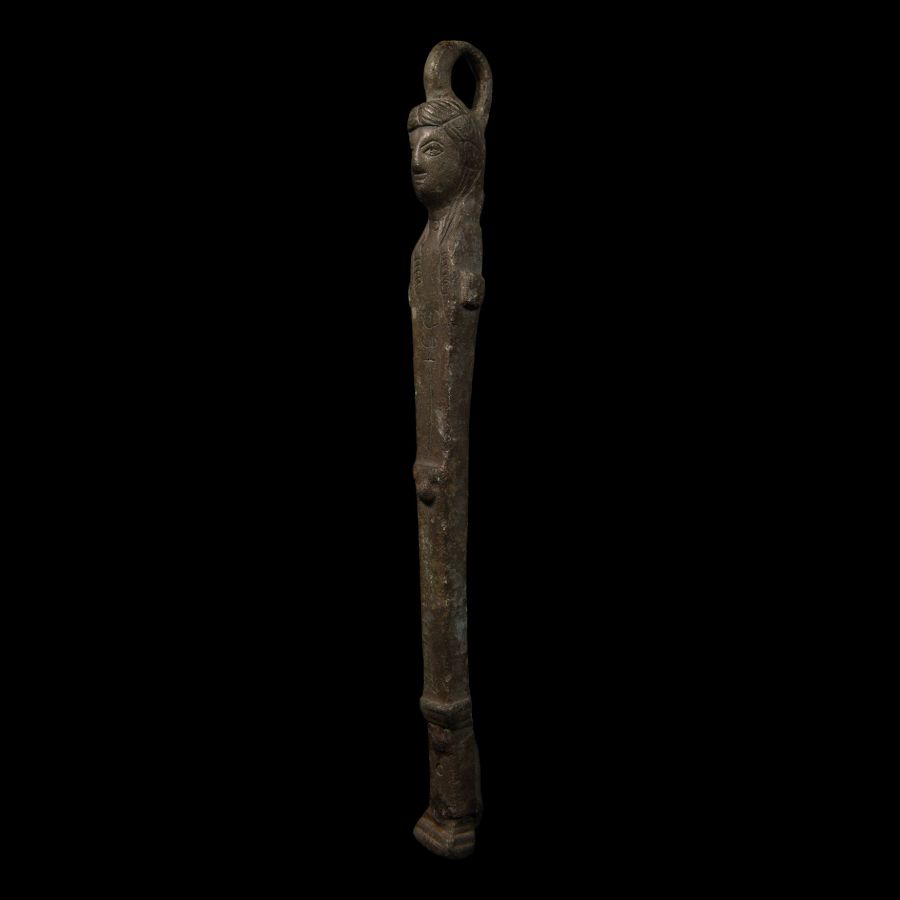
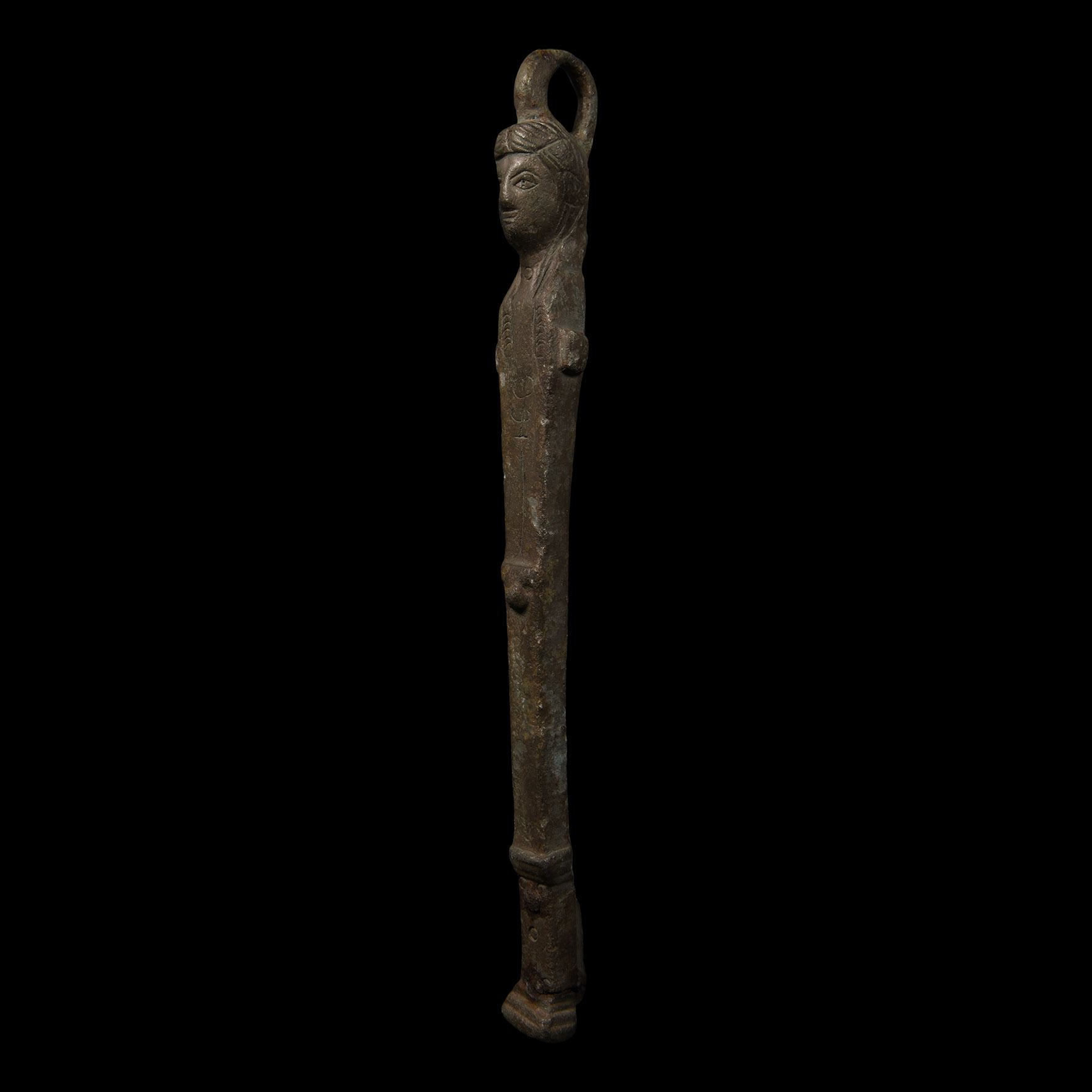
Roman Herm of the God Hermes
CIRCA 1ST CENTURY B.C.-1ST CENTURY A.D.
6 1/4 in. (110 grams, 16 cm).
A bronze herm lock element representing the god Hermes, with a stylised and beardless face, long hair descending with two parallel lines on the chest with engraved stylised caduceus, finial with a plinth and a squared pin to the reverse.
ProvenanceAcquired before 2000.
From the collection of a European gentleman living in the UK.
Cf. a very similar Herma in the Museum of Fine Art Budapest, inventory no.93.19.A.
FootnotesThis miniature herm, with a stylised caduceus engraved on the breast, possibly represents the god Hermes. It could have been used as a lock for a casket or a box where money was kept. Hermes was the protector of homes, symbolised by the Herma (from Hermes), a square or rectangular pillar of stone or bronze topped by a bust of the god.
CONDITIONTimeLine Auctions follows a vetting process to ensure the authenticity and legality of all items, reinforcing our commitment to integrity and responsible trading. Each antiquity, antique, and coin lot undergoes thorough examination by a vetting committee of at least ten external specialists, professional trade association members, scientists, and archaeologists: Our Vetting Process
AUCTIONS:
TimeLine is a leading auction house specialising in antiquities, ancient art, collectables, natural history, coins, medals, and books. Our auctions offer museums, collectors, historians, and enthusiasts the opportunity to acquire unique and historically significant pieces.
-
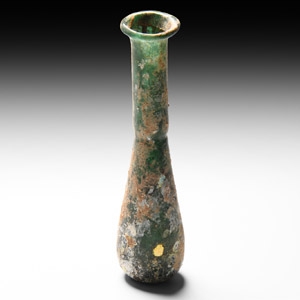
Roman Emerald Green Glass Unguentarium
2nd century A.D.Sold for (Inc. bp): £124
An emerald green glass unguentarium with a slender piriform body and tubular neck with rolled rim; iridescent surfaces. 21.3 grams, 10.1 cm
Acquired 1980-2015. Ex Abelita family collection. -
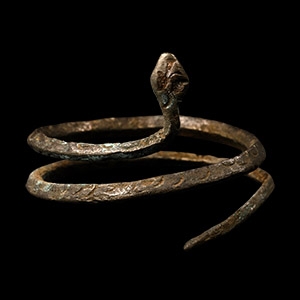
Romano-Egyptian Coiled Snake Ring
1st century B.C.-1st century A.D.Sold for (Inc. bp): £312
A zoomorphic copper-alloy ring composed of a slender, square-section coiled body with one tapering terminal and one terminal formed as a stylised snake's head with simple punched detailing. 2.40 grams, 24.19 mm overall, 19.91 mm internal diameter (approximate size British R, USA 8 1/2, Europe 18 3/4, Japan 18)
Acquired before 2000. From the collection of a European gentleman living in the UK. -
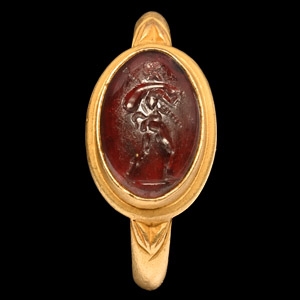
Roman Satyr Traveller Gemstone in Gold Ring
1st-3rd century A.D.Sold for (Inc. bp): £4,940
A garnet cabochon with intaglio satyr traveller advancing with staff and pouch over his shoulder, set into a later gold finger ring. 8.22 grams, 27.20 mm overall, 22.95 mm internal diameter (approximate size British O, USA 7, Europe 14.98, Japan 14)
Acquired 1960s-1990s. Late Alison Barker collection, a retired London barrister. This lot has been checked against the Interpol Database of stolen works of art and is accompanied by search certificate no.11619-199018.
The subject was popular on Roman gems: Silenus and the satyrs, grotesque hedonists, unrestrained in their desire for sex and wine, and yet immortal companions of Dionysus, were considered ‘cruder than men and yet somehow wiser, combining mischief with wisdom, lewdness with skill in music, animalism with divinity'. The counterpoint of the divine and the atavistic appealed to the Roman sense of moral superiority.
