
Loading, please wait...
LOT 0189
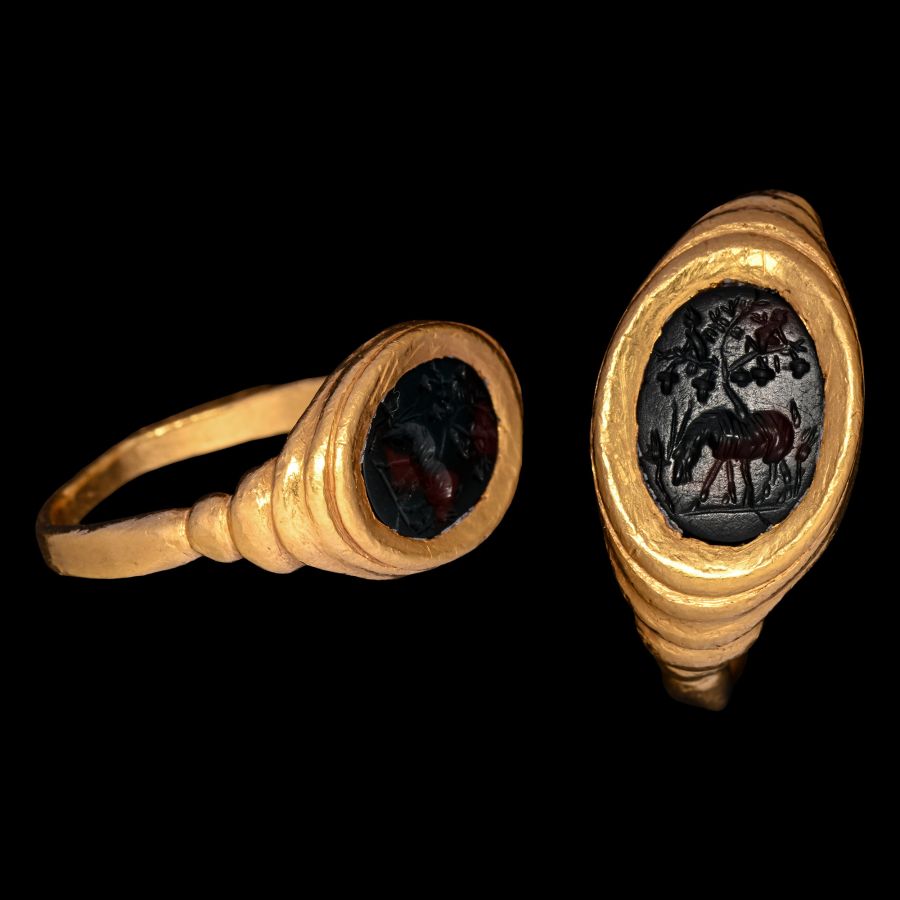
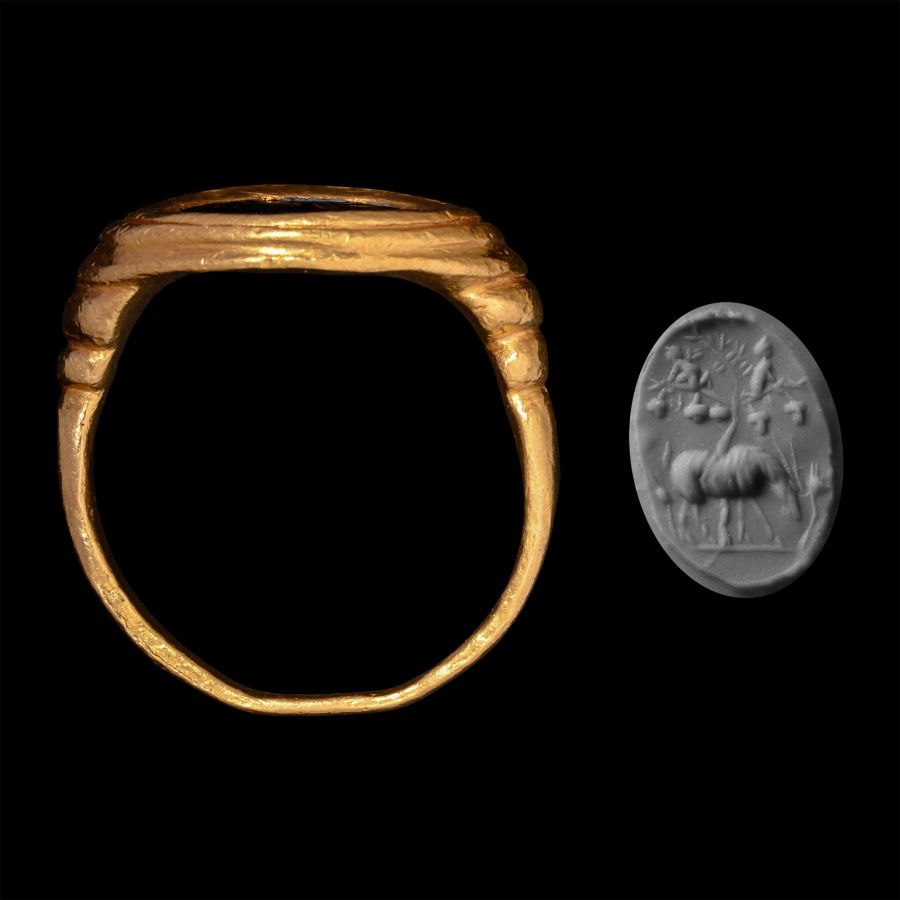
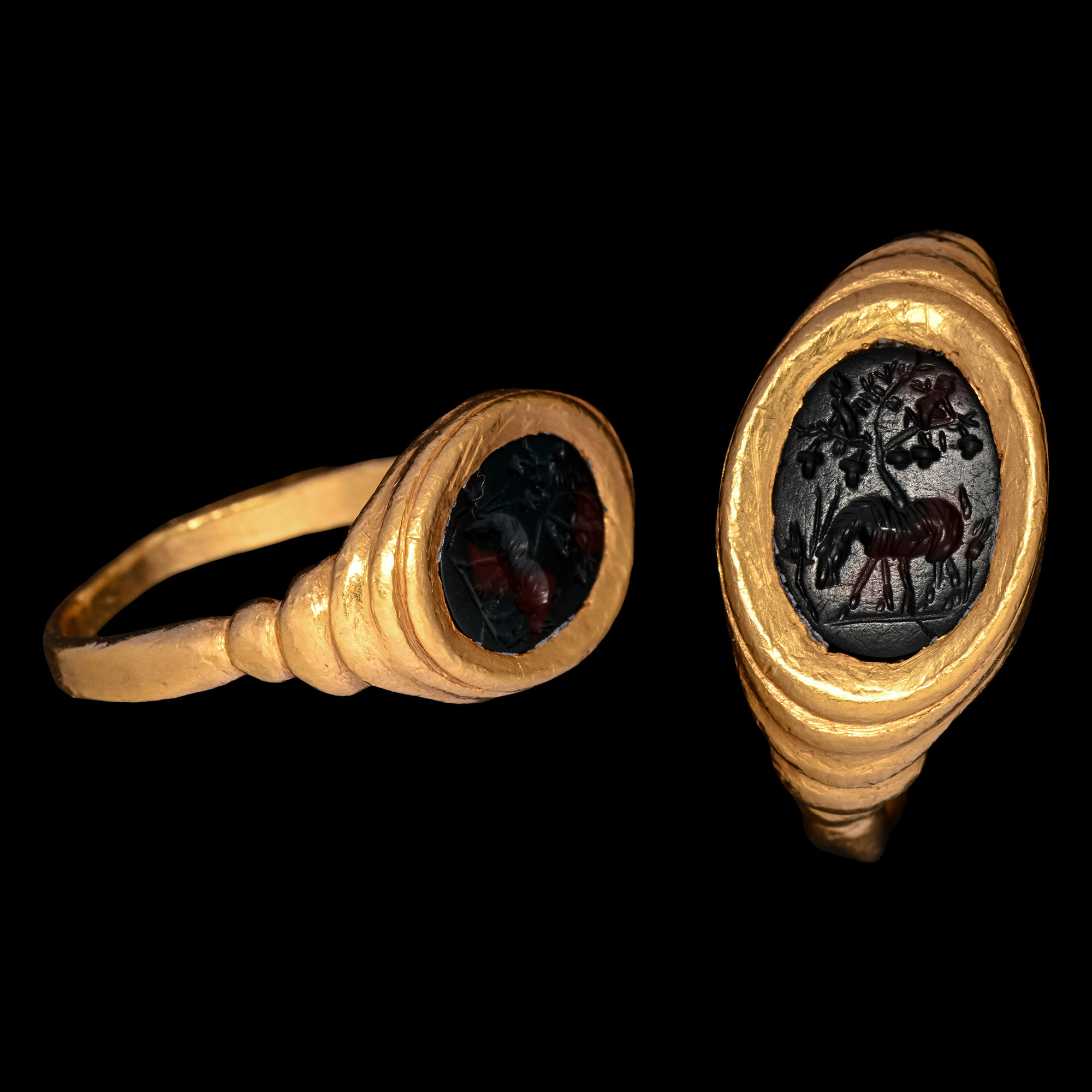
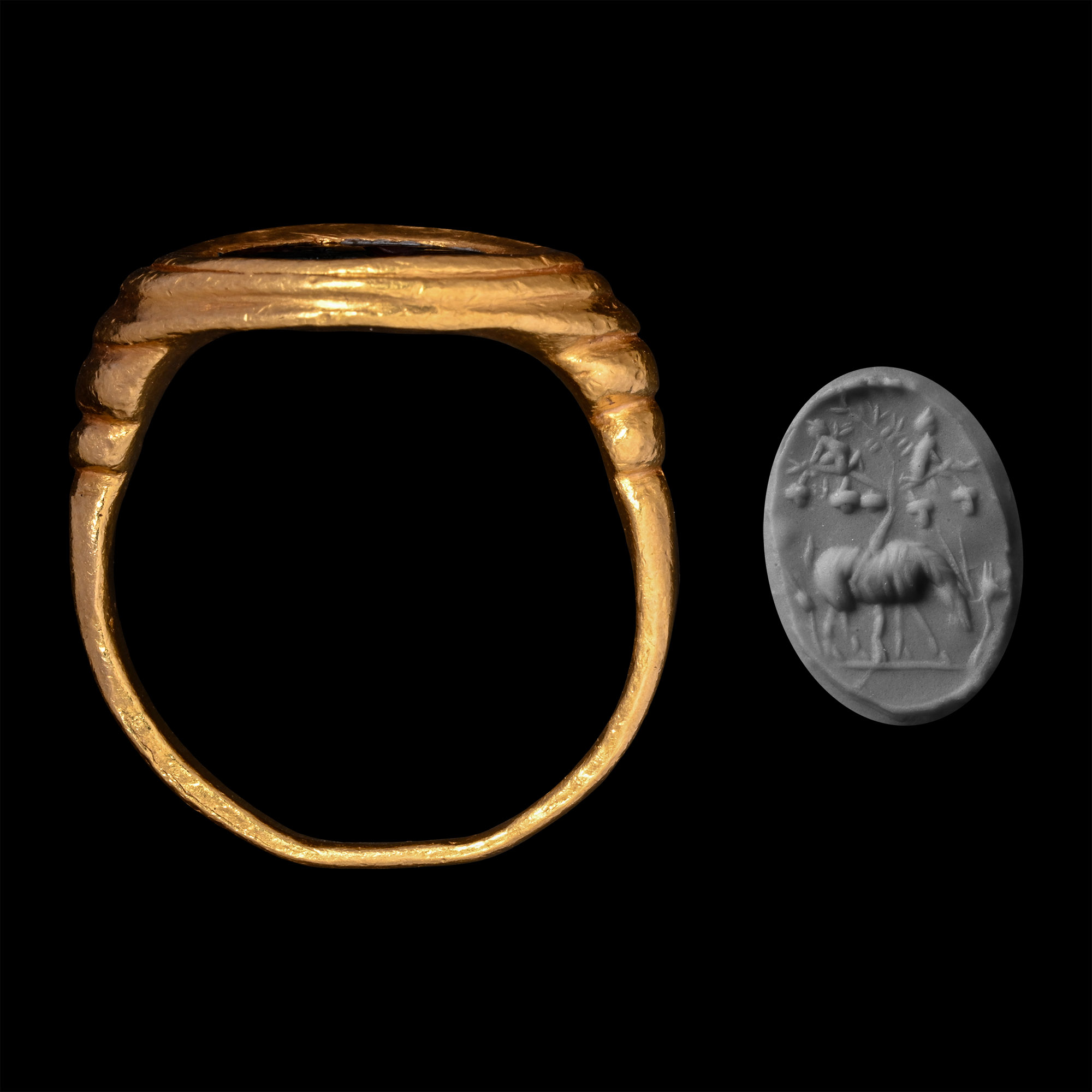
Roman Heliotrope Gemstone with Ibex and Two Erotes in Gold Ring
2ND CENTURY A.D.
7/8 in. (9.93 grams, 22.82 mm overall, 19.07 mm internal diameter (approximate size British R, USA 8 1/2, Europe 18 3/4, Japan 18)).
Ellipsoid cloison with profile grazing ibex beneath a tree with two erotes; set into a later gold ring; supplied with a museum-quality impression.
ProvenancePrivate collection, England.
LiteratureCf. Chadour, A.B., Rings. The Alice and Louis Koch Collection, volume I, Leeds, 1994, item 156, for type.
CONDITIONTimeLine Auctions follows a vetting process to ensure the authenticity and legality of all items, reinforcing our commitment to integrity and responsible trading. Each antiquity, antique, and coin lot undergoes thorough examination by a vetting committee of at least ten external specialists, professional trade association members, scientists, and archaeologists: Our Vetting Process
AUCTIONS:
TimeLine is a leading auction house specialising in antiquities, ancient art, collectables, natural history, coins, medals, and books. Our auctions offer museums, collectors, historians, and enthusiasts the opportunity to acquire unique and historically significant pieces.
LOT 0189
Roman Heliotrope Gemstone with Ibex and Two Erotes in Gold Ring
Estimate £1,500 - 2,000€1,740 - 2,320 (for guidance only)$2,030 - 2,700 (for guidance only)
-

Roman Agate Gemstone with Eagle
1st-2nd century A.D.Sold for (Inc. bp): £364
Intaglio of an eagle standing on a thunderbolt, flanked by a stylised palm tree, leafed branch, and the Greek letters (ΠA); supplied with a museum-quality impression. 1.02 grams, 19 mm
Acquired on the French art market. Private collection, England. -
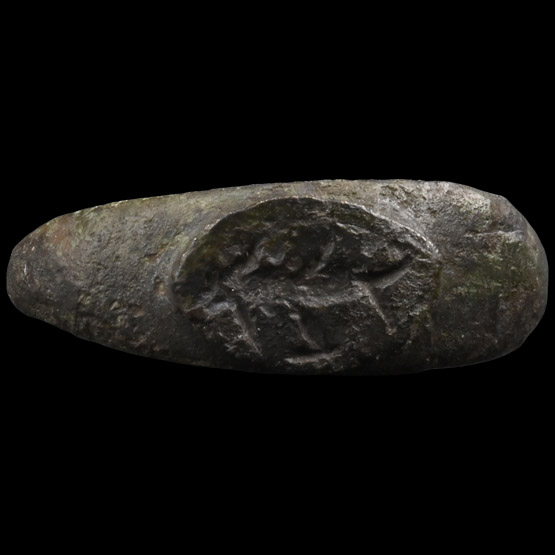
Roman Early Christian Bronze Ring with Fish
4th century A.D.Sold for (Inc. bp): £72
Ellipsoid bezel with incuse fish motif, broad shoulders. 2.93 grams, 19.68 mm overall, 15.64 mm internal diameter (approximate size British G 1/2, USA 3 1/2, Europe 5.55, Japan 5)
Ex German art market, 2000s. Acquired from an EU collector living in London. From the collection of a Surrey, UK, gentleman.
The Christian fish motif was one of the most important and widespread symbols used by early Christians during the Roman period. It served as a secret sign of identity and a shorthand declaration of faith, primarily to avoid persecution by Roman authorities. -

Roman Decorated Bronze Vessel Lid Group
3rd-4th century A.D.Sold for (Inc. bp): £515
Each a domed disc with central depression, concentric tendril bands and leaf motifs to shoulder, hinge lugs. 765 grams total, 11.2-11.6 cm wide
Acquired on the European art market in the early 2000s. with Galerie Rhéa, Zurich, Switzerland.
