
Loading, please wait...



LOT 0680
Roman Haematite Magical Gemstone
2ND-4TH CENTURY A.D.
1 in. (2.84 grams, 24 mm).
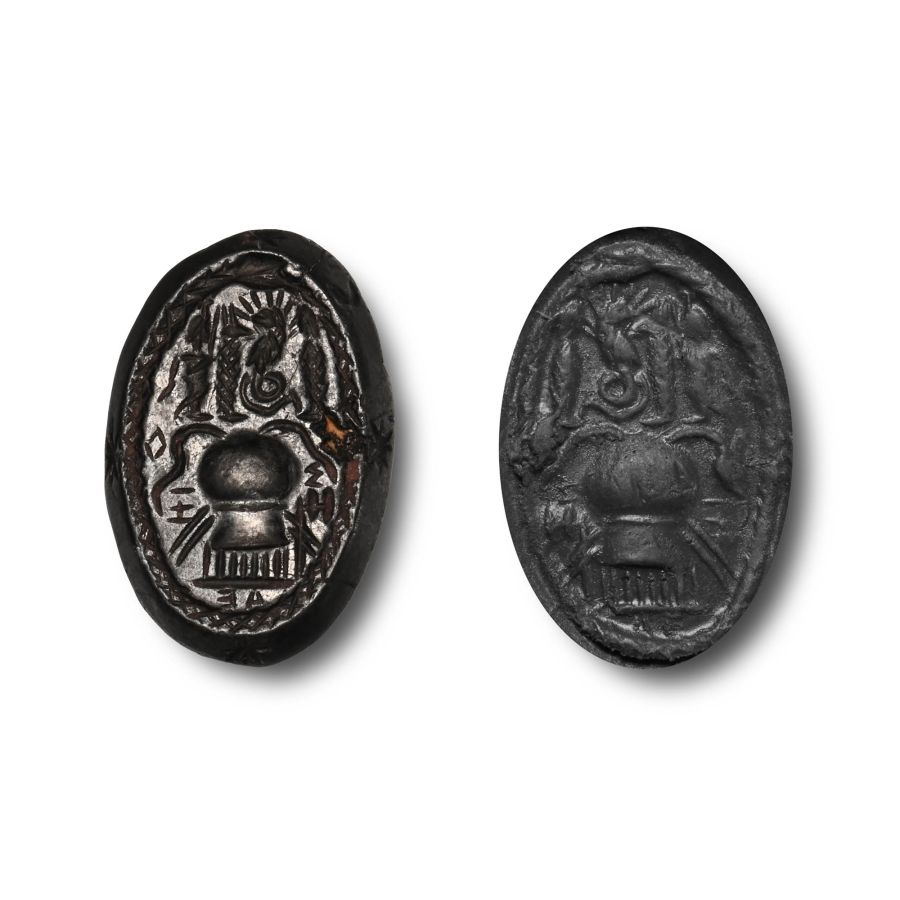
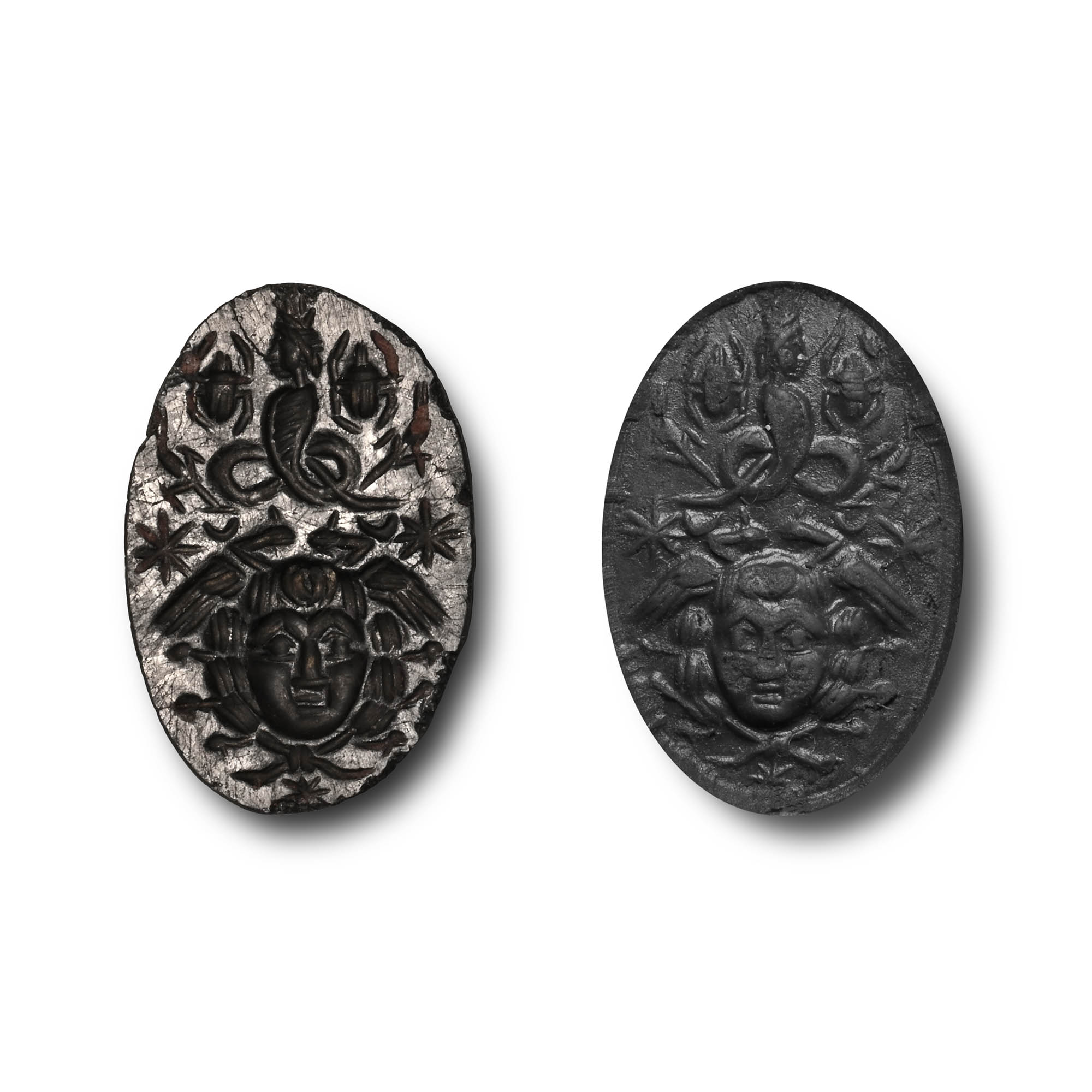
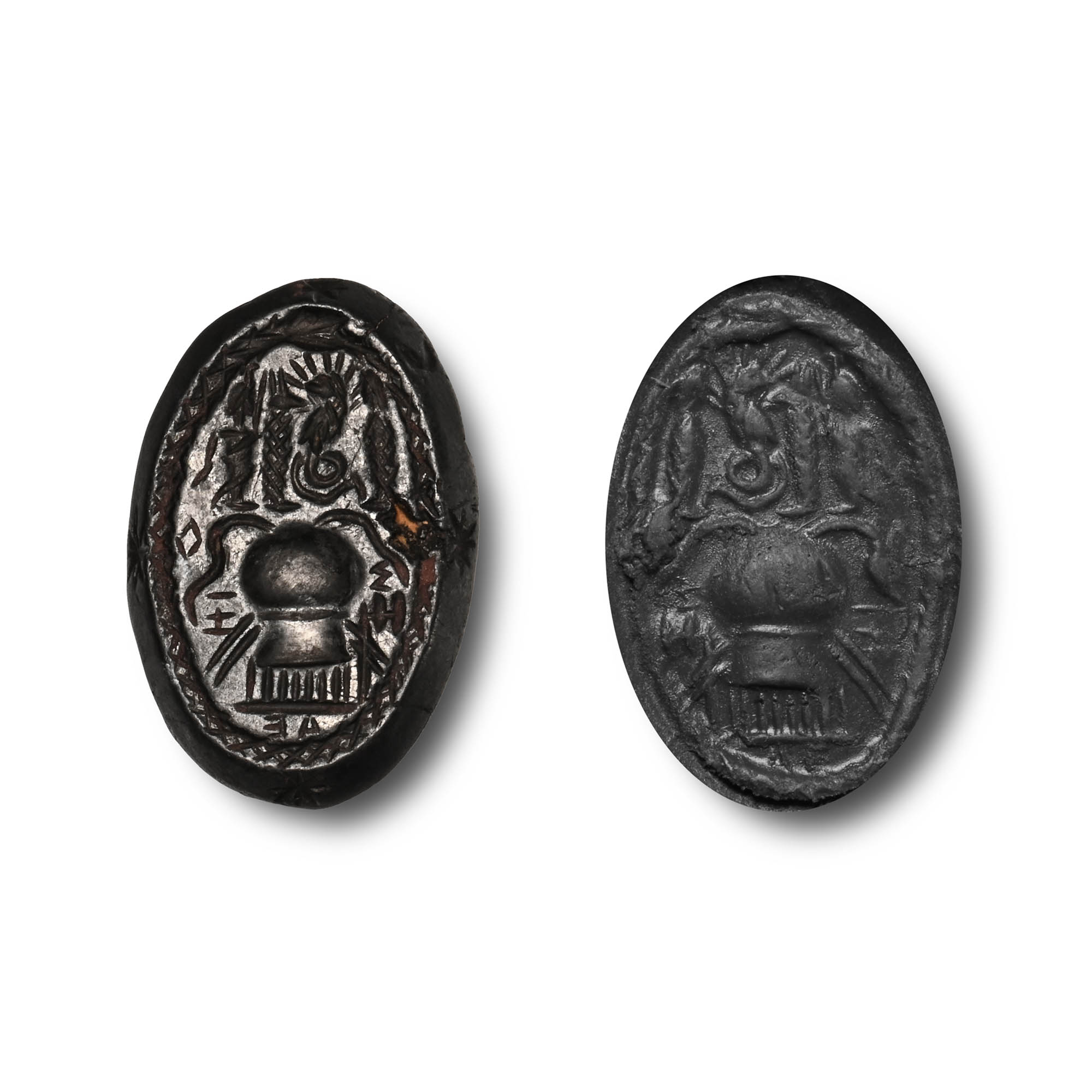
Ellipsoid in plan with chamfered rim to obverse with womb with key and roots; above womb the figures of Isis, Anubis, Chnoubis, and Nephthys (from left to right); reverse with facing Medusa mask with wings to the brow below a coiled snake, spiders and other items.
ProvenanceFrom the collection of magical objects of the late Mr A. Cotton, Brockenhurst, Hampshire, UK.
This lot has been checked against the Interpol Database of stolen works of art and is accompanied by search certificate number no.12354-225280.
This lot has been cleared against the Art Loss Register database, and is accompanied by an illustrated lot declaration signed by the Head of the Antiquities Department, Dr Raffaele D’Amato.
Cf. similar item in Gordon, R., 'Archaeologies of Magical Gems' in Entwistle, C., Adams, N., Gems of Heaven, recent research on engraved Gemstones in Late Antiquity, c. AD 200-600, London, 2011, pp.39-49, pl.5; see also BM inv.no.EA56076, for similar gemstone.
FootnotesDuring the Graeco-Roman period, the traditional genres of Egyptian or Near Eastern temple magic gems, particularly protective magic against demons, snakes and scorpions, seemed largely to have disappeared, and new genres became dominant, for different types of divination (direct visions of god, bowl divination, dream sending, Homer oracles), malign magic, aggressive (mainly erotic) magic, magic for personal success and attractiveness. This type of amulet was intended to aid childbirth and avoid illness and dangers for its attendant.
CONDITIONTimeLine Auctions follows a vetting process to ensure the authenticity and legality of all items, reinforcing our commitment to integrity and responsible trading. Each antiquity, antique, and coin lot undergoes thorough examination by a vetting committee of at least ten external specialists, professional trade association members, scientists, and archaeologists: Our Vetting Process
AUCTIONS:
TimeLine is a leading auction house specialising in antiquities, ancient art, collectables, natural history, coins, medals, and books. Our auctions offer museums, collectors, historians, and enthusiasts the opportunity to acquire unique and historically significant pieces.
-
Bronze Age to Roman Bronze Artefact Group
1st millennium B.C.-4th century A.D.Sold for (Inc. bp): £65
Comprising: terracotta bowl fragments; bow brooch fragments; a looped fastener; two awls; a small duck mount; bone pin fragments; a looped nail cleaner; and others. 166 grams total, 12-74 mm
Found on various UK sites since 1974. Property of an Essex collector. This lot is accompanied by an illustrated lot declaration signed by the Head of the Antiquities Department, Dr Raffaele D’Amato. -
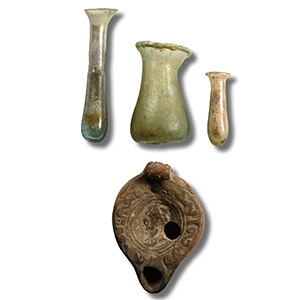
Romano-British Glass Vessel and Terracotta Oil Lamp Group
1st-2nd century AD.Sold for (Inc. bp): £117
Comprising: a small unguentarium with iridescent surface; a small flask with rolled rim; terracotta oil lamp with lug handle. 71 grams total, 41-75 mm
From an old collection formed before WWII, and believed to have been found at Worcester, UK. Acquired from Alan Cherry, Bournemouth, UK, in 2007. Ian Wilkinson collection, Nottinghamshire, UK, formed since 1985. This lot is accompanied by an illustrated lot declaration signed by the Head of the Antiquities Department, Dr Raffaele D’Amato. -
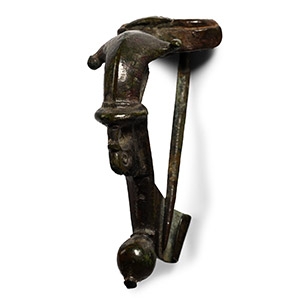
Romano-British Bronze Dolphin Bow Brooch
1st-2nd century A.D.Sold for (Inc. bp): £78
With chord developing to a sturdy pin, carinated bow with lateral knops, collar to the equator with duck-head below, recurved foot with bulb finial, long catchplate. 21.5 grams, 51 mm
Found Yorkshire, UK, in 1971. Acquired from Spinks, The Shambles, York, 2011. Ian Wilkinson collection, Nottinghamshire, UK, formed since 1985. Accompanied by an old handwritten dealer's ticket. This lot is accompanied by an illustrated lot declaration signed by the Head of the Antiquities Department, Dr Raffaele D’Amato.
