
Loading, please wait...

LOT 0800
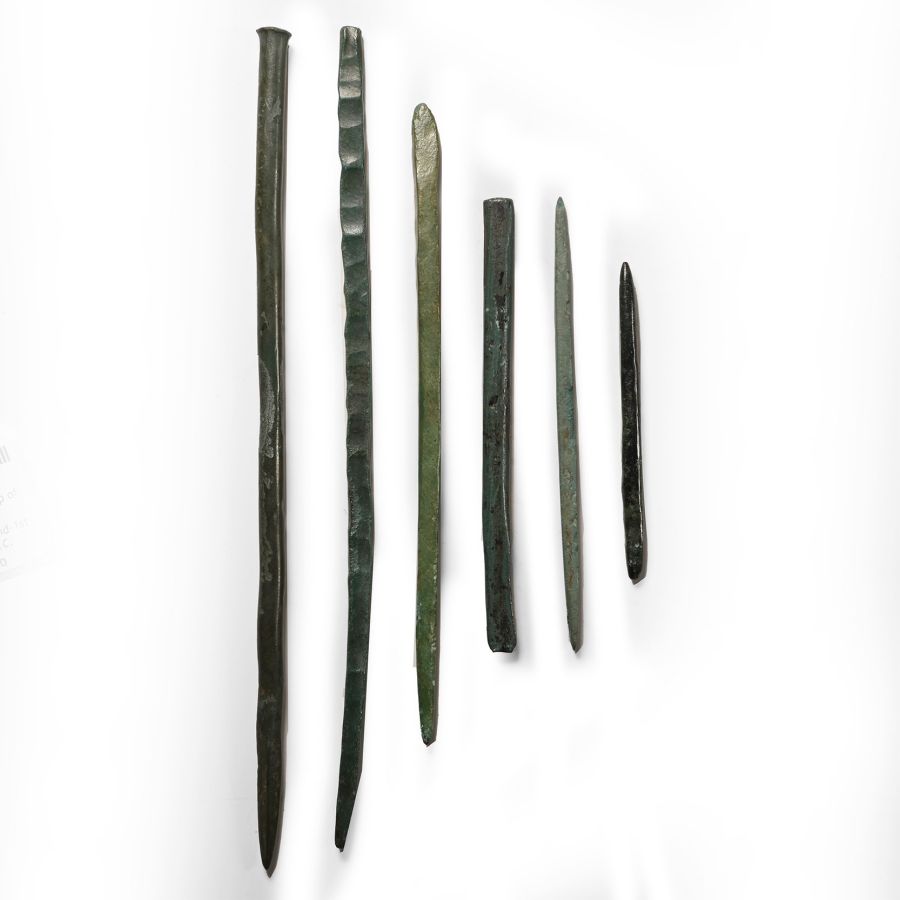
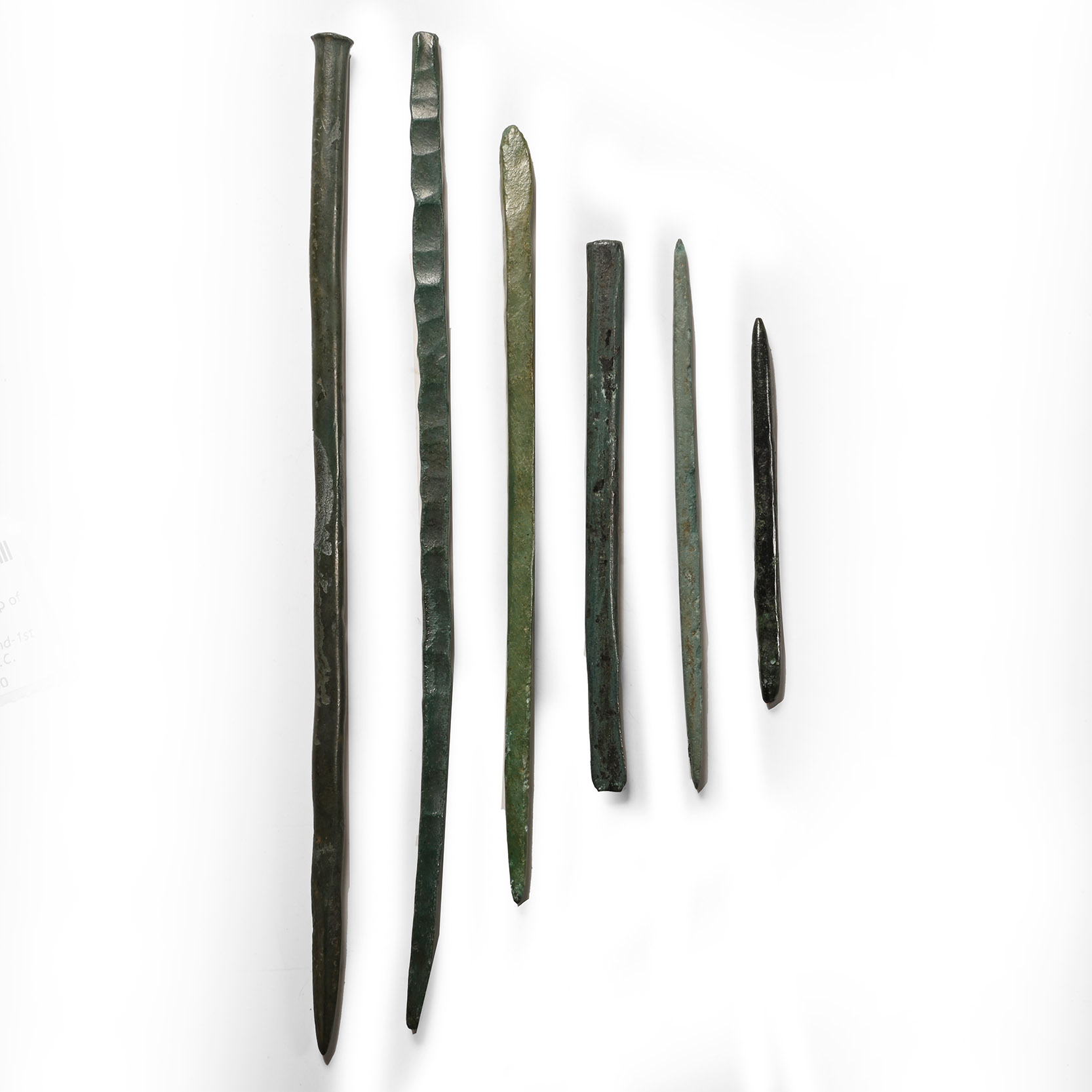
Roman Group of Bronze Stylus and Other Tools
1ST-4TH CENTURY A.D.
2 3/8 - 6 1/2 in. (88 grams total, 6.2-16.6 cm).
Including square- and round-section awl, spike and other tools. [6]
ProvenanceEx German collection, 1990s.
This lot is accompanied by an illustrated lot declaration signed by the Head of the Antiquities Department, Dr Raffaele D’Amato.
TimeLine Auctions follows a vetting process to ensure the authenticity and legality of all items, reinforcing our commitment to integrity and responsible trading. Each antiquity, antique, and coin lot undergoes thorough examination by a vetting committee of at least ten external specialists, professional trade association members, scientists, and archaeologists: Our Vetting Process
AUCTIONS:
TimeLine is a leading auction house specialising in antiquities, ancient art, collectables, natural history, coins, medals, and books. Our auctions offer museums, collectors, historians, and enthusiasts the opportunity to acquire unique and historically significant pieces.
-
Roman Artefact Collection from Crococolana
2nd-4th century A.D.Sold for (Inc. bp): £39
Including fragments of domestic pottery, wall plaster, tableware and other items. 1.1 kg total,11-84 mm
Found from the Roman settlement of Crococolana, Brough, Lincolnshire, UK, 2003-2005. Ian Wilkinson collection, Nottinghamshire, UK, formed since 1985. This lot is accompanied by an illustrated lot declaration signed by the Head of the Antiquities Department, Dr Raffaele D’Amato. -
Romano-British Bronze Stone Mason or Architect's Dividers
1st-3rd century A.D.Sold for (Inc. bp): £273
Each arm with incised hatching at the broad end, square-section point; securing knop with baluster and notched finial. 27.5 grams, 95 mm
Found Colchester, Essex, UK. Acquired from Parthenon Gallery, London WC1, UK, before 2000. Property of a Bedfordshire, UK, private collector. Accompanied by an illustrated collector's identification tag. This lot is accompanied by an illustrated lot declaration signed by the Head of the Antiquities Department, Dr Raffaele D’Amato. -
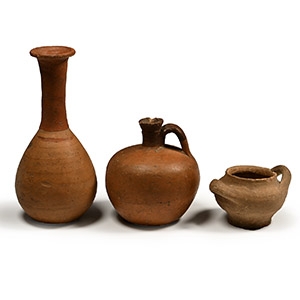
Roman Terracotta Vessel Group
1st-4th century A.D.Sold for (Inc. bp): £221
Comprising: a piriform vase; a squat jar with two loop handles; a barrel-shaped jar with trumpet-shaped neck and mouth. 172 grams total, 6.3-11.8 cm
Believed to have been part of the Duke of Northumberland collection. From an early 20th century collection. From a Hampshire, UK, private collection. This lot is accompanied by an illustrated lot declaration signed by the Head of the Antiquities Department, Dr Raffaele D’Amato.
