
Loading, please wait...

LOT 0630
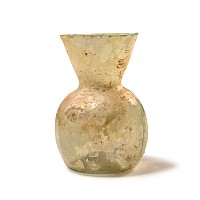
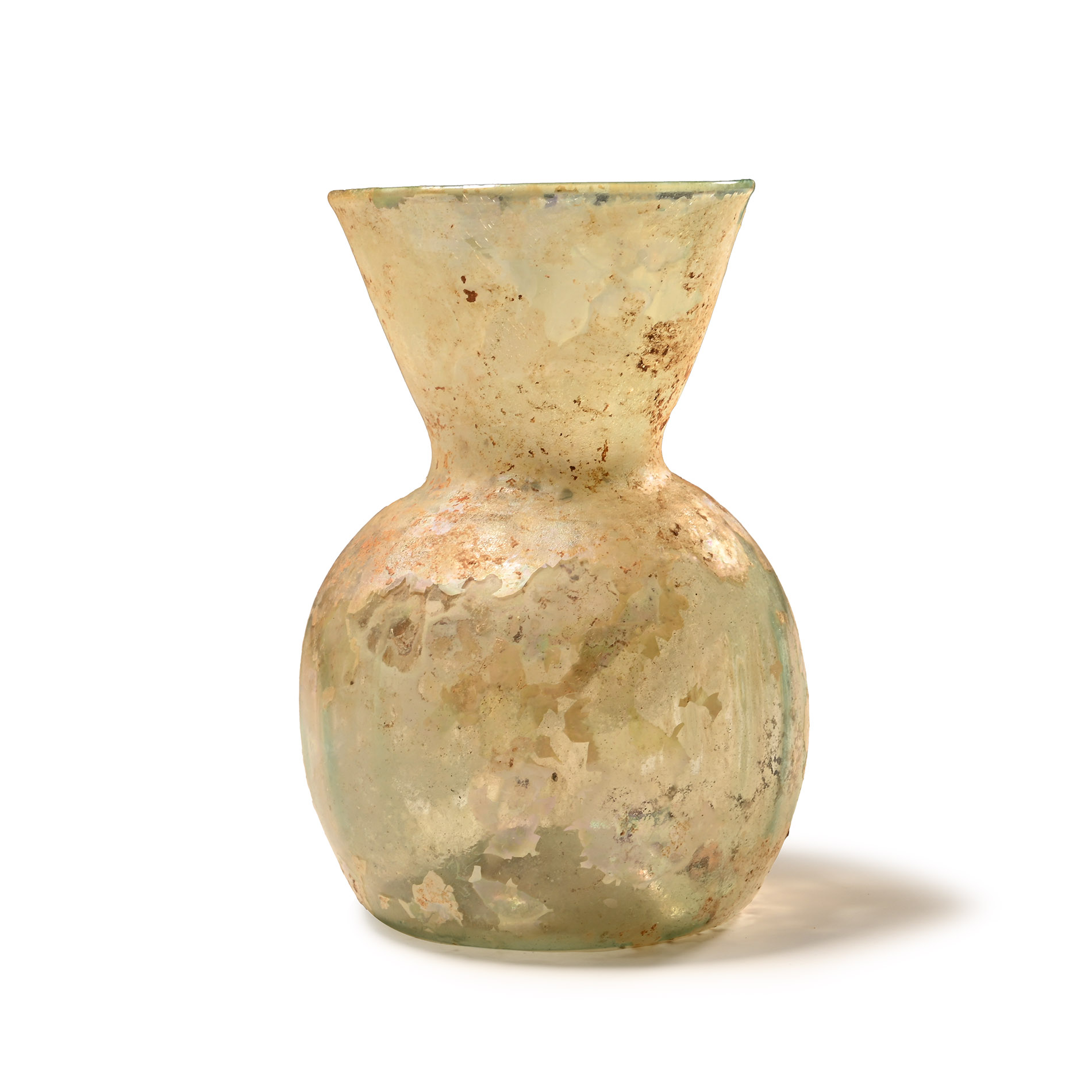
Roman Green Glass Vessel
4TH-5TH CENTURY A.D.
4 1/4 in. (48 grams, 11 cm).
Transparent pale green with bulbous body, rounded lip, flared neck and concave base.
ProvenanceEx London, UK, collection, 1980-1990s.
This lot is accompanied by an illustrated lot declaration signed by the Head of the Antiquities Department, Dr Raffaele D’Amato.
Cf. Whitehouse, D., Roman Glass in the Corning Museum of Glass, vol.2, New York, 1997, item 623, for similar.
FootnotesThe small bottle can be associated with the Isings form 104b. There are some parallels from graves at Beit Ras, Jordan and Samaria-Sebaste. Some models of the type have faint ribs.
CONDITIONTimeLine Auctions follows a vetting process to ensure the authenticity and legality of all items, reinforcing our commitment to integrity and responsible trading. Each antiquity, antique, and coin lot undergoes thorough examination by a vetting committee of at least ten external specialists, professional trade association members, scientists, and archaeologists: Our Vetting Process
AUCTIONS:
TimeLine is a leading auction house specialising in antiquities, ancient art, collectables, natural history, coins, medals, and books. Our auctions offer museums, collectors, historians, and enthusiasts the opportunity to acquire unique and historically significant pieces.
-
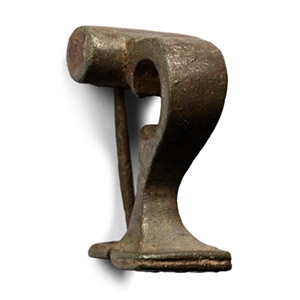
Romano-British Tinned Bronze Decorated Knee Brooch
2nd century A.D.Sold for (Inc. bp): £33
Comprising a chord housed with a horizontal sleeve with pin to the rear, deep scrolled bow with spurs to the reverse, scooped lower end and trapezoidal foot, hooked catch to reverse. 16.2 grams, 30 mm
Found near Wetwang, North Yorkshire, UK. Acquired UK circa 2007. Ian Wilkinson collection, Nottinghamshire, UK, formed since 1985. This lot is accompanied by an illustrated lot declaration signed by the Head of the Antiquities Department, Dr Raffaele D’Amato. -
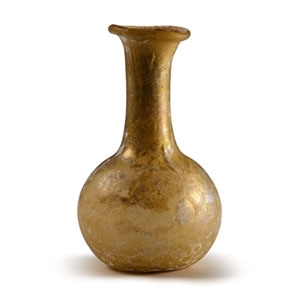
Roman Yellow Glass Bottle with Iridescence
2nd-3rd century A.D.Sold for (Inc. bp): £104
Bulbous body with dimpled underside, tubular neck with rolled and folded rim, iridescent surface. 10.1 grams, 65 mm
with H.A.C., Basel, prior 1999. This lot is accompanied by an illustrated lot declaration signed by the Head of the Antiquities Department, Dr Raffaele D’Amato. -
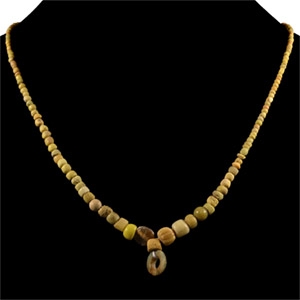
Roman Yellow Glass Bead Necklace String
1st-4th century A.D. and laterSold for (Inc. bp): £104
Composed of graduated oblate beads with an annular pendant decorated with ring-and-dot motifs. 17.4 grams, 40.5 cm
Acquired 1980-2015. Ex Abelita family collection. This lot is accompanied by an illustrated lot declaration signed by the Head of the Antiquities Department, Dr Raffaele D’Amato.
