
Loading, please wait...
LOT 0845
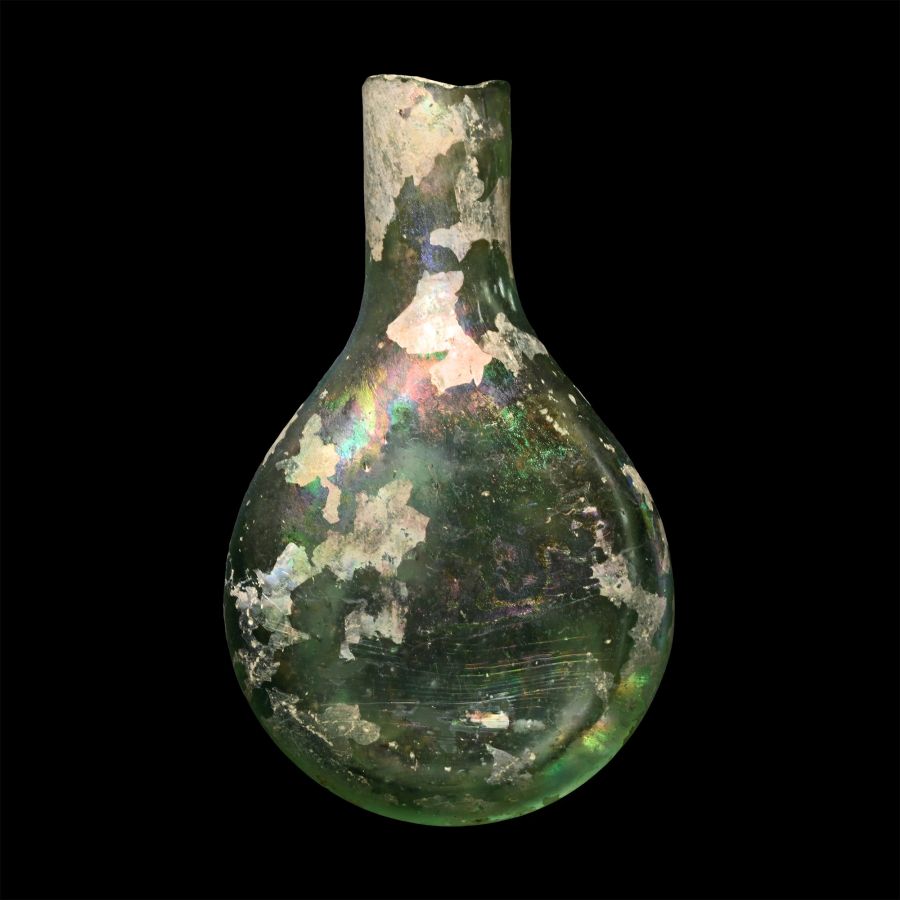
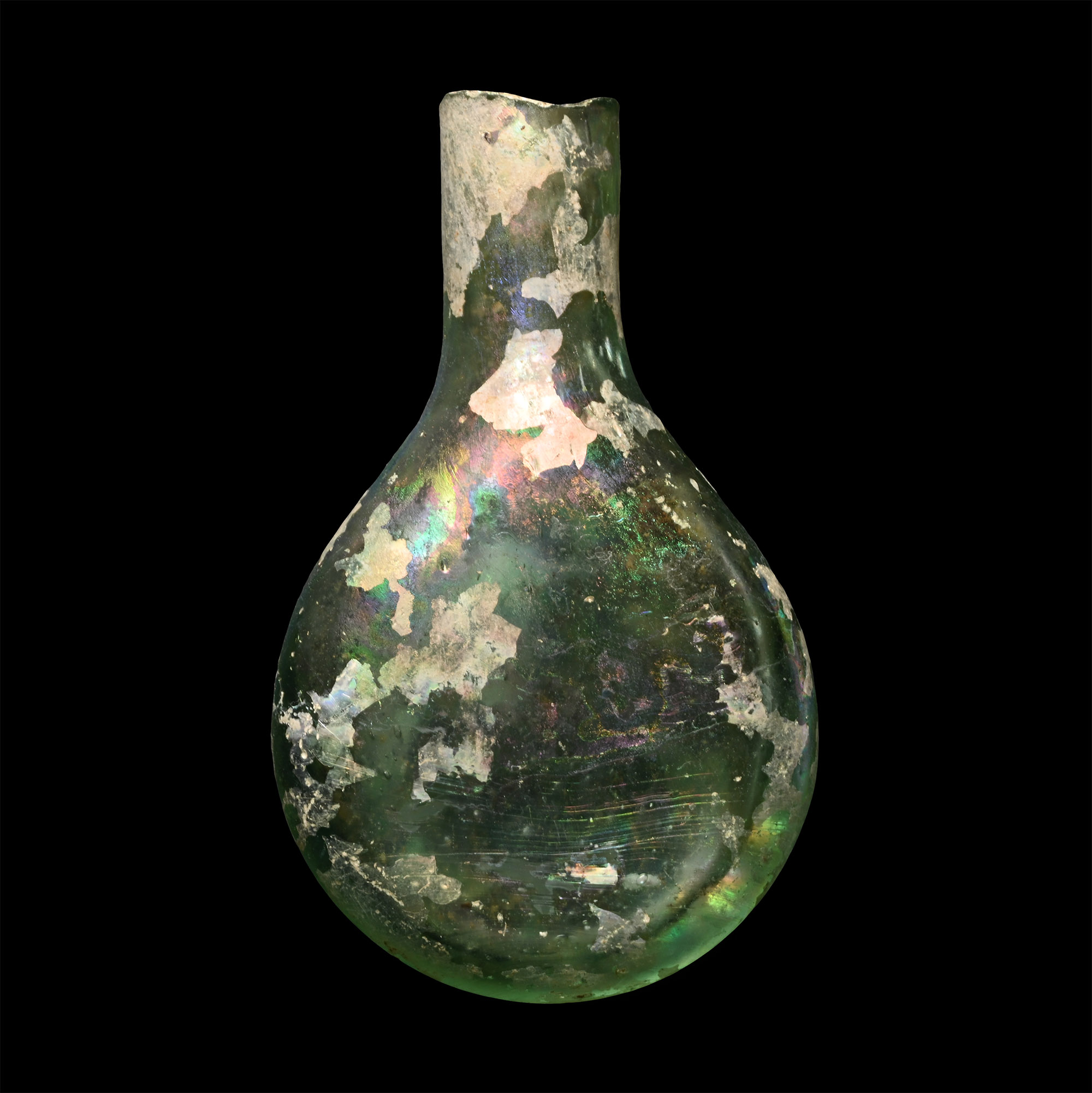
Roman Green Glass Perfume Flask
1ST-4TH CENTURY A.D.
2 1/8 in. (14.8 grams, 54.8 mm).
Piriform in plan with flatted body; iridescent surface [No Reserve]
ProvenanceFrom the private collection of Mr Brian Edwards, New Malden, Surrey, UK, formed from the late 1970s-early 1980s; thence by descent.
Accompanied by the original collector's data sheet with reference no.A151.
Cf. for similar The Metropolitan Museum, New York, item 74.51.67, in Lightfoot, C. S., The Cesnola Collection of Cypriot Art: Ancient Glass, New York, 2017, p.290, no.430.
CONDITIONTimeLine Auctions follows a vetting process to ensure the authenticity and legality of all items, reinforcing our commitment to integrity and responsible trading. Each antiquity, antique, and coin lot undergoes thorough examination by a vetting committee of at least ten external specialists, professional trade association members, scientists, and archaeologists: Our Vetting Process
AUCTIONS:
TimeLine is a leading auction house specialising in antiquities, ancient art, collectables, natural history, coins, medals, and books. Our auctions offer museums, collectors, historians, and enthusiasts the opportunity to acquire unique and historically significant pieces.
-
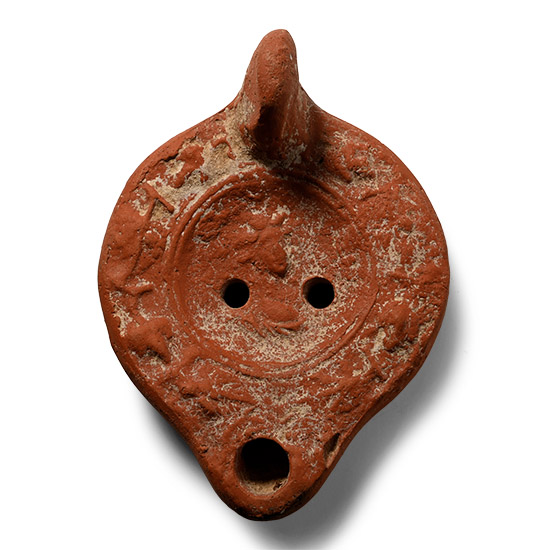
Roman 'Thurburbo Major' Terracotta Oil Lamp
Northern Tunisia, 3rd-4th century A.D.Sold for (Inc. bp): £91
Shallow body with a D-shaped handle at the rear, the edge with a vine-leaf border, two filler holes at the centre flanking a profile bust; an old label at the base reading 'Roman redware terracotta lamp excavated at Thurburbo Major c. 3rd-4th cent AD'. 140 grams, 10.8 cm
Acquired from Vanessa Purcell & Company, Manchester, UK, in 1993. From the collection of Mr & Mrs J.G.W. Lee, late Herefordshire collectors, their collection having been established from the 1990s. Accompanied by a copy of an original sales receipt. -
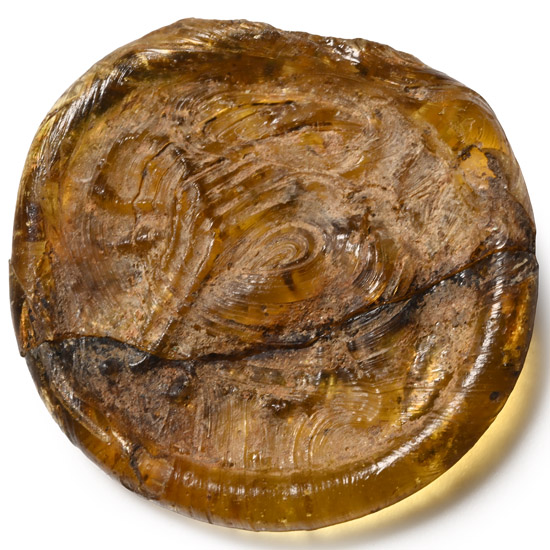
Roman Glass Pendant with Lion's Head
2nd-3rd century A.D.Sold for (Inc. bp): £39
An amber-coloured pendant with an impressed lion motif. 1.11 grams, 18.65 mm
From the private collection of a European gentleman (1942-2024), formed since the 1970s. -
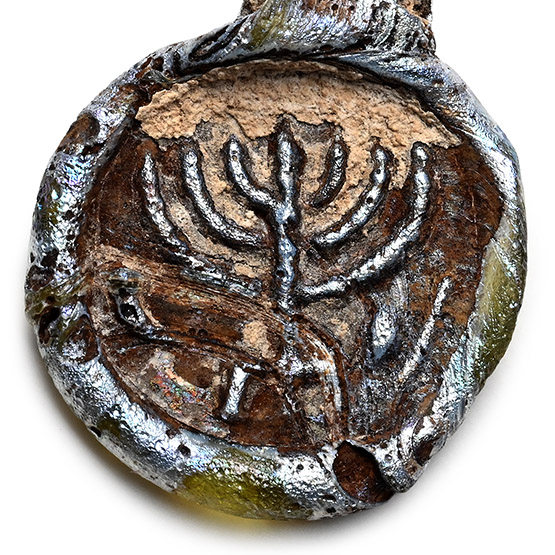
Eastern Roman Glass Pendant with Menorah
6th-7th century A.D.Sold for (Inc. bp): £1,040
Discoid with impressed menorah motif, integral loop. 1.07 grams, 22 mm
Private collection, acquired in the late 1980s-early 1990s; thence by descent.
Glass medallions were produced especially in Syria and decorated with imagery including Christian saints and monograms. The iconography of the Menorah was used by both Christian and Jewish communities, being for the Orthodox church a symbol of divine light, the seven gifts of the Holy Ghost and the church itself.
