
Loading, please wait...
LOT 0836
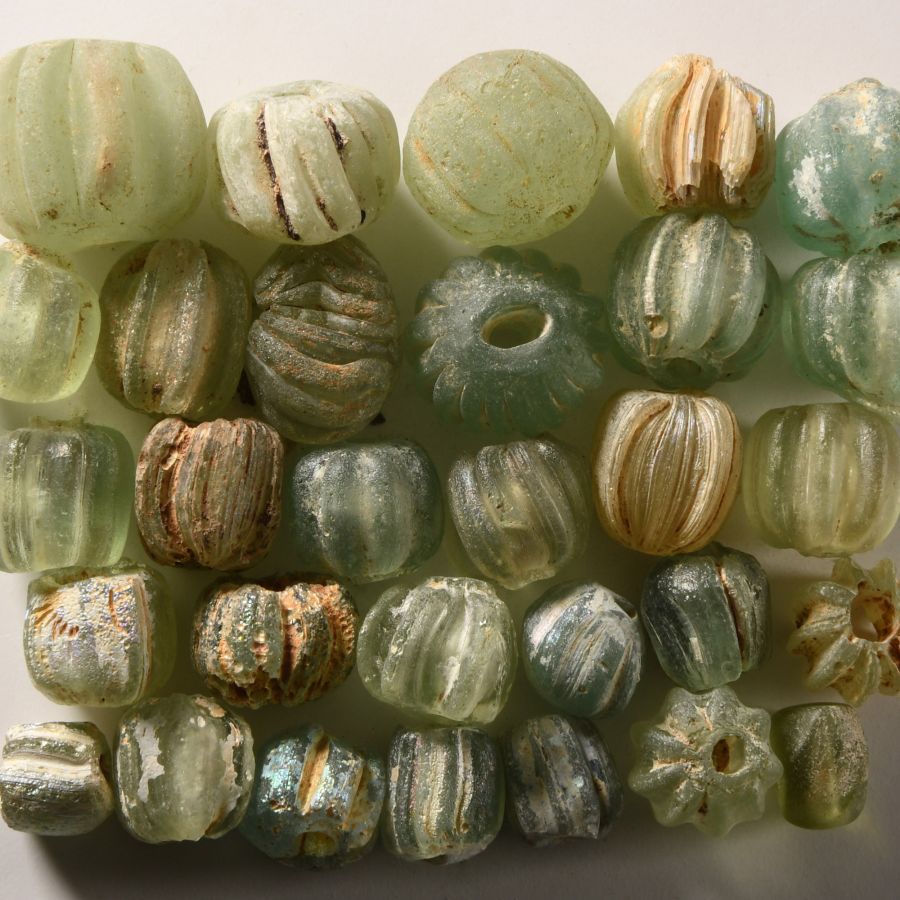
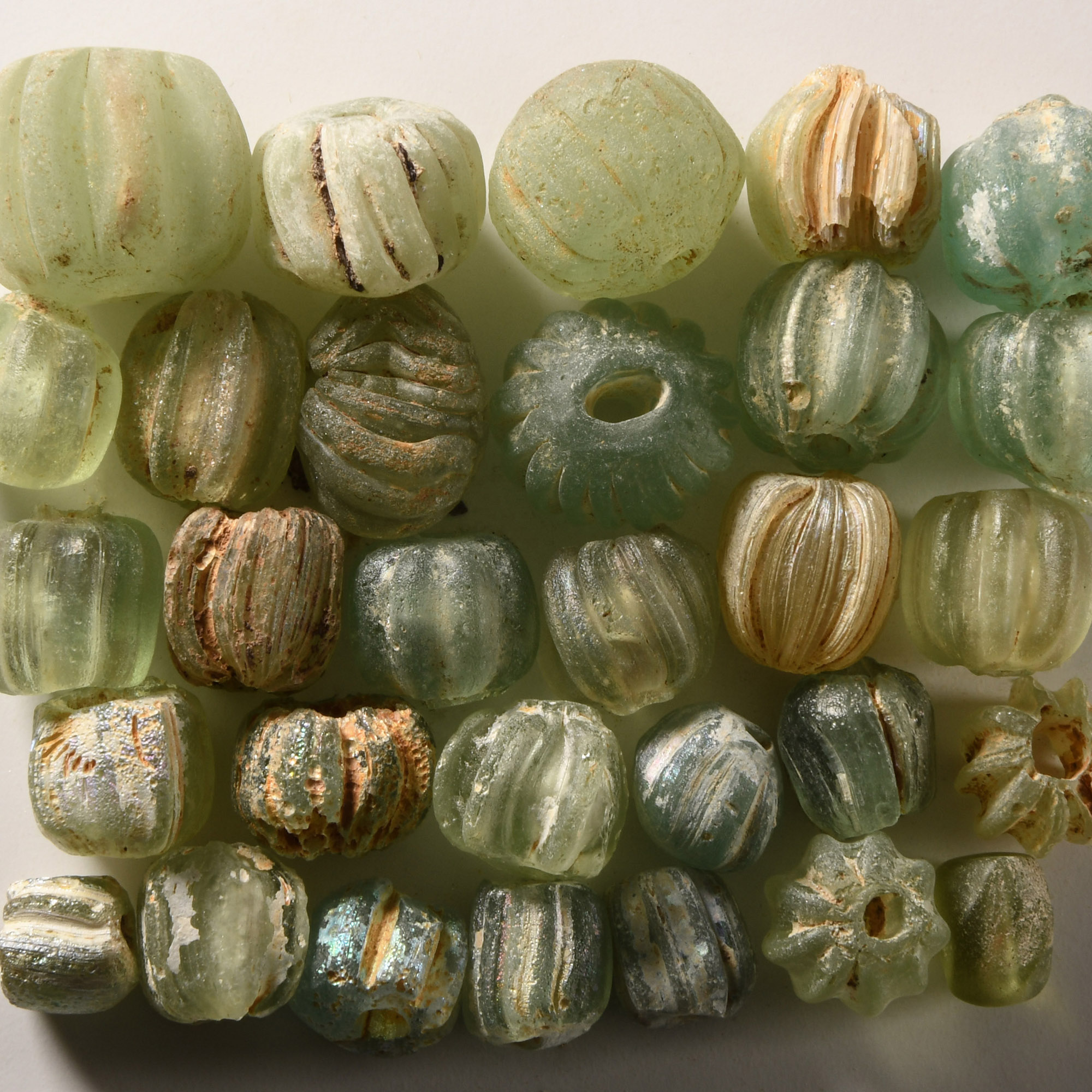
Roman Green Glass Melon Bead Collection
LATE 1ST MILLENNIUM B.C. AND LATER
3/8 - 3/4 in. (91 grams total, 9-18 mm).
Including variously sized beads, many with iridescent surfaces. [30]
ProvenanceUK gallery, early 2000s.
CONDITIONTimeLine Auctions follows a vetting process to ensure the authenticity and legality of all items, reinforcing our commitment to integrity and responsible trading. Each antiquity, antique, and coin lot undergoes thorough examination by a vetting committee of at least ten external specialists, professional trade association members, scientists, and archaeologists: Our Vetting Process
AUCTIONS:
TimeLine is a leading auction house specialising in antiquities, ancient art, collectables, natural history, coins, medals, and books. Our auctions offer museums, collectors, historians, and enthusiasts the opportunity to acquire unique and historically significant pieces.
-
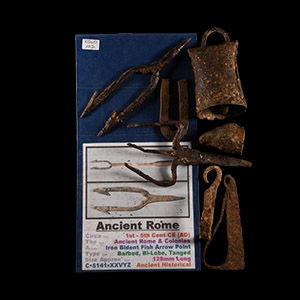
Roman to Medieval Iron Artefact Group
Circa 1st-16th century A.D.Sold for (Inc. bp): £26
Comprising: a bell; fire steel; fish arrow point; tanged 'fork'; ram's head mount; together with other miscellaneous items. 368 grams total, 4.3-12.5 cm
Acquired on the UK art market. Property of a Ruislip, UK, gentleman, by inheritance. -
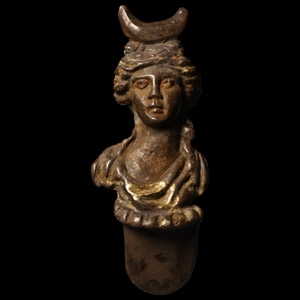
Roman Silver-Gilt Ring with Bust of Goddess
2nd-3rd century A.D.Sold for (Inc. bp): £1,105
Composed of a large hoop with raised tongue-shaped plaques at the shoulders, bezel formed as the bust of goddess Selene wearing a crescentic crown; trace remains of gilding. 12.63 grams, 34.40 mm overall, 21.27 mm internal diameter (approximate size British V, USA 10 1/2, Europe 23.77, Japan 22)
Acquired on the German art market around 2000s. From the collection of an EU gentleman living in the UK. -
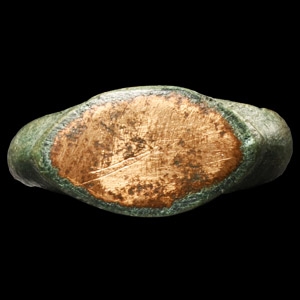
Roman Bronze Ring
1st century B.C.Sold for (Inc. bp): £52
With carinated hoop, elliptical bezel. 3.62 grams, 20.42 mm overall, 15.13 mm internal diameter (approximate size British H 1/2, USA 4, Europe 6.81, Japan 6)
Acquired from Den of Antiquity, Cambridgeshire, UK. Ex private Merseyside, UK, collection.
