
Loading, please wait...
LOT 0901
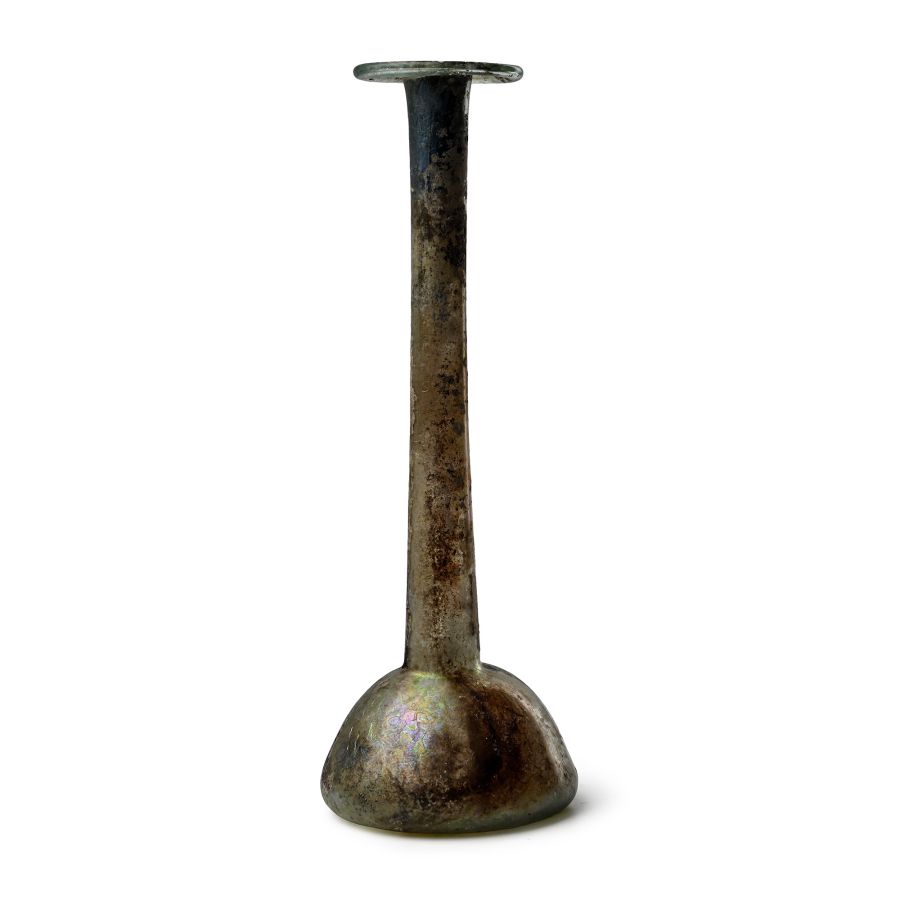
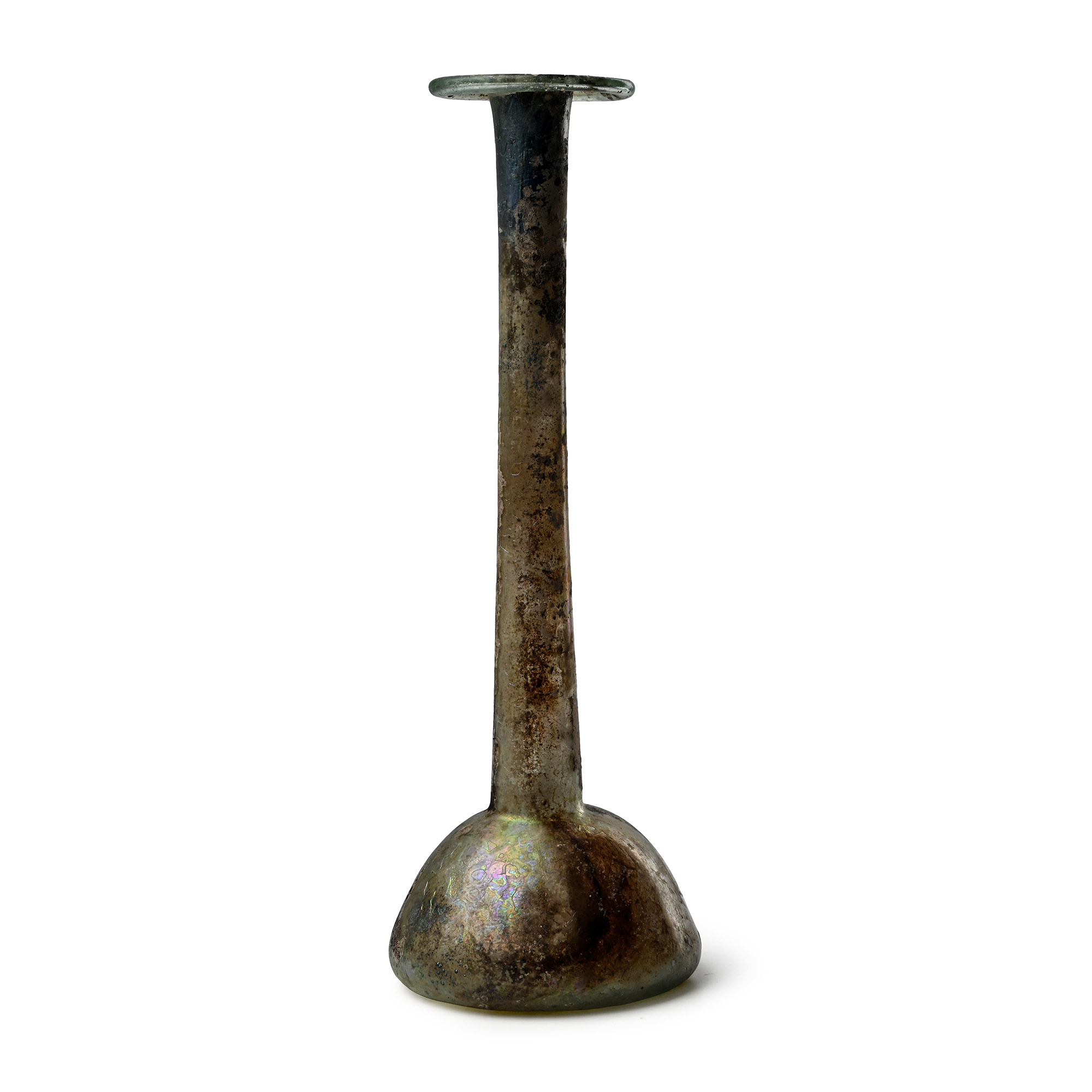
Roman Green Glass Flask
CIRCA 1ST-4TH CENTURY A.D.
8 1/8 in. (50 grams, 20.7 cm).
With domed body and discoid base, tall neck with everted rolled rim; some iridescence.
ProvenanceFrom a London, UK, collection of glass, 1970-2000s.
CONDITIONTimeLine Auctions follows a vetting process to ensure the authenticity and legality of all items, reinforcing our commitment to integrity and responsible trading. Each antiquity, antique, and coin lot undergoes thorough examination by a vetting committee of at least ten external specialists, professional trade association members, scientists, and archaeologists: Our Vetting Process
AUCTIONS:
TimeLine is a leading auction house specialising in antiquities, ancient art, collectables, natural history, coins, medals, and books. Our auctions offer museums, collectors, historians, and enthusiasts the opportunity to acquire unique and historically significant pieces.
-
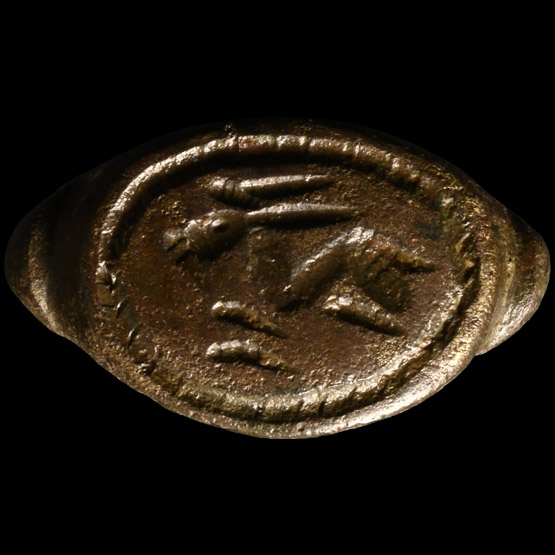
Eastern Roman Bronze Ring with Ibex
2nd-3rd century A.D.Sold for (Inc. bp): £39
Comprising a D-section hoop and a large, oval bezel with a reclining ibex facing left. 4.78 grams, 22.61 mm overall, 17.81 mm internal diameter (approximate size British N 1/2, USA 6 3/4, Europe 14.35, Japan 13)
London, UK, art market, 1980s. Private collection, London, UK. -
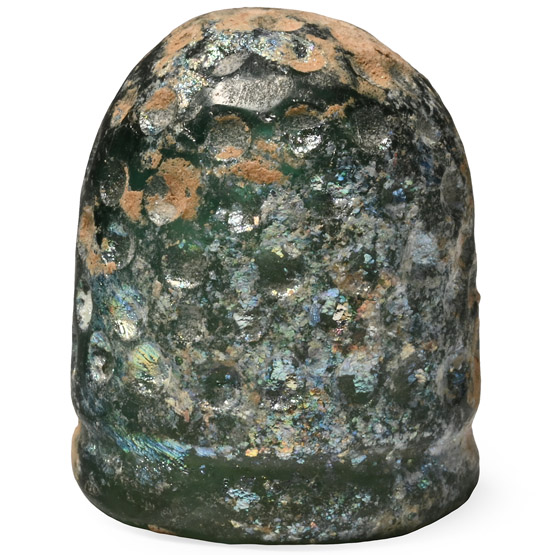
Roman Glass Thimble
1st-4th century A.D.Estimate: £250 - 350 (+bp*)
Opening Bid: £130
Narrow tubular thimble-type object with domed end and impressed dimples, remains of iridescence. 9.26 grams, 23 mm
From an important collection of a London gentleman, UK, 1990s. -
.jpg)
Roman Carnelian Gemstone of an Elderly Man
1st century A.D. or laterSold for (Inc. bp): £2,600
Showing a mature man in profile facing left, modelled after the Roman Republican portrait models; supplied with a museum-quality impression. 1.15 grams, 18 mm
Private English collection, formed between the late 1970s and early 1990s. Private collection, London, UK.
