
Loading, please wait...


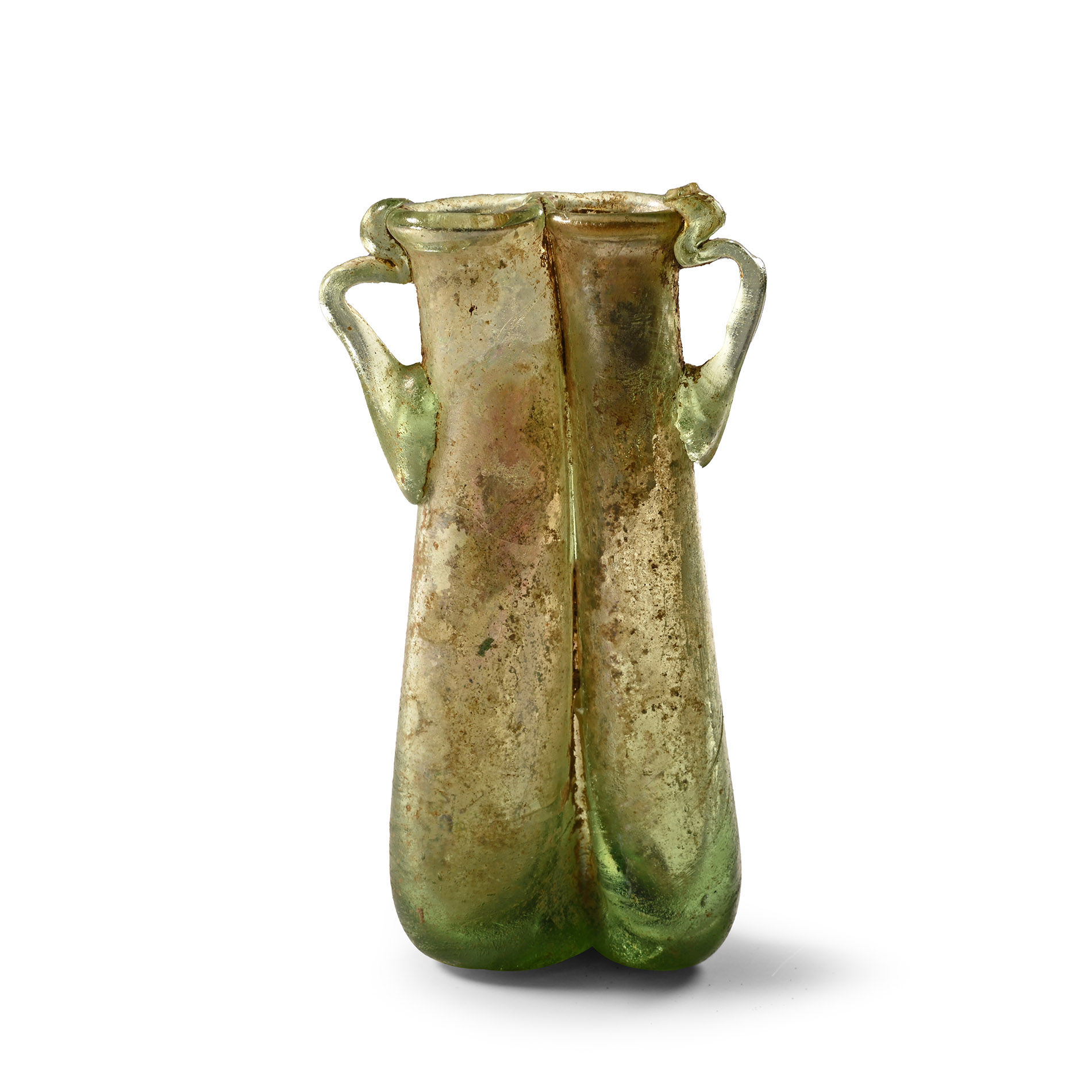
LOT 0170
Roman Green Glass Double Unguentarium
3RD-4TH CENTURY A.D.
4 3/8 in. (78 grams, 11 cm).
Pale green iridescent glass, two tapering tubes with rolled, everted rims, applied lateral triangular handles.
ProvenanceAcquired in the mid 1980s-1990s.
Private collection, Switzerland, thence by descent.
Private collection, since the late 1990s.
This lot is accompanied by an illustrated lot declaration signed by the Head of the Antiquities Department, Dr Raffaele D’Amato.
Cf. Whitehouse, D., Roman Glass in the Corning Museum of Glass, vol.2, New York, 2001, items 742, 744.
CONDITIONTimeLine Auctions follows a vetting process to ensure the authenticity and legality of all items, reinforcing our commitment to integrity and responsible trading. Each antiquity, antique, and coin lot undergoes thorough examination by a vetting committee of at least ten external specialists, professional trade association members, scientists, and archaeologists: Our Vetting Process
AUCTIONS:
TimeLine is a leading auction house specialising in antiquities, ancient art, collectables, natural history, coins, medals, and books. Our auctions offer museums, collectors, historians, and enthusiasts the opportunity to acquire unique and historically significant pieces.
-
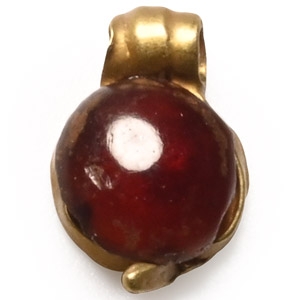
Roman Gold and Garnet Pendant
1st-4th century A.D.Sold for (Inc. bp): £156
Plano-convex garnet cabochon in a gold cell with loop. 0.12 grams, 6 mm
Ex property of a late Japanese collector, 1970-2000s. This lot is accompanied by an illustrated lot declaration signed by the Head of the Antiquities Department, Dr Raffaele D’Amato. -
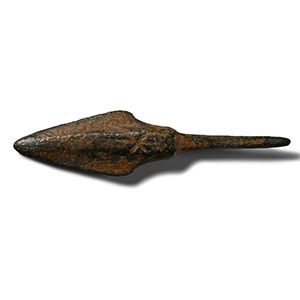
Roman Period Bronze Arrowhead with 'X' Maker's Mark
4th-6th century A.D.Sold for (Inc. bp): £143
Lozengiform blades on a broad midrib, spiked tang; incised 'X' (10) to one face. 6.6 grams, 53 mm
From an English collection formed before 2000. This lot is accompanied by an illustrated lot declaration signed by the Head of the Antiquities Department, Dr Raffaele D’Amato. -
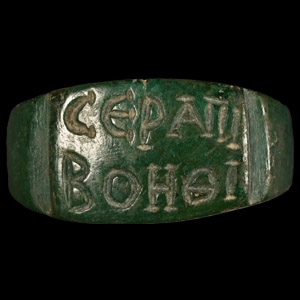
Roman Bronze 'Help Me Serapis' Ring
2nd-3rd century A.D.Sold for (Inc. bp): £1,040
With rectangular plaque, incuse Greek inscription 'CEPAΔωΠI/BOHΘI' (Help me Serapis). 3.74 grams, 20.40 mm overall, 17.71 mm internal diameter (approximate size British K 1/2, USA 5 1/2, Europe 10.58, Japan 10)
Ex German art market, 2000s. Acquired from an EU collector living in London. From the collection of Surrey, UK, gentleman. This lot is accompanied by an illustrated lot declaration signed by the Head of the Antiquities Department, Dr Raffaele D’Amato.
