
Loading, please wait...
LOT 0601
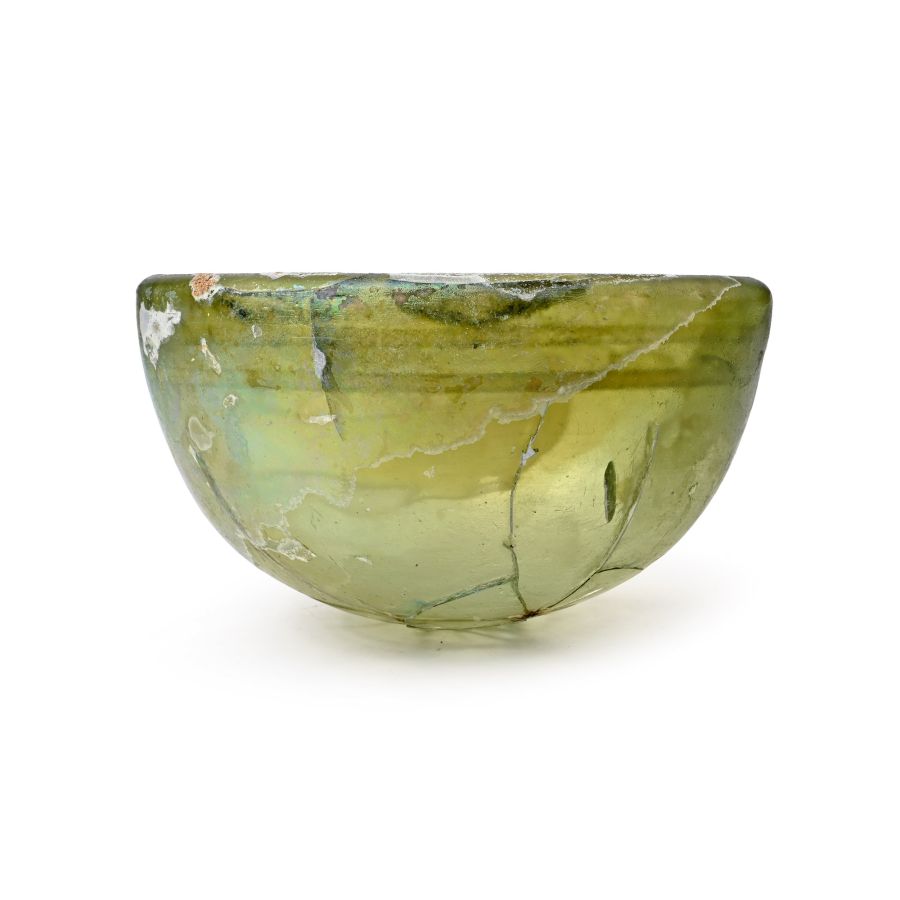
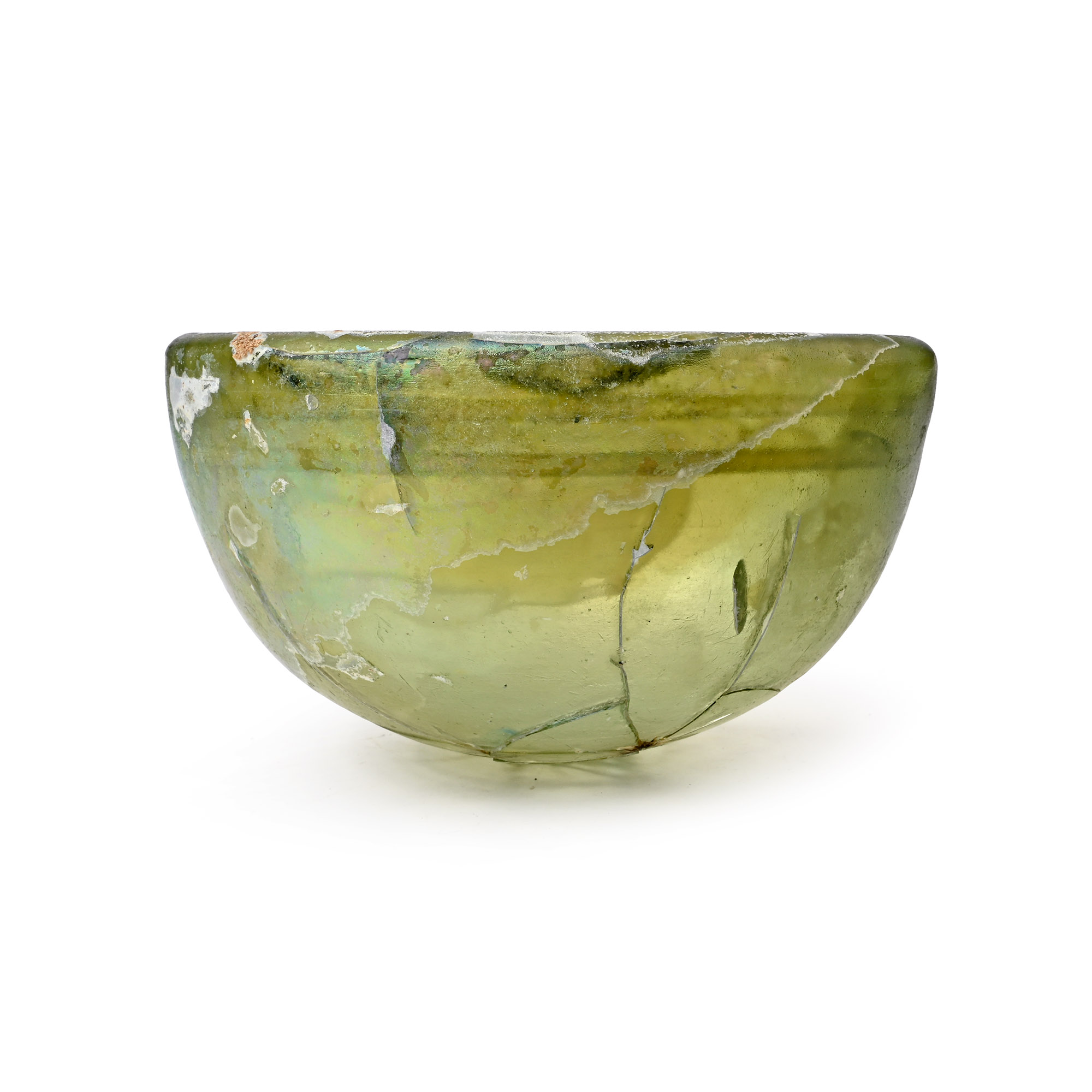
Roman Green Glass Bowl
150-50 B.C.
5 in. (280 grams, 12.8 cm wide).
Hemispherical body with a wheel-cut decoration on the inside rim.
ProvenanceFrom an important London, UK, collection 1980-2020.
LiteratureCf. Antonaras, A., Ancient Glass in the J.Paul Getty Museum, Malibu, 2025, p.84, no.61, for the type of grooved bowl.
FootnotesSuch bowls were mainly produced in the Eastern Mediterranean and diffused in Rome since the 2nd century B.C., when the sea was becoming a Mare Nostrum for the Res Publica. They were characterised by a hemispherical body with a round and convex bottom, but especially by concentric circular grooves.
CONDITIONTimeLine Auctions follows a vetting process to ensure the authenticity and legality of all items, reinforcing our commitment to integrity and responsible trading. Each antiquity, antique, and coin lot undergoes thorough examination by a vetting committee of at least ten external specialists, professional trade association members, scientists, and archaeologists: Our Vetting Process
AUCTIONS:
TimeLine is a leading auction house specialising in antiquities, ancient art, collectables, natural history, coins, medals, and books. Our auctions offer museums, collectors, historians, and enthusiasts the opportunity to acquire unique and historically significant pieces.
-
.jpg)
Roman Bronze Military Horse Harness Pendant Group
1st-4th century A.D.Sold for (Inc. bp): £124
Including ivy-leaf and other types, one with an attachment strap. 37 grams total, 41-65 mm
Ex German art market, 2000s. Acquired from an EU collector living in London. From the collection of a Surrey, UK, gentleman. -
.jpg)
Roman Garnet Gemstone with Portrait
Late 5th century A.D.Sold for (Inc. bp): £98
Ellipsoid type with dished underside, incuse-facing portrait bust, from a Constantinople garnet workshop. 1.22 grams, 14 mm
From the private collection of a European gentleman (1942-2024), formed since the 1970s. -
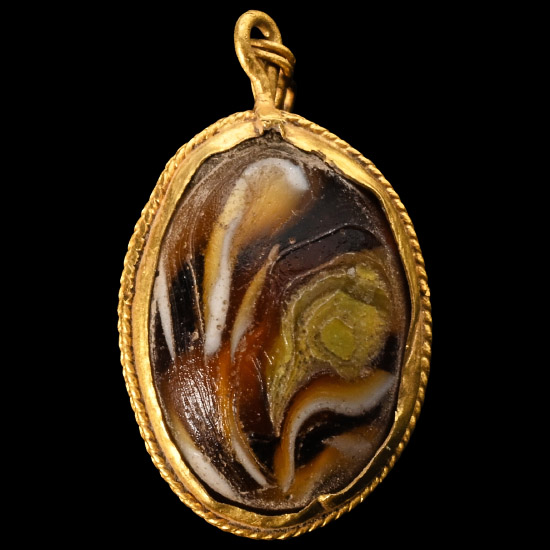
Roman Gold Pendant with Cabochon
1st-2nd century A.D.Sold for (Inc. bp): £247
With suspension loop and link, filigree fillet to the border, and an inset glass cabochon. 1.54 grams, 23 mm
Ex property of a European gentleman living in the UK; formerly in a private collection formed in the 1990s. Private collection, Suffolk, UK.
