
Loading, please wait...
LOT 0700
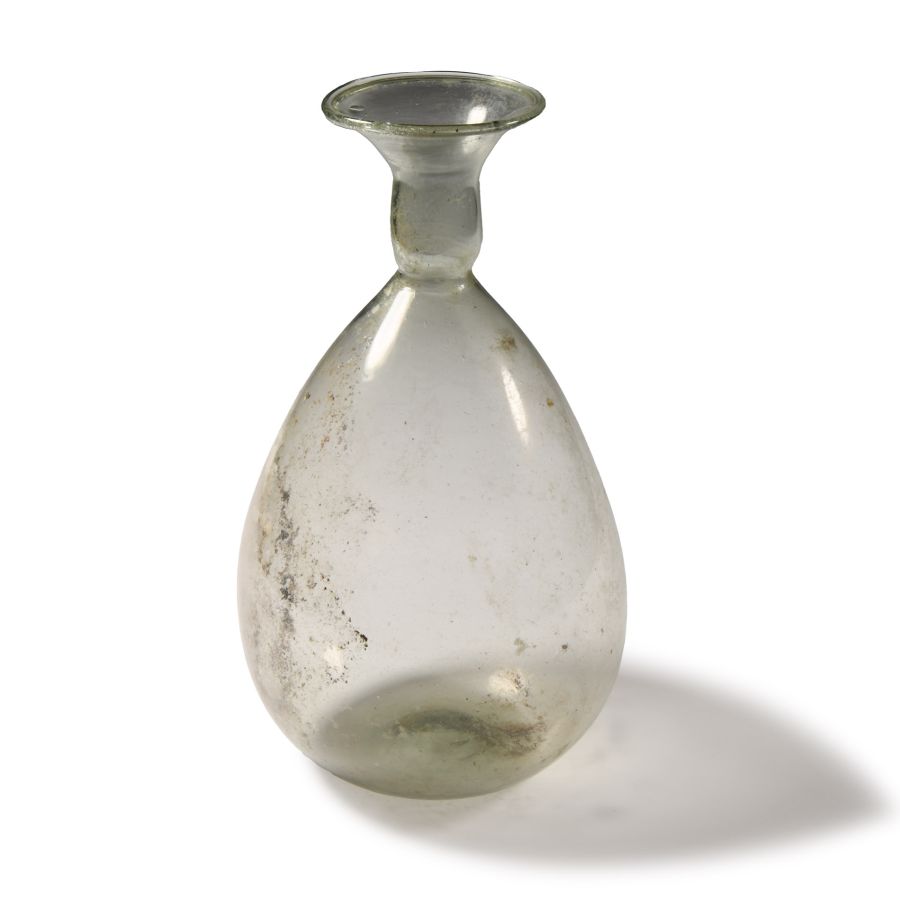
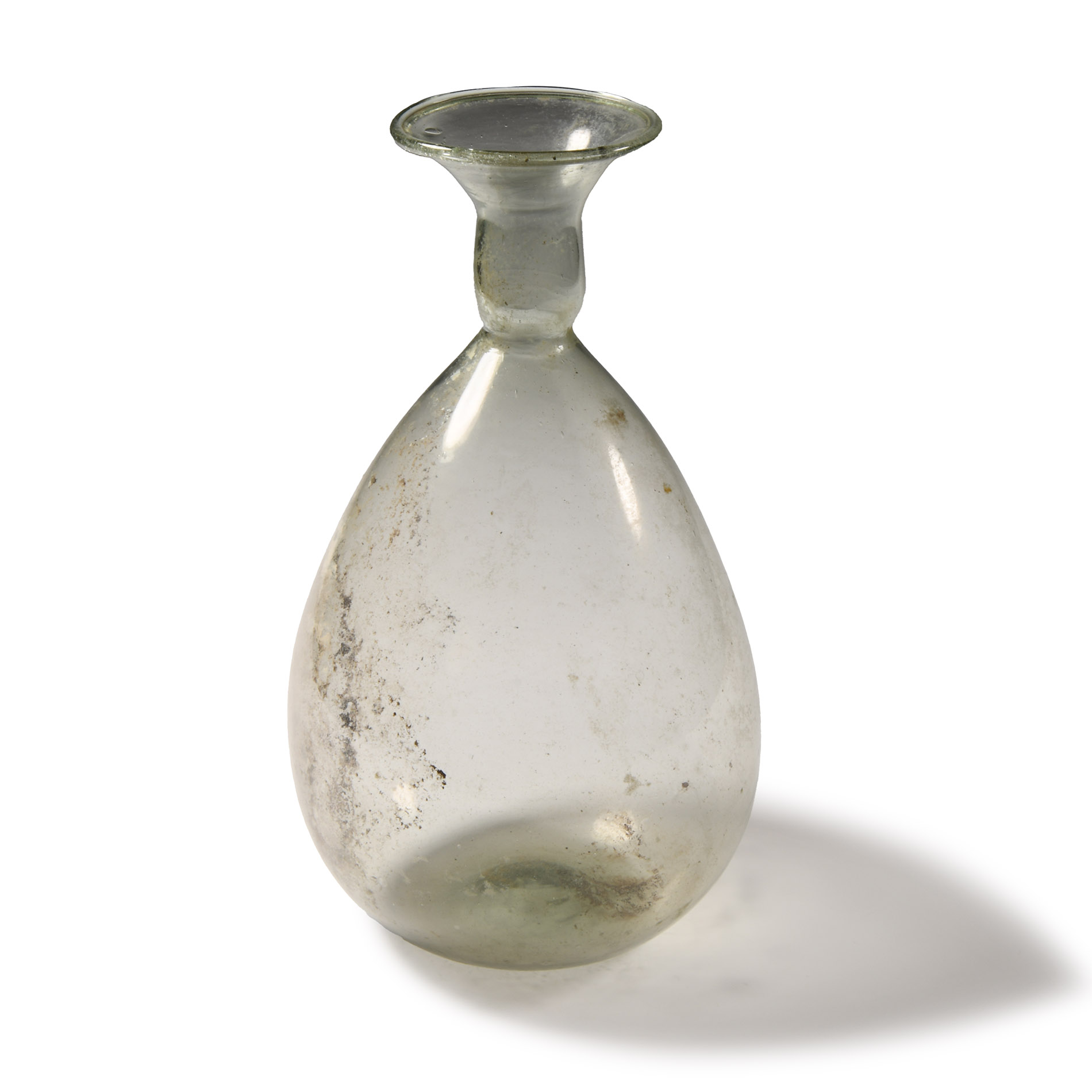
Roman Green Glass Bottle
2ND-4TH CENTURY A.D.
7 1/2 in. (85 grams, 19 cm high).
With large piriform body and dimpled base; funicular, waisted neck and rolled rim.
ProvenanceAcquired in the 1970s, thence by descent 2012.
Private UK collection, Cambridge, UK.
Property of an East Sussex, UK, gentleman.
TimeLine Auctions follows a vetting process to ensure the authenticity and legality of all items, reinforcing our commitment to integrity and responsible trading. Each antiquity, antique, and coin lot undergoes thorough examination by a vetting committee of at least ten external specialists, professional trade association members, scientists, and archaeologists: Our Vetting Process
AUCTIONS:
TimeLine is a leading auction house specialising in antiquities, ancient art, collectables, natural history, coins, medals, and books. Our auctions offer museums, collectors, historians, and enthusiasts the opportunity to acquire unique and historically significant pieces.
-
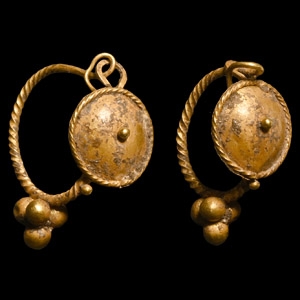
Roman Gold Earrings with Bosses
Circa 1st-2nd century A.D.Estimate: £400 - 600 (+bp*)
Opening Bid: £210
Matched pair of gold earrings each a twisted wire hoop with domed shield, central granule and filigree border, cluster of granules below. 1.01 grams total, 16-17 mm
From a collection of a London lady, acquired annually during 1990s-2000s. -
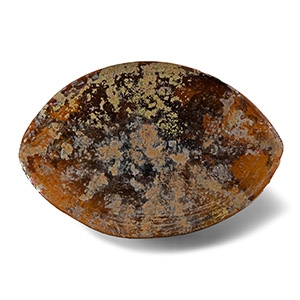
Roman Amber Glass Eye-Shaped Dish
1st-4th century A.D.Sold for (Inc. bp): £468
Shallow elliptical dish with stepped elliptical foot to base; iridescent surfaces. 194 grams, 21 cm wide
Acquired early 1990s. Ex private American collection; thence by descent. Private collection since 1998. -
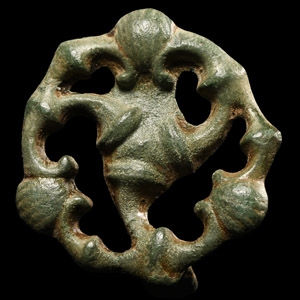
British Roman Military Bronze Plate Brooch with Scallop Shells and Trumpets
2nd-3rd century A.D.Sold for (Inc. bp): £111
The face moulded with a central motif of three trumpet heads all meeting at a triangular central point, in-between each outer trumpet motif is a scallop-shell like element; the reverse carry's a single rectangular lug for the spring and pin, and a single transverse rectangular tab to act as a catchplate, but appears to be unfinished. 10.8 grams, 35 mm
Found whilst searching with a metal detector near Kettlewell with Starbotton, North Yorkshire, UK, early 2022. The evidence of the manufacturing process makes this find a 'Find of Note', and has been designated by the British Museum's Portable Antiquities Scheme to be of Regional importance. Accompanied by a copy of the British Museum's Portable Antiquities Scheme (PAS) report no.SWYOR-A1B317.
Mackreth notes that this brooch is uncommon in Britain. This brooch directly parallels LIN-B8C6EB and no.11664 (Mackreth 2011, p.172-173, Type 7c, no.11664, p.115).
