
Loading, please wait...
LOT 0554
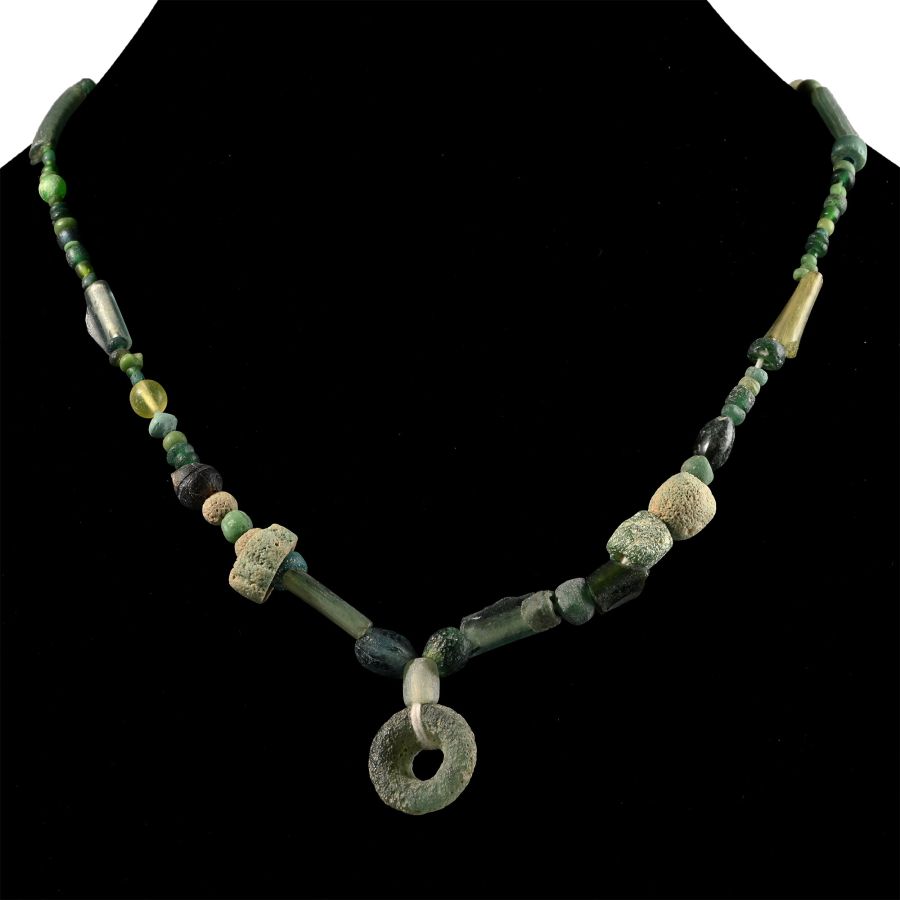
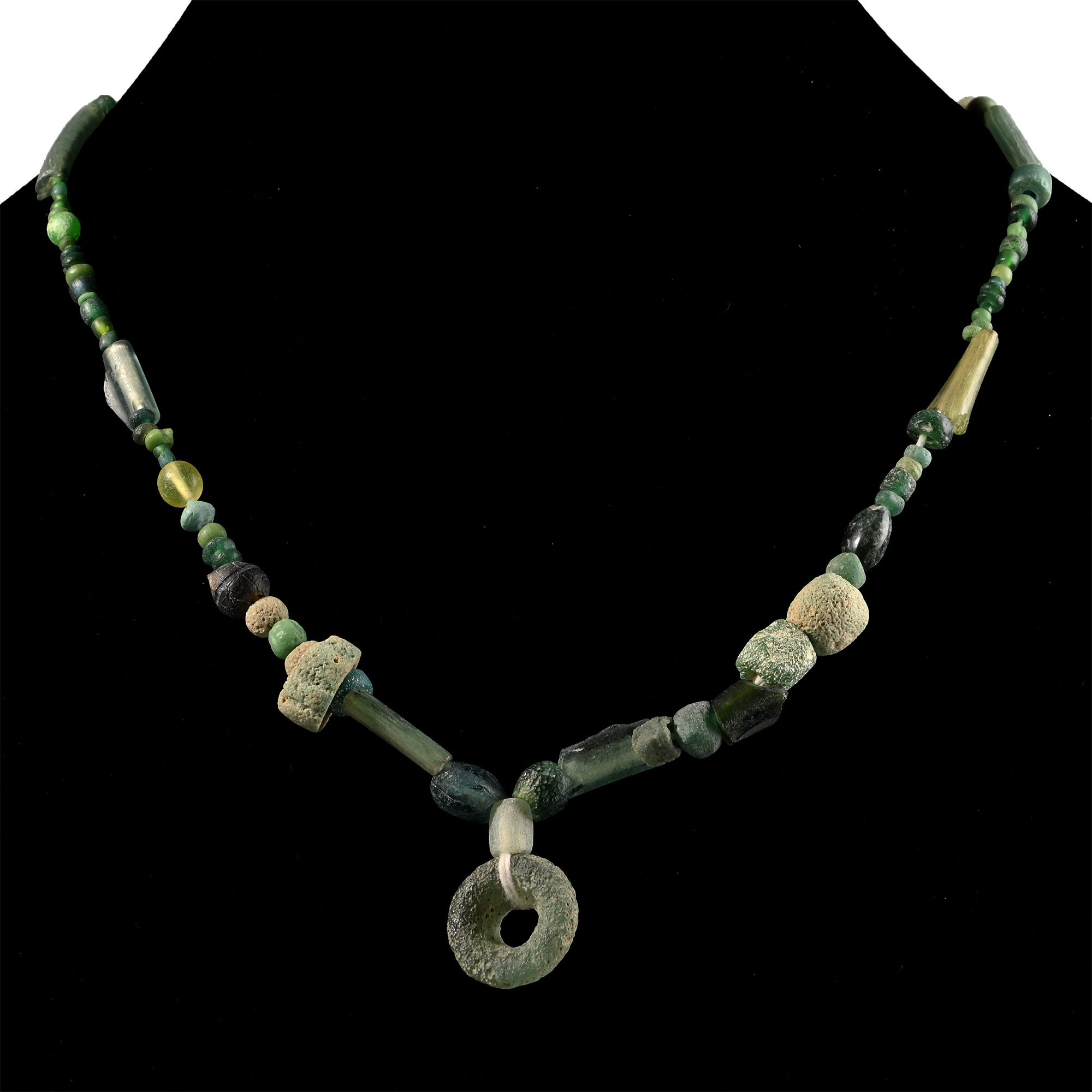
Roman Green Glass Bead Necklace String
1ST-4TH CENTURY A.D. AND LATER
16 1/8 in. (22.8 grams, 41 cm).
Composed of mixed beads including oblate, spherical, and other types, the central feature a large annular bead, restrung. [No Reserve]
ProvenanceAcquired in the 1990s.
Ex London, UK, collection.
TimeLine Auctions follows a vetting process to ensure the authenticity and legality of all items, reinforcing our commitment to integrity and responsible trading. Each antiquity, antique, and coin lot undergoes thorough examination by a vetting committee of at least ten external specialists, professional trade association members, scientists, and archaeologists: Our Vetting Process
AUCTIONS:
TimeLine is a leading auction house specialising in antiquities, ancient art, collectables, natural history, coins, medals, and books. Our auctions offer museums, collectors, historians, and enthusiasts the opportunity to acquire unique and historically significant pieces.
-
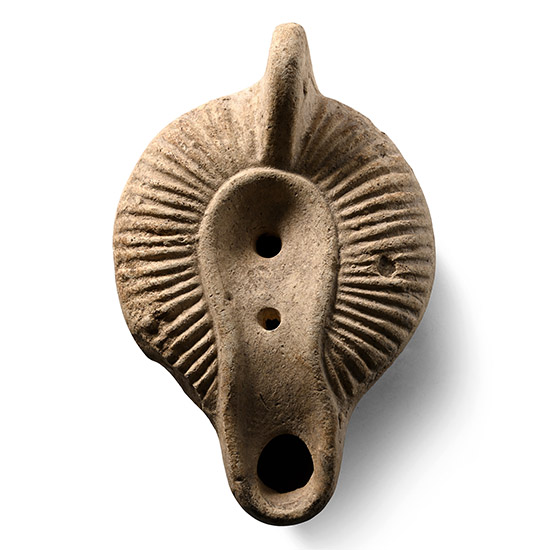
Roman African Terracotta Oil Lamp with Radiating Ridges
Circa 2nd-3rd century A.D.Sold for (Inc. bp): £130
Wide channel extending from the discus to the nozzle surrounded by raised linear decoration, lug handle to the rear, inked collector's number 'L 132' on the base. 152 grams, 12.7 cm
Ex important German collection, 1960-1990. -
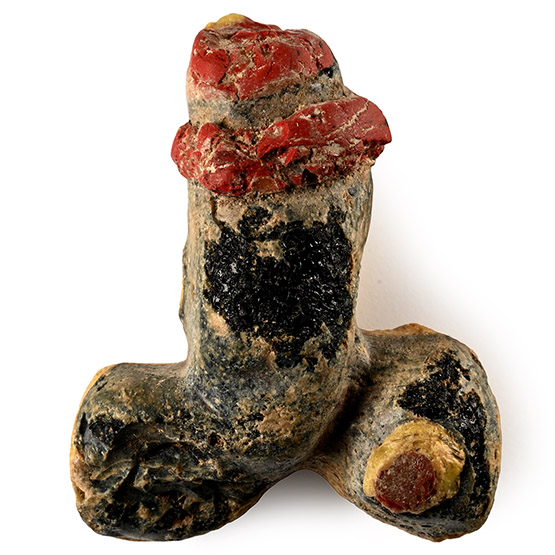
Roman Glass Phallic Amulet
1st century B.C.-1st century A.D.Sold for (Inc. bp): £468
Modelled in the round with applied red-glass collar, pierced through the shaft for suspension. 11.4 grams, 32 mm
Acquired in the mid 1980s-1990s. Private collection, Switzerland, thence by descent. Private collection, since the late 1990s.
In the Roman world, the phallus was a symbol of luck or fertility, and it was believed to have apotropaic functions. Pendants, amulets and small objects were worn by all sorts of people as symbols of protection, especially by young children, according to Varro and Pliny the Elder. The phallus is also commonly found on reliefs, frescoes and lamps from the Graeco-Roman world. -
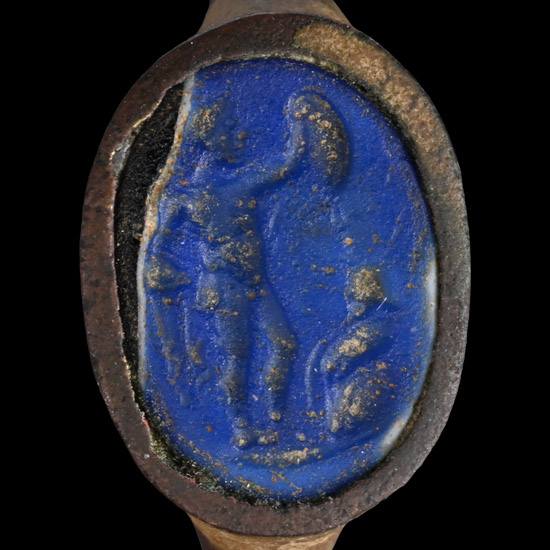
Roman Bronze Ring with Naked Male Gemstone
2nd-3rd century A.D.Sold for (Inc. bp): £156
D-section hoop widening at the shoulders, tall oval bezel set with blue glass intaglio with a standing nude male, bow behind back, holding a wine skin in upraised hand. 4.33 grams, 21.61 mm overall, 16.10 mm internal diameter (approximate size British K, USA 5 1/4, Europe 9.95, Japan 9)
Ex property of a gentleman; from a Mayfair, London, UK, gallery. Private collection, Suffolk, UK.
