
Loading, please wait...
LOT 0944
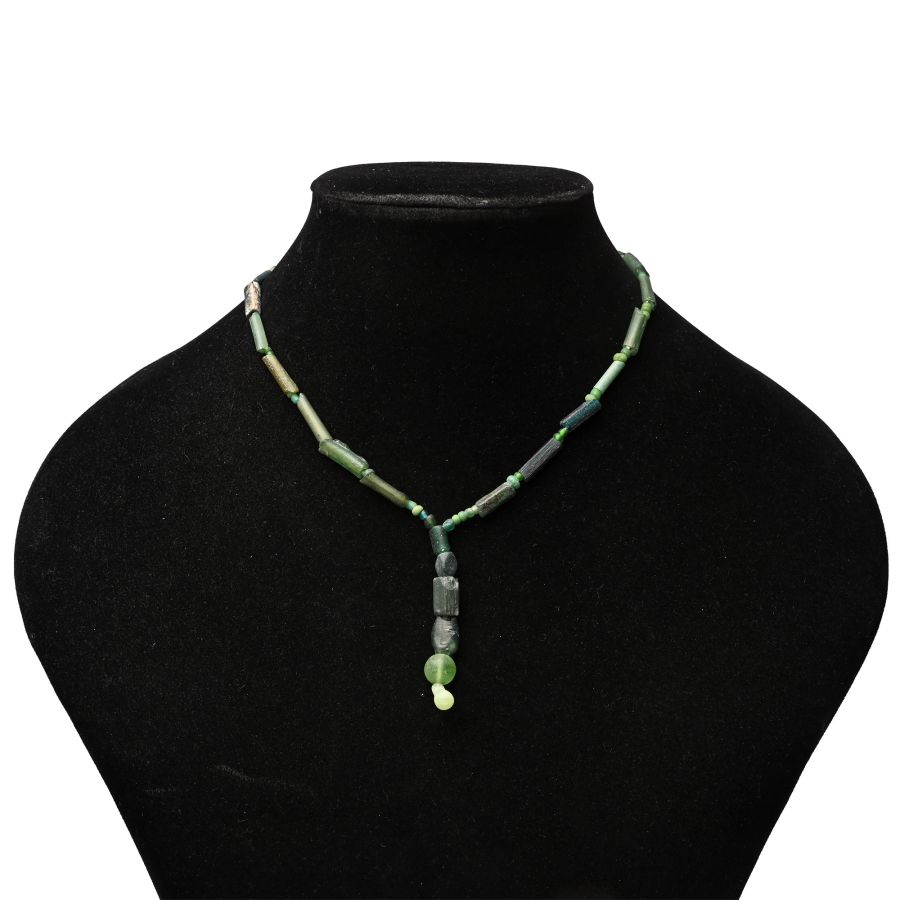
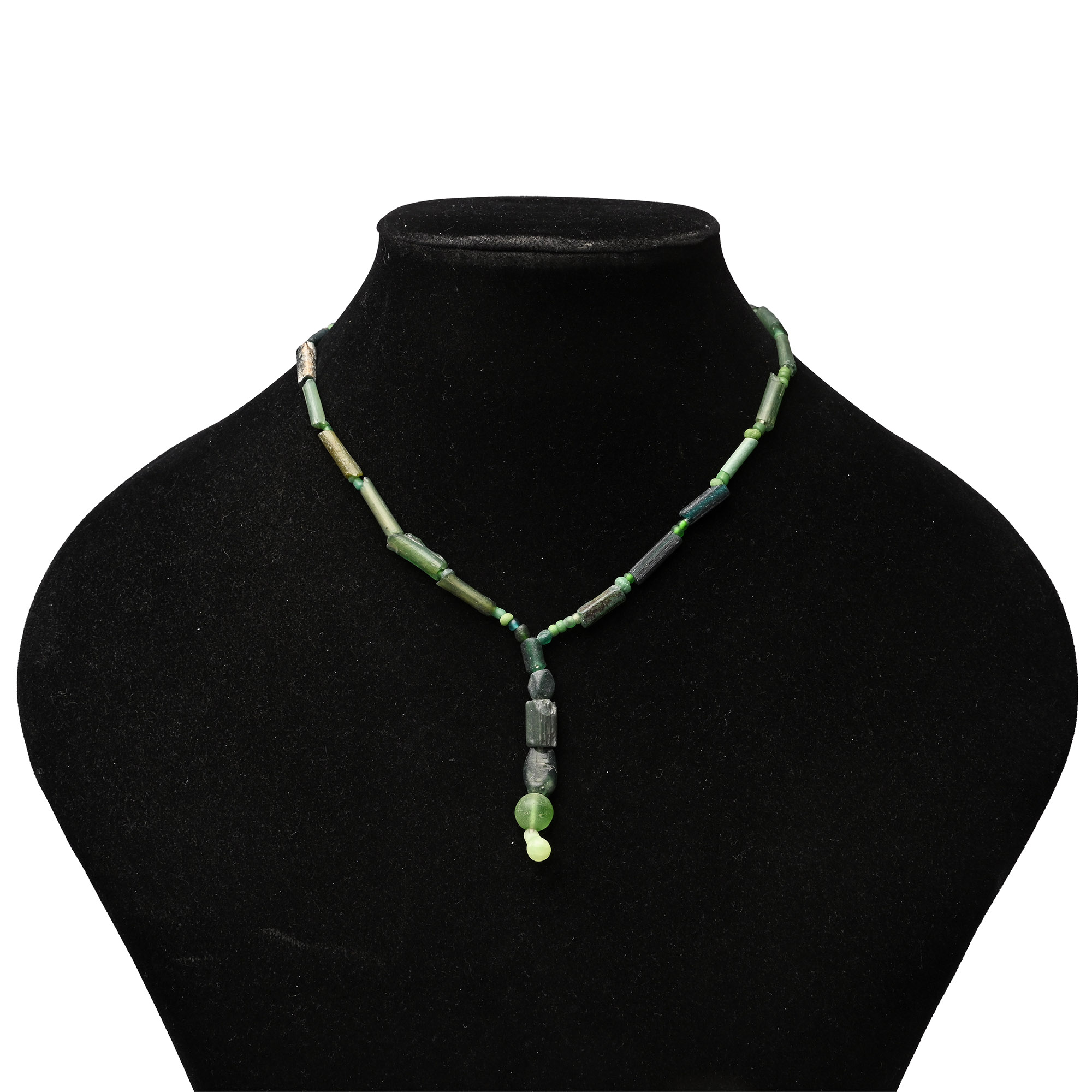
Roman Green Glass Bead Necklace String
1ST-4TH CENTURY A.D. AND LATER
12 3/4 in. (14.6 grams, 32.5 cm).
Composed of alternating tubular and small oblate beads, larger beads as a central feature; restrung. [No Reserve]
ProvenanceFrom the London, UK, art market in the 1990s.
This lot is accompanied by an illustrated lot declaration signed by the Head of the Antiquities Department, Dr Raffaele D'Amato.
For similar green Roman beads see Then-Obluska, J., ‘Beads and pendants from the Hellenistic to early Byzantine Red Sea port of Berenike, Egypt, Seasons 2014 and 2015’ in Polish Archaeology in the Mediterranean, 27/1, 2018, pp.203–234, figs.3a, 4,5,7.
FootnotesIn the Roman period there was a strong formal and chromatic diversity of glass beads used for necklaces and bracelets. The most common beads in forms were small biconical (lenticular), barrel-shaped, spherical and annular; the most common colours were dark blue, followed by green and yellow. The succession of glass beads often imitates jewellery made of costly materials (gold, silver, semi-precious and precious stones).
CONDITIONTimeLine Auctions follows a vetting process to ensure the authenticity and legality of all items, reinforcing our commitment to integrity and responsible trading. Each antiquity, antique, and coin lot undergoes thorough examination by a vetting committee of at least ten external specialists, professional trade association members, scientists, and archaeologists: Our Vetting Process
AUCTIONS:
TimeLine is a leading auction house specialising in antiquities, ancient art, collectables, natural history, coins, medals, and books. Our auctions offer museums, collectors, historians, and enthusiasts the opportunity to acquire unique and historically significant pieces.
-
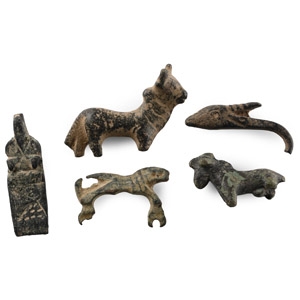
Roman Bronze Animal Artefact Group
1st-4th century A.D.Sold for (Inc. bp): £169
Including running hound, ox, horse and other types. 78 grams total, 32-47 mm
Ex German art market, 2000s. Acquired from an EU collector living in London. From the collection of a Surrey, UK, gentleman. This lot is accompanied by an illustrated lot declaration signed by the Head of the Antiquities Department, Dr Raffaele D'Amato. -
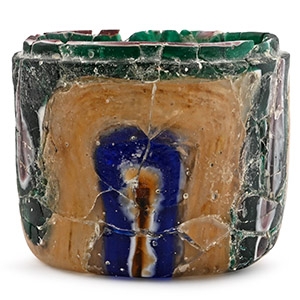
Roman Banded Glass Pyxis
1st century A.D.Estimate: £500 - 700 (‡+bp*)
Opening Bid: £250
Drum-shaped in profile with stepped rim; repaired. 87 grams, 60 mm
Acquired in the late 1980s. Private collection, thence by descent. Private collection, since the late 1990s. This lot is accompanied by an illustrated lot declaration signed by the Head of the Antiquities Department, Dr Raffaele D'Amato. -
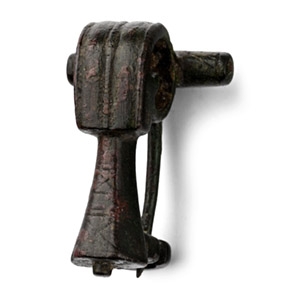
Roman Bronze Knee Brooch
2nd century A.D.Sold for (Inc. bp): £59
Comprising a chord in a horizontal sleeve with pin to the rear, deep scrolled bow with spurs to the reverse, scooped lower end and trapezoidal foot, hooked catch to reverse; light linear ornament to flared shank. 20.5 grams, 35 mm
Found Dorchester, Dorset, UK, in 1971. Ex UK art market. From the private collection of a Leicestershire, UK, gentleman. This lot is accompanied by an illustrated lot declaration signed by the Head of the Antiquities Department, Dr Raffaele D'Amato.
