
Loading, please wait...

LOT 0675
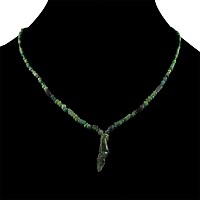
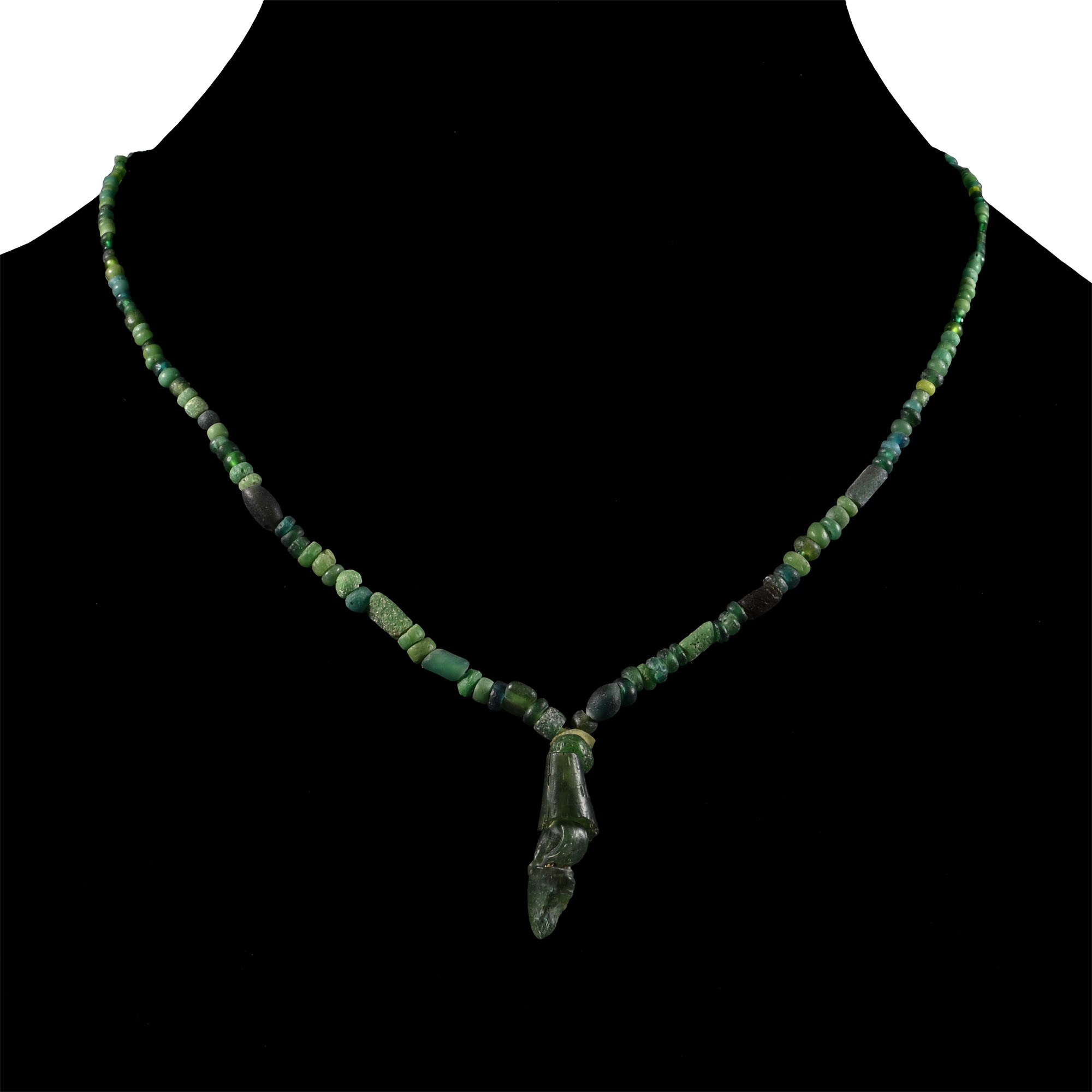
Roman Green Glass Bead Necklace String
1ST-4TH CENTURY A.D. AND LATER
14 1/8 in. (9.7 grams, 36 cm).
Composed mainly of oblate and annular beads, restrung to a Y-shape with irregular feature beads. [No Reserve]
ProvenanceAcquired 1980-2015.
Ex Abelita family collection.
This lot is accompanied by an illustrated lot declaration signed by the Head of the Antiquities Department, Dr Raffaele D’Amato.
TimeLine Auctions follows a vetting process to ensure the authenticity and legality of all items, reinforcing our commitment to integrity and responsible trading. Each antiquity, antique, and coin lot undergoes thorough examination by a vetting committee of at least ten external specialists, professional trade association members, scientists, and archaeologists: Our Vetting Process
AUCTIONS:
TimeLine is a leading auction house specialising in antiquities, ancient art, collectables, natural history, coins, medals, and books. Our auctions offer museums, collectors, historians, and enthusiasts the opportunity to acquire unique and historically significant pieces.
-
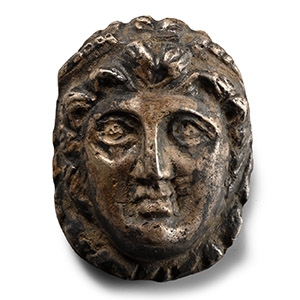
Roman Silver Applique Mask
2nd-4th century A.D.Sold for (Inc. bp): £247
Appliqué with repoussé detailing, mask of Alexander the Great or Dionysus with diadem to his brow. 3.77 grams, 22 mm
Acquired on the London art market in the late 1980s-1990s. From the family collection of an East London, UK, gentleman. This lot is accompanied by an illustrated lot declaration signed by the Head of the Antiquities Department, Dr Raffaele D’Amato.
Similar applications in bronze or silver (sometimes even in gold) decorated the triclinia of rich aristocrats, or the precious furnishings in fine wood of the furniture of the Villas. -
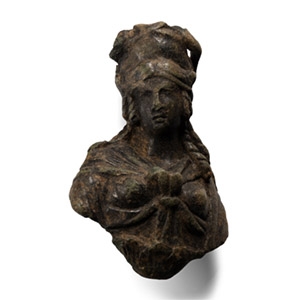
Roman Bronze Bust of Isis
2nd-3rd century A.D.Sold for (Inc. bp): £338
Modelled in the round with tall diadem, hair braided and hanging in hanks to the shoulders, palla tied between the breasts; hollow to the reverse. 58 grams, 60 mm
Found North Yorkshire, UK, circa 2005. Acquired UK, circa 2009. Ian Wilkinson collection, Nottinghamshire, UK, formed since 1985. This lot is accompanied by an illustrated lot declaration signed by the Head of the Antiquities Department, Dr Raffaele D’Amato. -
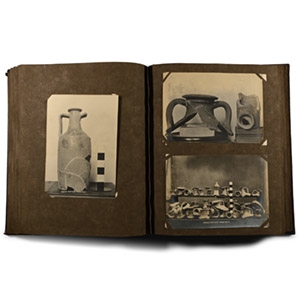
Archaeologist's Photograph Album
1920s A.D. and earlierSold for (Inc. bp): £845
Containing numerous original photographs of archaeological digs, found artefacts, etc, including digs at Roman sites such as Hadrian's Wall, Colchester, Templeborough, Silchester, Viroconium, Mancunium, Wilderspool and Holt and published images from the Ny Carlsberg Glyptek, Copenhagen; mostly with handwritten identification; with a photograph of the archaeologist T. May M.A. F.S.A. at Richborough and dated 1926 and Wilderspool - possibly the owner of the book; a rare archive of the 1920s British archaeology. 2.03 kg, 26.3 x 20.5 cm
Acquired on the English art market circa 2017. Ian Wilkinson collection, Nottinghamshire, UK, formed since 1985. This lot is accompanied by an illustrated lot declaration signed by the Head of the Antiquities Department, Dr Raffaele D’Amato.
The Roman furnaces at Wilderspool were excavated in 1905; the photographs are consistent in their appearance with that date.
