
Loading, please wait...
LOT 0680
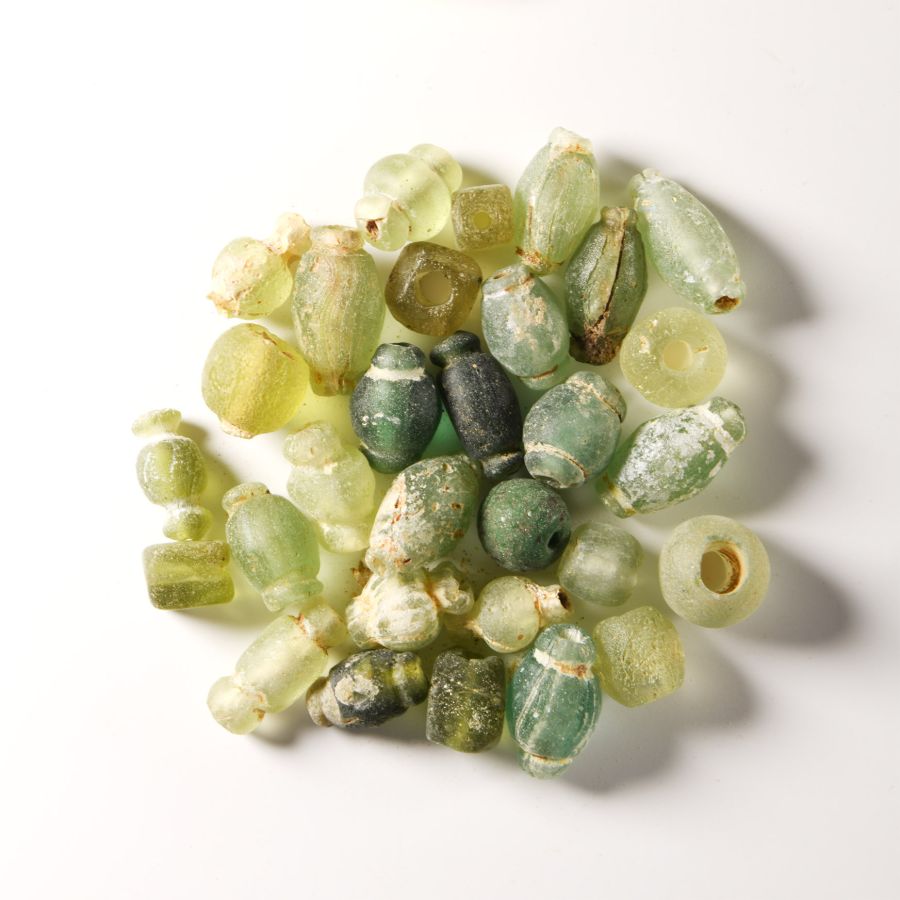
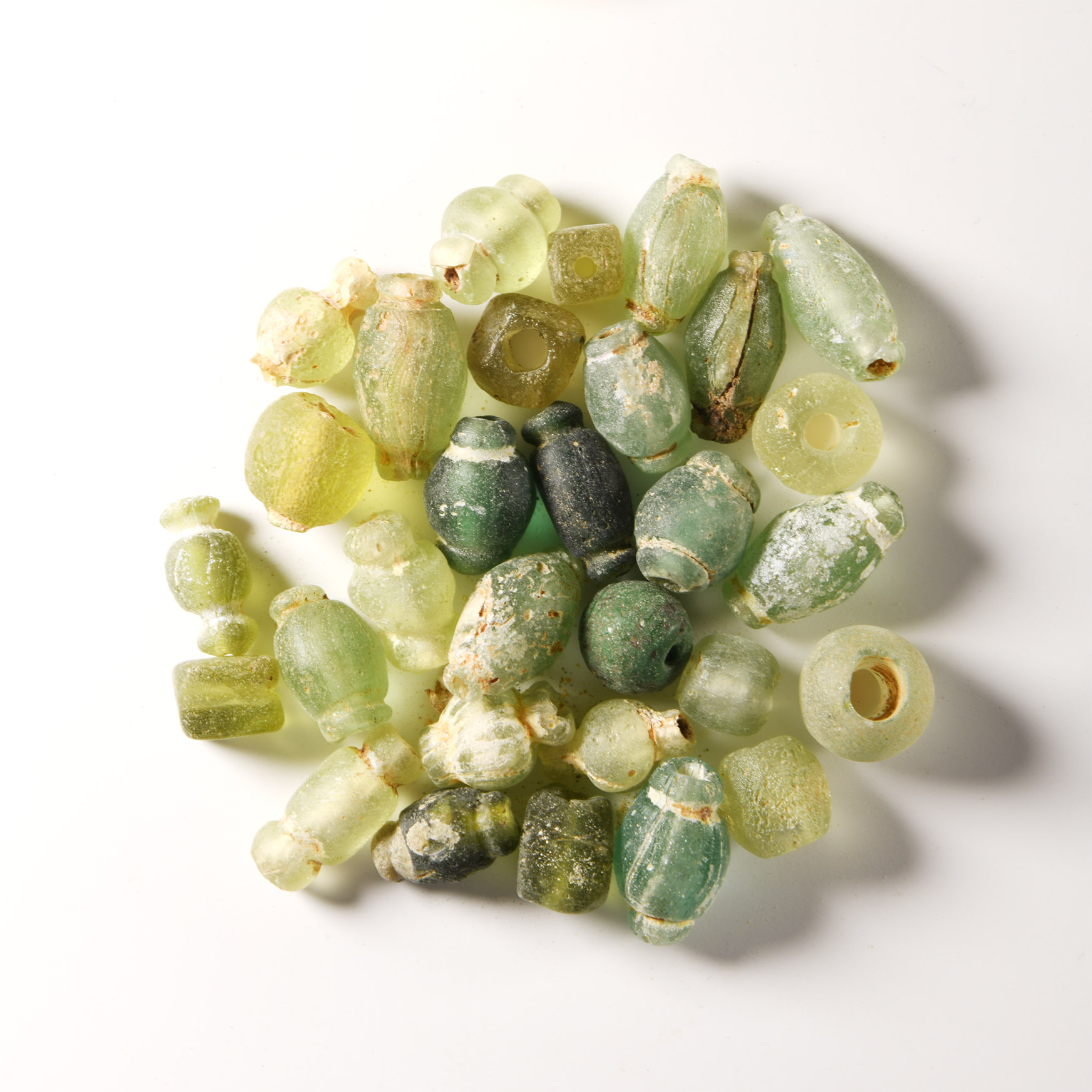
Roman Green Glass Bead Collection
LATE 1ST MILLENNIUM B.C. AND LATER
3/8 - 7/8 in. (94 grams total, 11-23 mm).
Comprising thirty lampworked green glass rounded and collared beads. [30]
ProvenanceUK gallery, early 2000s.
CONDITIONTimeLine Auctions follows a vetting process to ensure the authenticity and legality of all items, reinforcing our commitment to integrity and responsible trading. Each antiquity, antique, and coin lot undergoes thorough examination by a vetting committee of at least ten external specialists, professional trade association members, scientists, and archaeologists: Our Vetting Process
AUCTIONS:
TimeLine is a leading auction house specialising in antiquities, ancient art, collectables, natural history, coins, medals, and books. Our auctions offer museums, collectors, historians, and enthusiasts the opportunity to acquire unique and historically significant pieces.
-
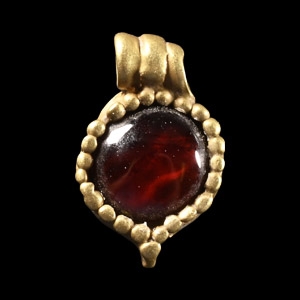
Roman Gold Pendant with Garnet
Circa 4th-5th century A.D.Sold for (Inc. bp): £286
Ribbed loop supporting a discoid plaque with beaded wire rim, inset garnet cabochon. 0.20 grams, 8.46 mm
From a late Japanese specialist collector, 1970-2000s. -
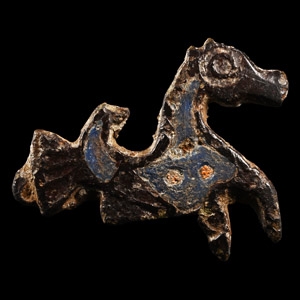
Romano-British Enamelled Bronze Hippocampus Brooch
Circa 2nd century A.D.Sold for (Inc. bp): £130
With low-relief eye and tail detailing, cells filled with enamel and roundels in contrasting colour; remains of pun-lug and catch to the reverse. 5.31 grams, 30.69 mm
Found Southern England. Acquired on the UK art market in the 1980s. From an East Anglian private collection. -
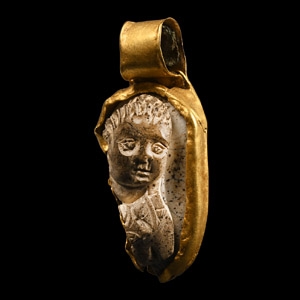
Roman Gold Pendant with Cameo
Circa 1st-2nd century A.D.Sold for (Inc. bp): £562
Suspension loop to one edge, the stone cameo fragment portraying a young boy. 3.84 grams, 30 mm
Acquired 1990s-early 2000s. East Anglian private collection.
