
Loading, please wait...
LOT 0841
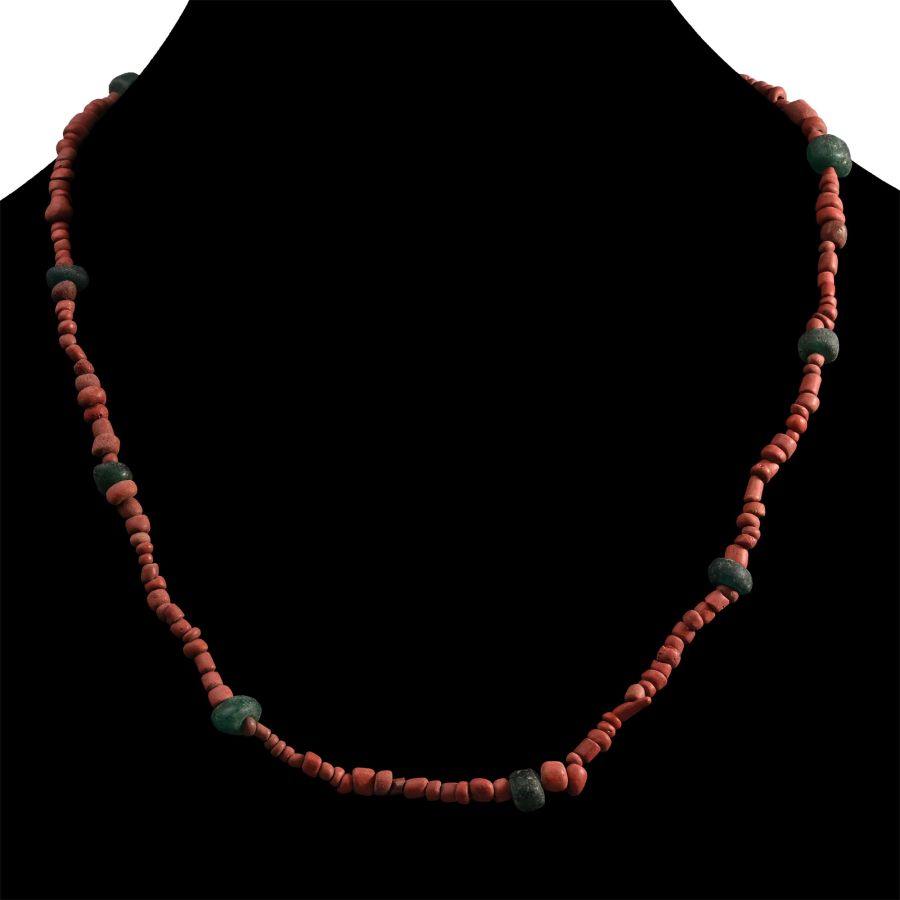
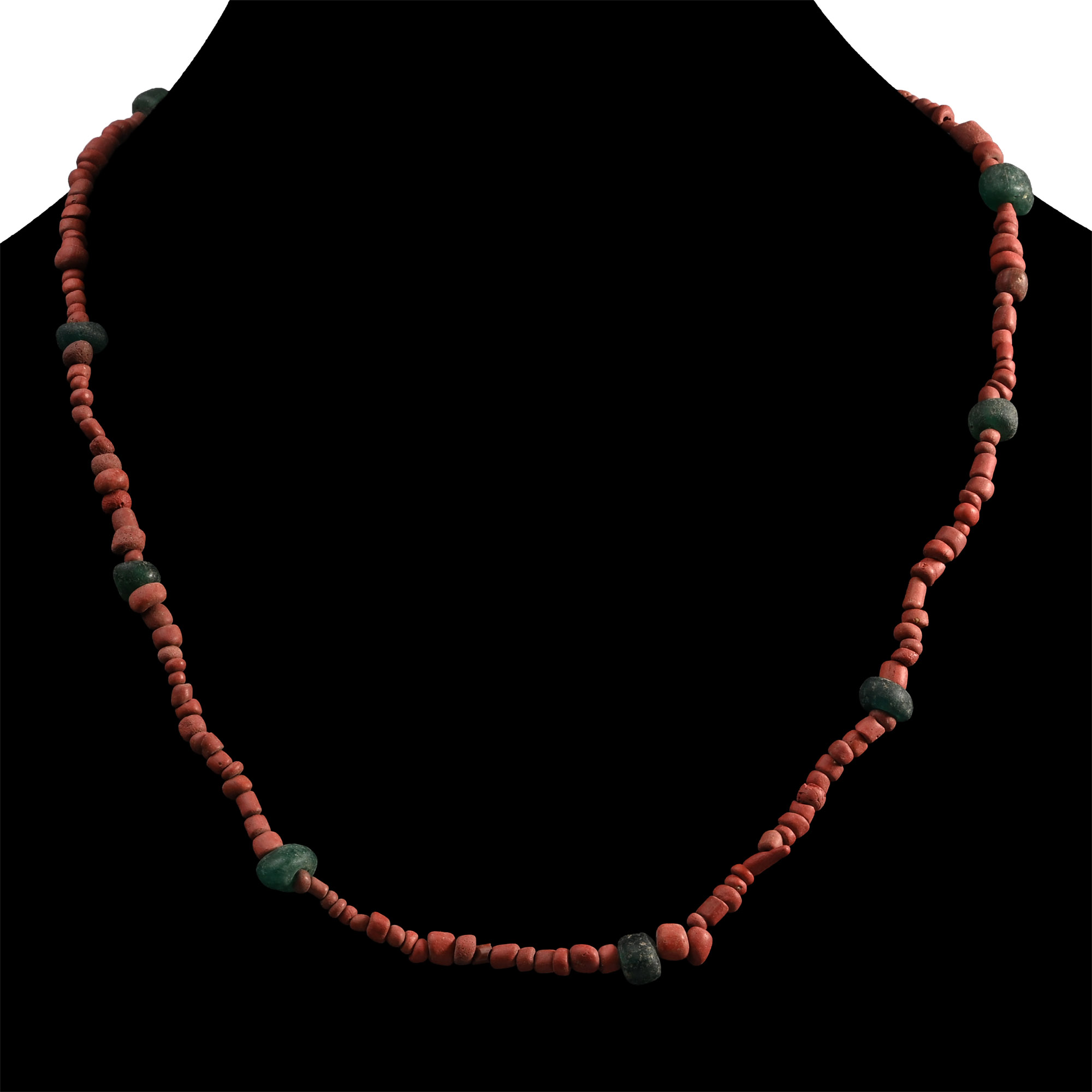
Roman Green and Red Glass Bead Necklace String
1ST-4TH CENTURY A.D. AND LATER
24 in. (24.9 grams, 61 cm long).
Composed of mainly annular and oblate red glass beads interspersed with larger green glass beads; restrung. [No Reserve]
ProvenanceFrom the London, UK, art market in the 1990s.
This lot is accompanied by an illustrated lot declaration signed by the Head of the Antiquities Department, Dr Raffaele D'Amato.
For examples of similar green Roman beads see Then-Obluska, J., ‘Beads and pendants from the Hellenistic to early Byzantine Red Sea port of Berenike, Egypt, Seasons 2014 and 2015’ in Polish Archaeology in the Mediterranean, pp.203–234, figs.3a, 4,5,7; for examples of similar red beads fig.4 nos.7-8-9 and 16-23.
FootnotesIn the Roman period there was a strong formal and chromatic diversity of glass beads used for necklaces and bracelets. The most common beads in forms were small biconical (lenticular), barrel-shaped, spherical and annular; the most common colours were dark blue, followed by green and yellow, and red. The succession of glass beads often imitates jewellery made of costly materials (gold, silver, semi-precious and precious stones).
CONDITIONTimeLine Auctions follows a vetting process to ensure the authenticity and legality of all items, reinforcing our commitment to integrity and responsible trading. Each antiquity, antique, and coin lot undergoes thorough examination by a vetting committee of at least ten external specialists, professional trade association members, scientists, and archaeologists: Our Vetting Process
AUCTIONS:
TimeLine is a leading auction house specialising in antiquities, ancient art, collectables, natural history, coins, medals, and books. Our auctions offer museums, collectors, historians, and enthusiasts the opportunity to acquire unique and historically significant pieces.
-
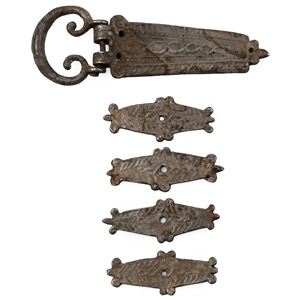
Roman Silver Military Belt Buckle with Mounts
2nd-3rd century A.D.Sold for (Inc. bp): £234
Comprising: triangular buckle plate with median guilloche between hatched bands, scrolled loop; four lozengiform plaques, each with hatched border and median guilloche. 32.6 grams total, 36-79 mm
Ex German art market, 2000s. Acquired from an EU collector living in London. From the collection of a Surrey, UK, gentleman. This lot is accompanied by an illustrated lot declaration signed by the Head of the Antiquities Department, Dr Raffaele D'Amato. -
.jpg)
Roman Bronze Trumpet Whorl Brooch
Circa 2nd century A.D.Sold for (Inc. bp): £104
S-shaped La Tène scroll with trumpet and bulb detailing, catch and pin to the reverse. 8.89 grams, 33 mm
From the collection of a Suffolk, UK, gentleman, established from the early 2000s. This lot is accompanied by an illustrated lot declaration signed by the Head of the Antiquities Department, Dr Raffaele D'Amato. -
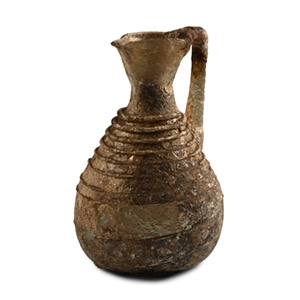
Roman Glass Jug with Trails
4th-5th century A.D.Estimate: £700 - 900 (‡+bp*)
Opening Bid: £250
A small pale yellow collared globular jug with short neck, angular ribbon handle with two narrow prominent ribs, folded upper attachment to the cylindrical neck, several horizontal lines on the globular body, trefoil mouth. 32 grams, 74 mm
with H.A.C., Basel, prior 1999. This lot is accompanied by an illustrated lot declaration signed by the Head of the Antiquities Department, Dr Raffaele D’Amato. This lot is accompanied by an illustrated lot declaration signed by the Head of the Antiquities Department, Dr Raffaele D'Amato.
These globular jugs were typical of the Eastern Mediterranean in the late Roman period. Ornamental threads were decorating the body, and the employment of these jugs was often similar to those of pilgrim flasks, destined to collect oil and water from early Christian sanctuaries.
