
Loading, please wait...
LOT 0162
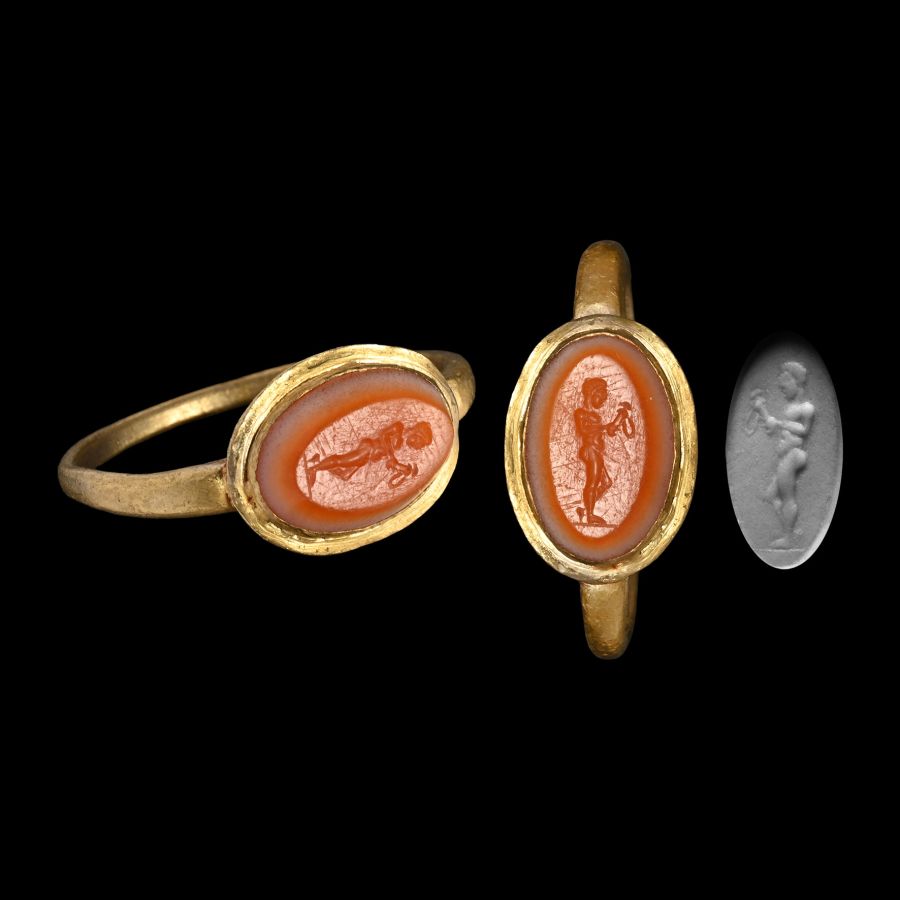
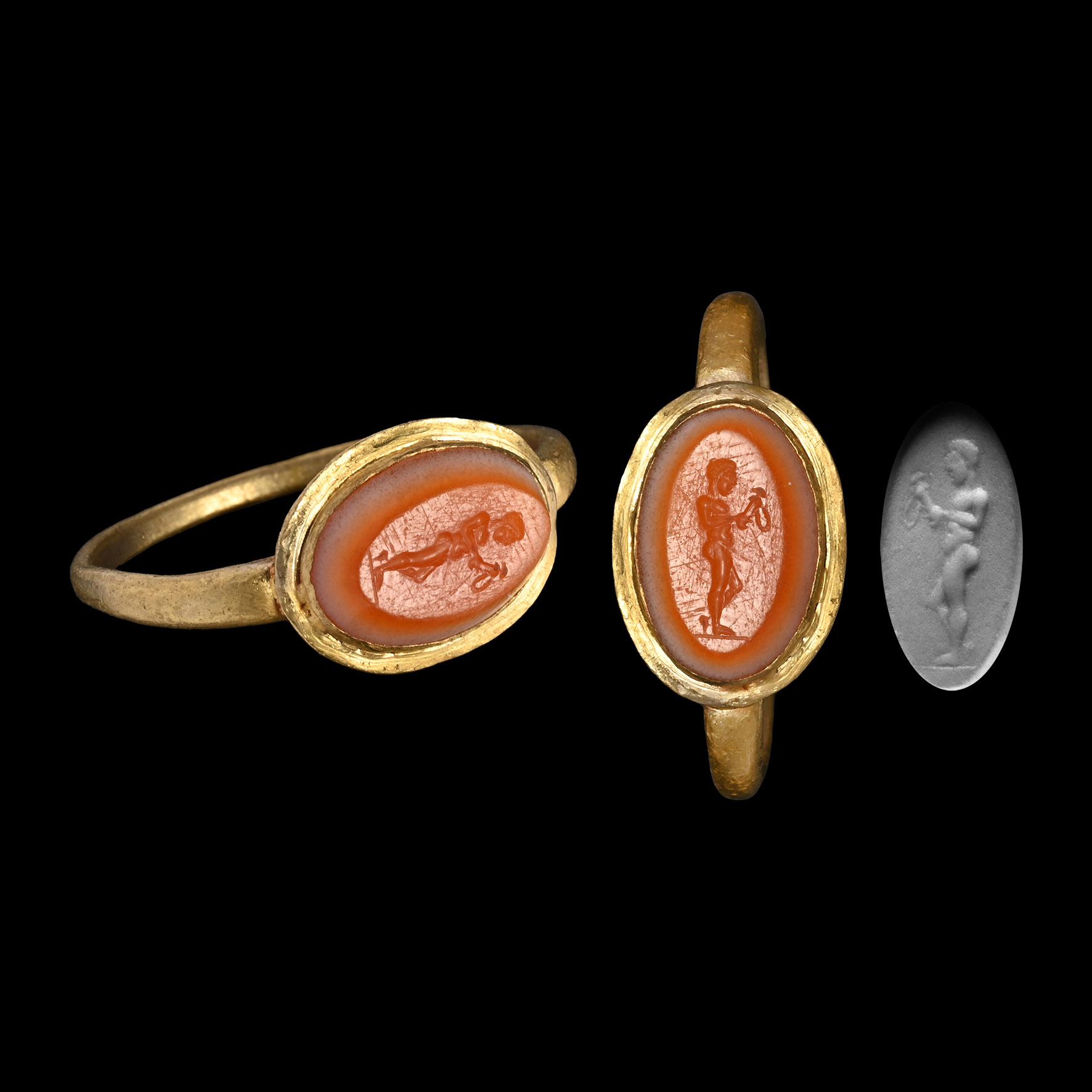
Roman Gold Ring with Theseus Gemstone
1ST CENTURY A.D.
1 in. (3.79 grams, 24.29 mm overall, 21.62 mm internal diameter (approximate size British O, USA 7, Europe 14.98, Japan 14)).
With flange rim to the ellipsoid bezel, inset banded agate gemstone, intaglio Theseus standing nude with a sword.
ProvenanceFrom a late Japanese specialist collector, 1970-2000s.
This lot has been checked against the Interpol Database of stolen works of art and is accompanied by search certificate number no.11862-206980.
Cf. Chadour, A.B., Rings. The Alice and Louis Koch Collection, volume I, Leeds, 1994, item 204, for type.
CONDITIONTimeLine Auctions follows a vetting process to ensure the authenticity and legality of all items, reinforcing our commitment to integrity and responsible trading. Each antiquity, antique, and coin lot undergoes thorough examination by a vetting committee of at least ten external specialists, professional trade association members, scientists, and archaeologists: Our Vetting Process
AUCTIONS:
TimeLine is a leading auction house specialising in antiquities, ancient art, collectables, natural history, coins, medals, and books. Our auctions offer museums, collectors, historians, and enthusiasts the opportunity to acquire unique and historically significant pieces.
LOT 0162
Roman Gold Ring with Theseus Gemstone
Estimate £3,000 - 4,000€3,480 - 4,640 (for guidance only)$4,050 - 5,400 (for guidance only)
-
Roman Terracotta Foot Lamp
2nd century A.D.Sold for (Inc. bp): £3,380
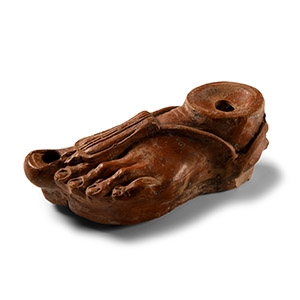
Mould-made and shaped as a sandaled left foot, filling-hole surrounded by a ridge in the ankle area, the sandal with two leather straps tied together near the ankle, wick-hole in the big toe; inscription 'ƩΑΛΣΙϹ' to the base, heel chipped. 112 grams, 12.2 cm
With Gorny & Mosch, Auction 194, 14 December 2010, lot 505. This lot has been checked against the Interpol Database of stolen works of art and is accompanied by search certificate number no.11799-206830.
This lamp belongs to a type of plastic lamp made in Anatolia and widespread throughout the Eastern Empire. The sandaled foot was part of the classification of plastic lamps dedicated to the representation of the human body. These lamps were the luxuries of the poor, being brought to temples as votive offerings, however some took their place in the domestic lararia, or were kept by children as playthings. -
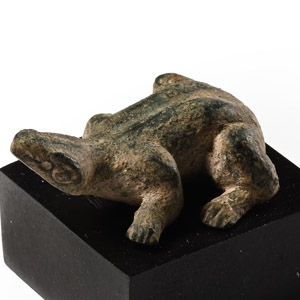
Romano Bronze Standing Frog Statuette
1st-4th century A.D.Estimate: £200 - 300 (+bp*)
Opening Bid: £111
Modelled in the round with naturalistic detailing, with head raised. 27 grams, 33 mm
‘The Ancient Menagerie Collection’ formerly the property of a Cambridgeshire lady, collected since the 1990s and acquired from auctions and dealers throughout Europe and the USA, now ex London collection. -
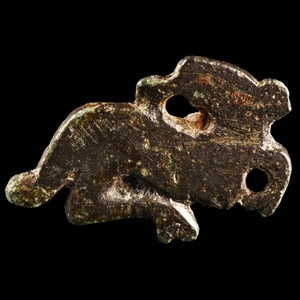
Roman Bronze Hare Plate Brooch
2nd century A.D.Sold for (Inc. bp): £20
With silvered finish, legs extended and head reversed, pin-lug and catch to the reverse. 6.9 grams, 31 mm
Ex DRG Coins and Antiquities, Essex, UK. Ex private Merseyside, UK, collection.
