
Loading, please wait...
LOT 0203
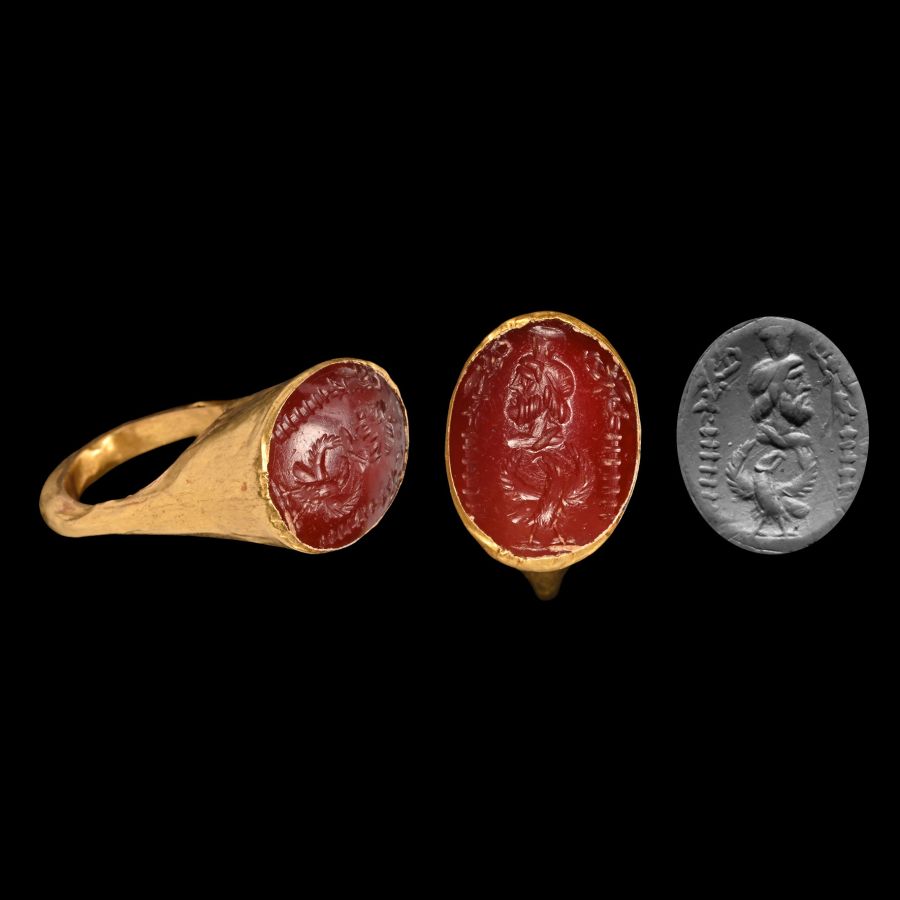
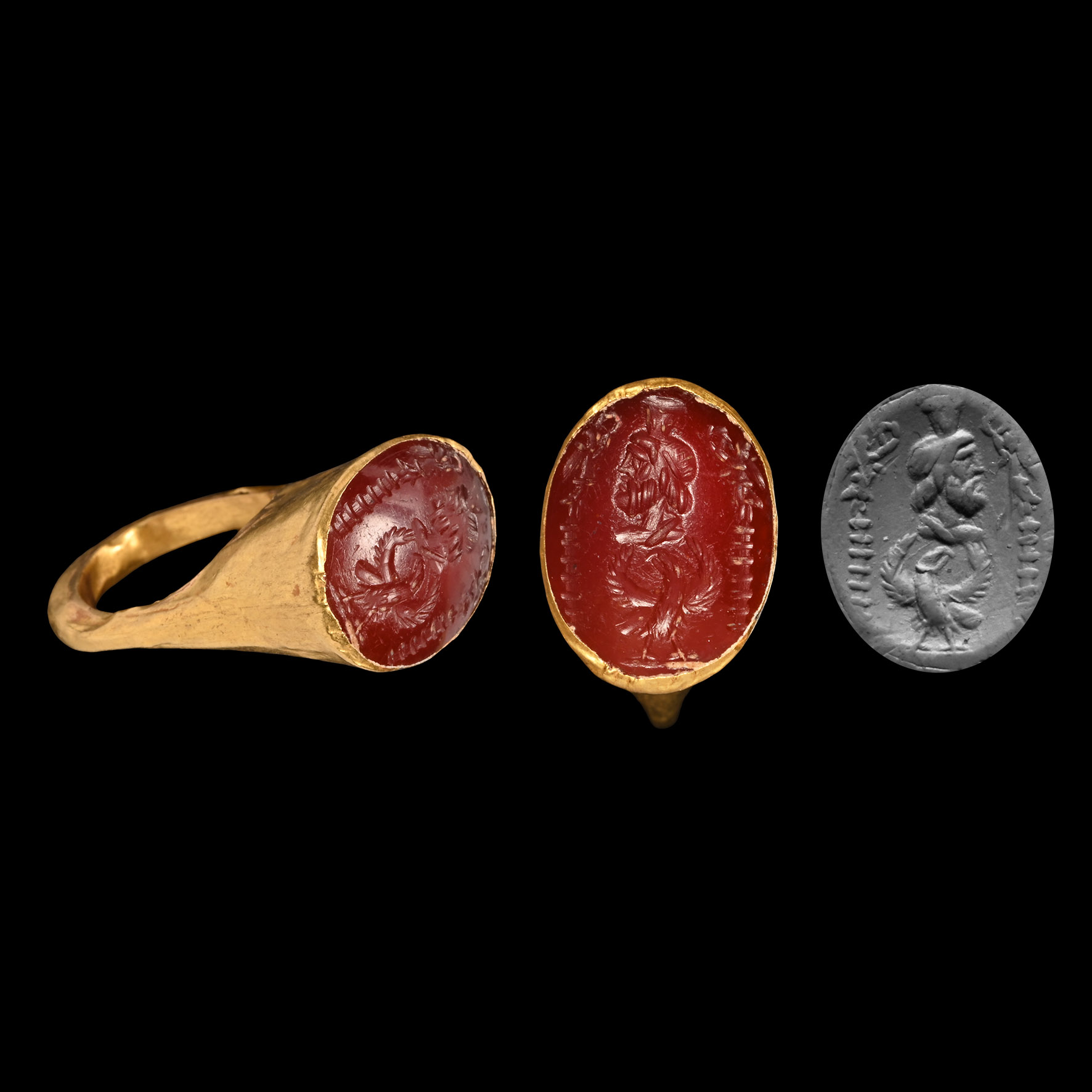
Roman Gold Ring with Serapis Gemstone
1ST CENTURY A.D.
1 in. (3.15 grams, 26.98 mm overall, 13.22 mm internal diameter (approximate size British D, USA 1 3/4, Europe 1.15, Japan 1)).
Hollow-formed with inset carnelian gemstone engraved with a profile bust of Serapis above a perching eagle flanked by fronds, possibly a marriage.
ProvenanceAcquired early 1990s.
Ex private American collection; thence by descent.
Private Swiss collection since 1998.
Cf. Chadour, A.B., Rings. The Alice and Louis Koch Collection, volume I, Leeds, 1994, item 142, for type.
CONDITIONTimeLine Auctions follows a vetting process to ensure the authenticity and legality of all items, reinforcing our commitment to integrity and responsible trading. Each antiquity, antique, and coin lot undergoes thorough examination by a vetting committee of at least ten external specialists, professional trade association members, scientists, and archaeologists: Our Vetting Process
AUCTIONS:
TimeLine is a leading auction house specialising in antiquities, ancient art, collectables, natural history, coins, medals, and books. Our auctions offer museums, collectors, historians, and enthusiasts the opportunity to acquire unique and historically significant pieces.
-
.jpg)
Roman Sardonyx Isis Gemstone
Circa 1st-2nd century A.D.Sold for (Inc. bp): £585
With intaglio profile bust of Isis with Hathor crown and cornucopia; supplied with a museum-quality impression. 0.91 grams, 14 mm
From the collection of a Swiss gentleman formed in Europe from 1970-1980s; thence by descent from the family in London. -
Large Eastern Roman Gold Earrings
2nd-3rd century A.D.Sold for (Inc. bp): £1,690
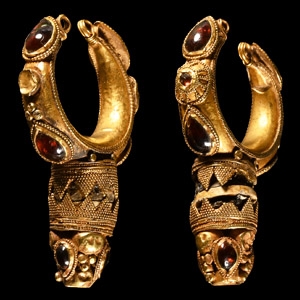
A hollow-formed hoop with lateral teardrop cells set with cabochon garnets and disc cells to the apex with bulbous central section; filigree and granulation detailing, cells with garnet cloisons; stepped columnar lower section with applied bosses and granulation; Eastern Empire or Parthian. 20.91 grams total, 47-48 mm
From a private collection formed in the 1990s. Ex London, UK, gallery. -
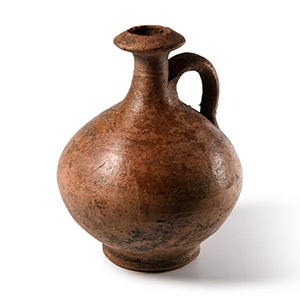
Roman Terracotta Wine Flagon
Circa 1st-2nd century A.D.Sold for (Inc. bp): £221
With globular body, thick basal ring, tall columnar neck with biconical collar, single strap handle to the rear. 360 grams, 15.3 cm
From the collection of a High Wycombe, Buckinghamshire, UK, gentleman, circa 2000.
