
Loading, please wait...
LOT 0201
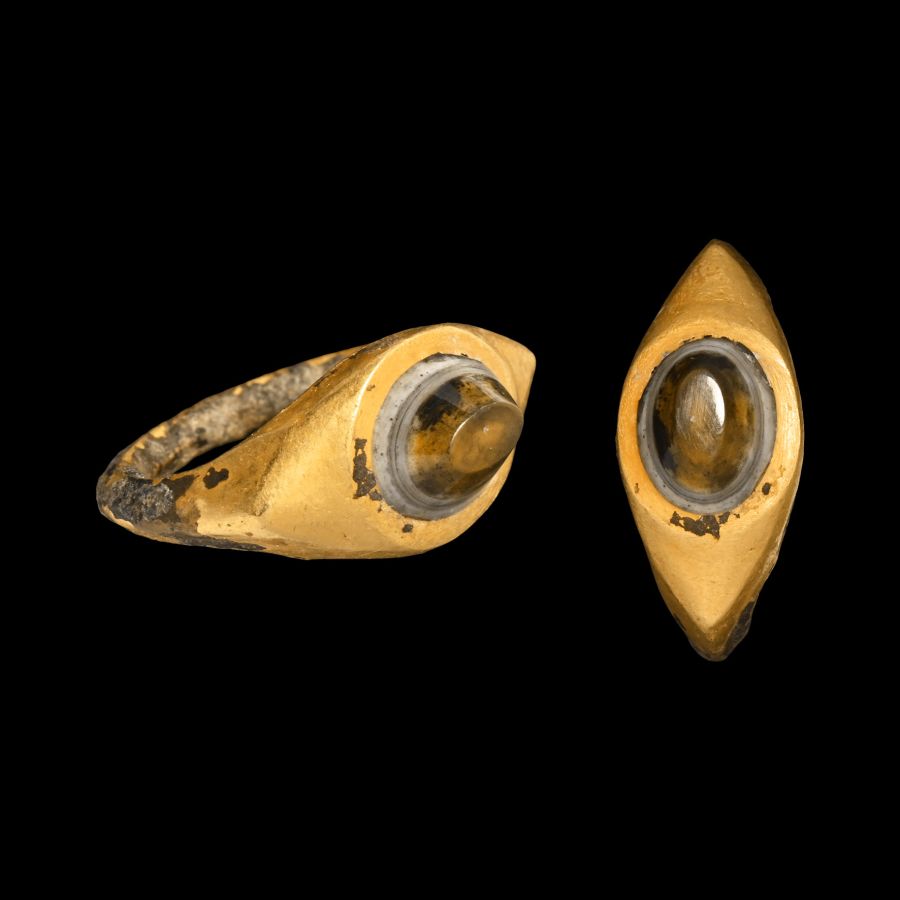
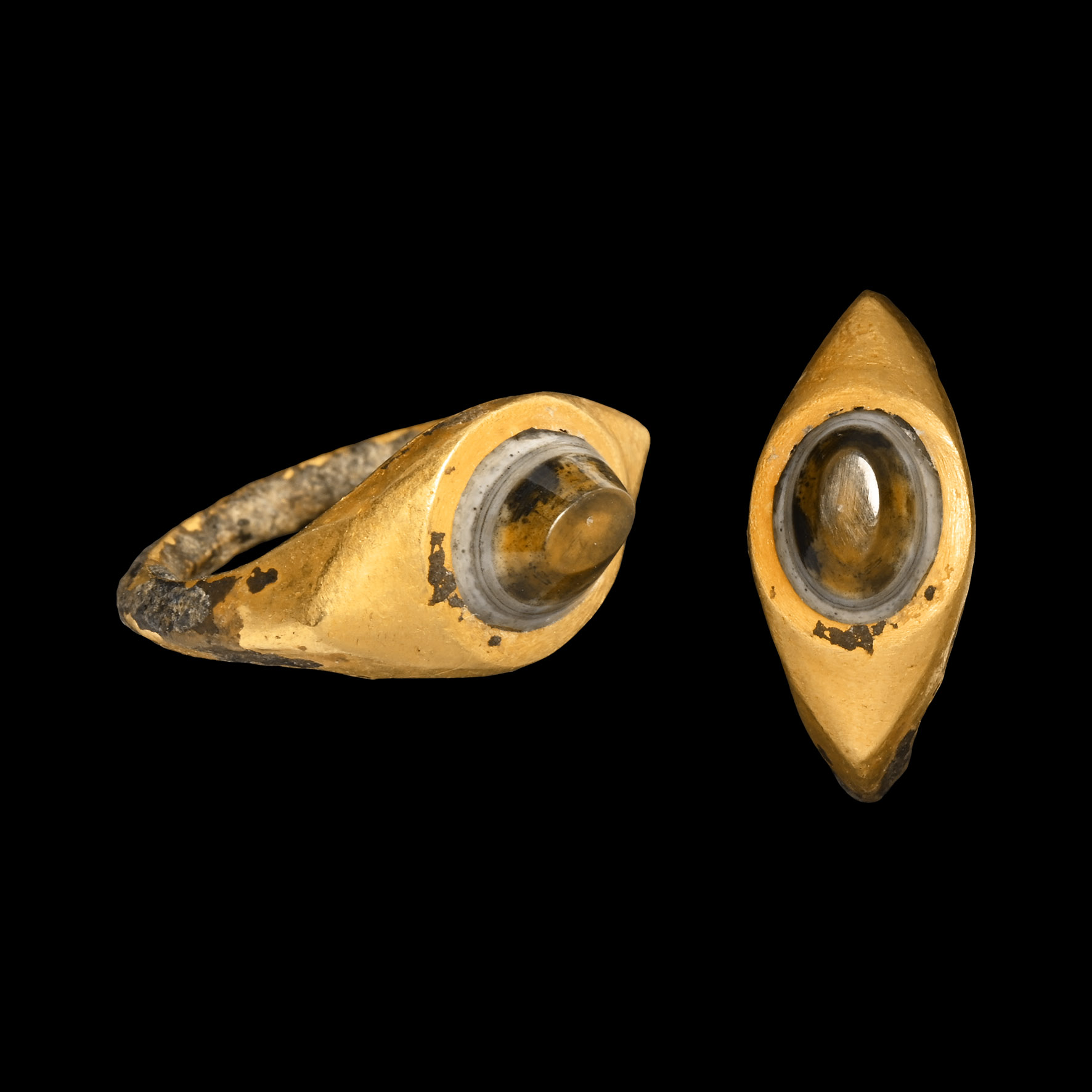
Roman Gold Ring with Sardonyx Gemstone
2ND-3RD CENTURY A.D.
3/4 in. (5.65 grams, 19.11 mm overall, 13.53 mm internal diameter).
With D-section shank and steep facetted shoulders, inset sardonyx gemstone.
ProvenancePrivate European collection, acquired 2000.
LiteratureCf. Chadour, A.B., Rings. The Alice and Louis Koch Collection, volume I, Leeds, 1994, item 304, for type.
CONDITIONTimeLine Auctions follows a vetting process to ensure the authenticity and legality of all items, reinforcing our commitment to integrity and responsible trading. Each antiquity, antique, and coin lot undergoes thorough examination by a vetting committee of at least ten external specialists, professional trade association members, scientists, and archaeologists: Our Vetting Process
AUCTIONS:
TimeLine is a leading auction house specialising in antiquities, ancient art, collectables, natural history, coins, medals, and books. Our auctions offer museums, collectors, historians, and enthusiasts the opportunity to acquire unique and historically significant pieces.
LOT 0201
Roman Gold Ring with Sardonyx Gemstone
Estimate £800 - 1,000€930 - 1,160 (for guidance only)$1,080 - 1,350 (for guidance only)
-
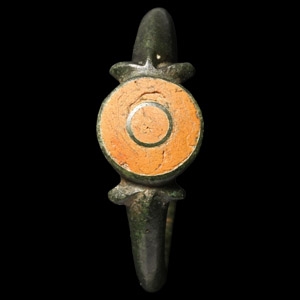
Superb Romano-British Enamelled Bronze Ring
3rd-4th century A.D.Sold for (Inc. bp): £260
With spurs to the shoulders, domed bezel with central roundel, enamel fill. 2.97 grams, 21.66 mm overall, 16.06 x 17.11 mm internal diameter (approximate size British L 1/2, USA 6, Europe 11.87, Japan 11)
Found Norfolk, Southern England. Acquired on the UK art market in the 1980s. From an East Anglian private collection. Accompanied by an old Norfolk Castle Museum record slip. -

Roman Marble Bust of a Kouros
Circa 1st century A.D.Estimate: £3,500 - 4,500 (+bp*)
Opening Bid: £1,750
Carved in the half-round as a bust of a kouros youth with soft features and tiered hair hanging in hanks to the sides of the clean-shaven face; flat to the reverse. 4.1 kg, 22 cm high
Ex Paris collection. French gallery, Paris, 1990-2000s. This lot has been checked against the Interpol Database of stolen works of art and is accompanied by search certificate no.11959-209638. -
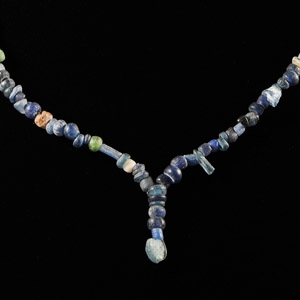
Roman Deep Blue Glass and Other Bead Necklace String
1st century A.D. and laterSold for (Inc. bp): £39
Restrung to a Y-shape with mainly blue glass beads. 13.8 grams, 56 cm long
UK gallery, early 2000s.
