
Loading, please wait...


LOT 0163
Roman Gold Ring with Red Gem
1ST CENTURY A.D.
7/8 in. (1.55 grams, 21.78 mm overall, 15.63 x 14.16 mm internal diameter (approximate size British H 1/2, USA 4, Europe 6.81, Japan 6)).
Comprising a hollow-form round-section hoop widening towards the shoulders, set with a table-cut garnet or paste with foil backing, polished. [No Reserve]
ProvenanceFrom the old family collection of a West Country, UK, lady; acquired by descent from her grandfather circa 2001.
LiteratureCf. Ruseva-Slokoska, L., Roman Jewellery, Sofia, 1991, item 189, for type.
FootnotesThe ring belongs to variant 3, type 1, of the Slokovska classification. The type of ring is characteristic of the Early Imperial Age. Similar rings with the same typology of gemstones have also been found in Kerch.
CONDITIONTimeLine Auctions follows a vetting process to ensure the authenticity and legality of all items, reinforcing our commitment to integrity and responsible trading. Each antiquity, antique, and coin lot undergoes thorough examination by a vetting committee of at least ten external specialists, professional trade association members, scientists, and archaeologists: Our Vetting Process
AUCTIONS:
TimeLine is a leading auction house specialising in antiquities, ancient art, collectables, natural history, coins, medals, and books. Our auctions offer museums, collectors, historians, and enthusiasts the opportunity to acquire unique and historically significant pieces.
-
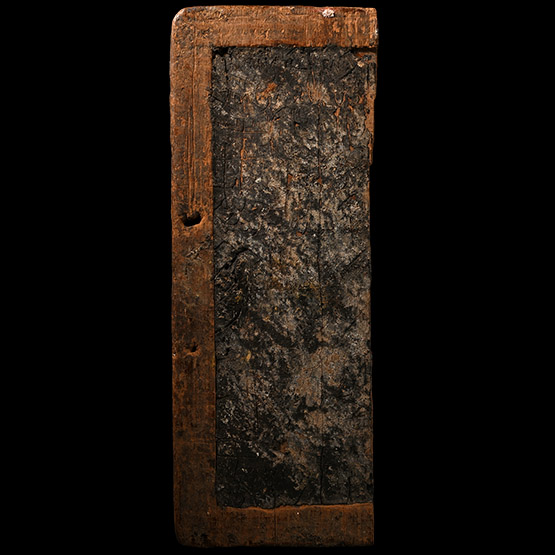
Roman Wooden Wax Tablet Fragment Written in Greek
Circa 3rd-4th century A.D.Sold for (Inc. bp): £1,430
Part of a wax tablet with two holes in the frame for fastening, Greek writing. 45.45 grams, 18.6 x 7.2 cm
Property of a North London gentleman; previously in the Dean family collection since 1975.
Wax tablets written in Greek or Latin, were used by Romans as account registers (codices accepti et expensi); for transactions (for example, the tablets of the banker Lucius Caecilius Iucundus found in Pompeii); for lists of goods, inventories, and notes to be kept and archived; for Roman magistrates to annotate the salient events of their bureaucratic activities; for writing letters; for drawing up legal texts of various kinds: legacies, declarations of births and citizenship, reports of trials and diplomata militaria. -
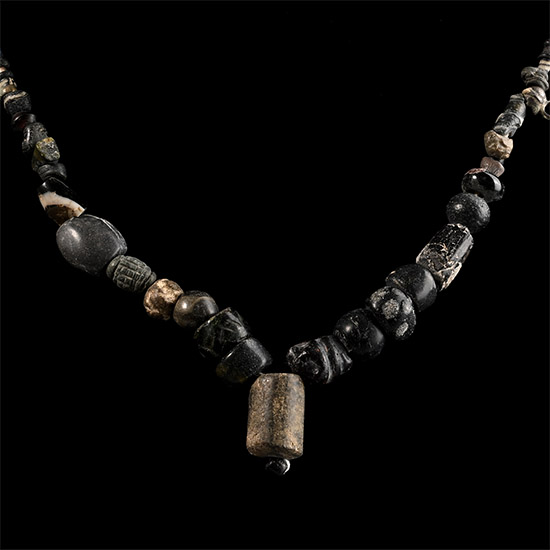
Roman Black Glass and Other Bead Necklace String
1st-4th century A.D. and laterSold for (Inc. bp): £39
Mixed group of graduated beads, the central feature a large cylindrical bead; restrung. 27 grams, 30 cm
Acquired in the 1990s. Ex London, UK, collection. -
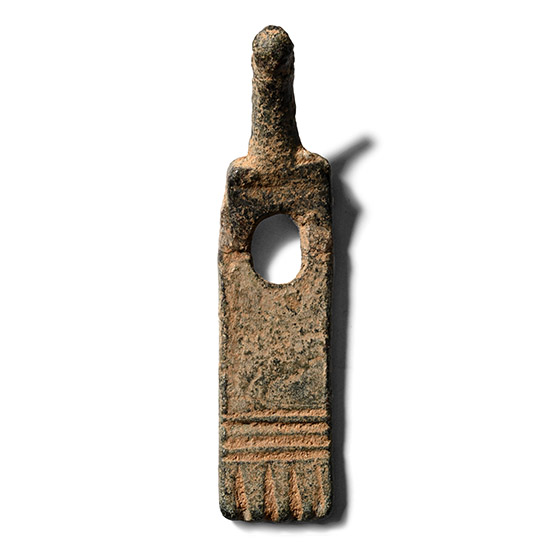
Roman Bronze Phallic Quillon
1st-4th century A.D.Sold for (Inc. bp): £117
Rectangular plate with a large oval socket, one end formed as an erect phallus, and the other as a stylised fist with ribbed cuff. 15.65 grams, 58 mm
Ex German collection, 1990s.
