
Loading, please wait...
LOT 0148
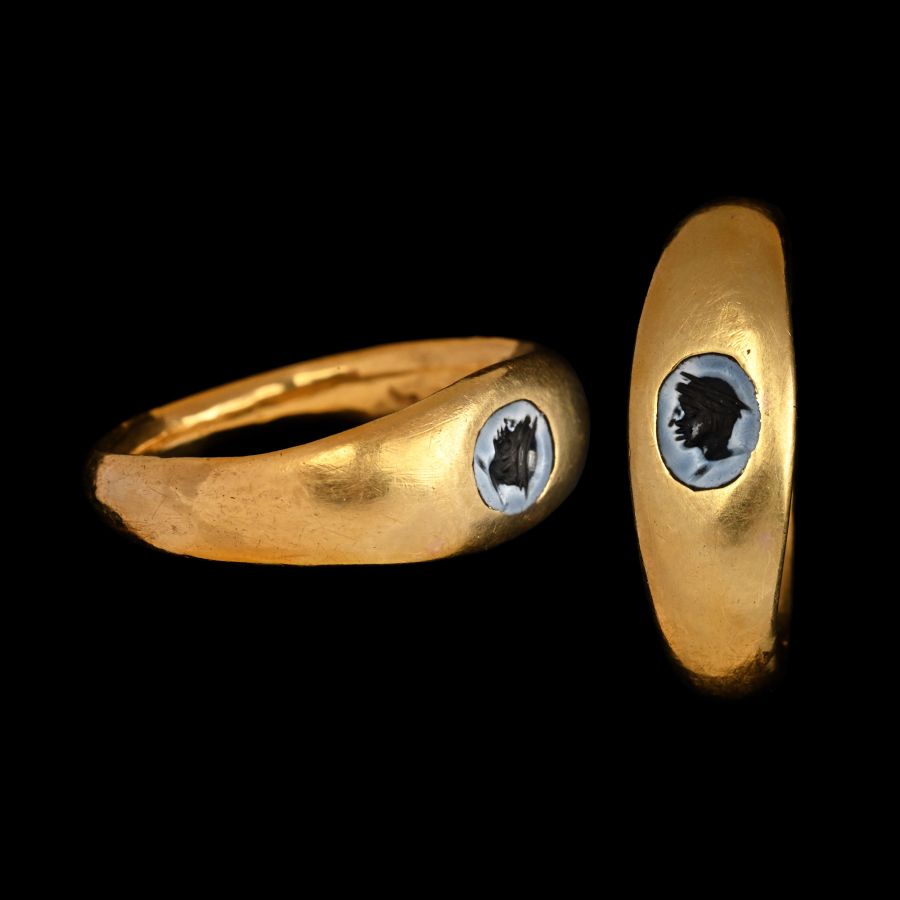
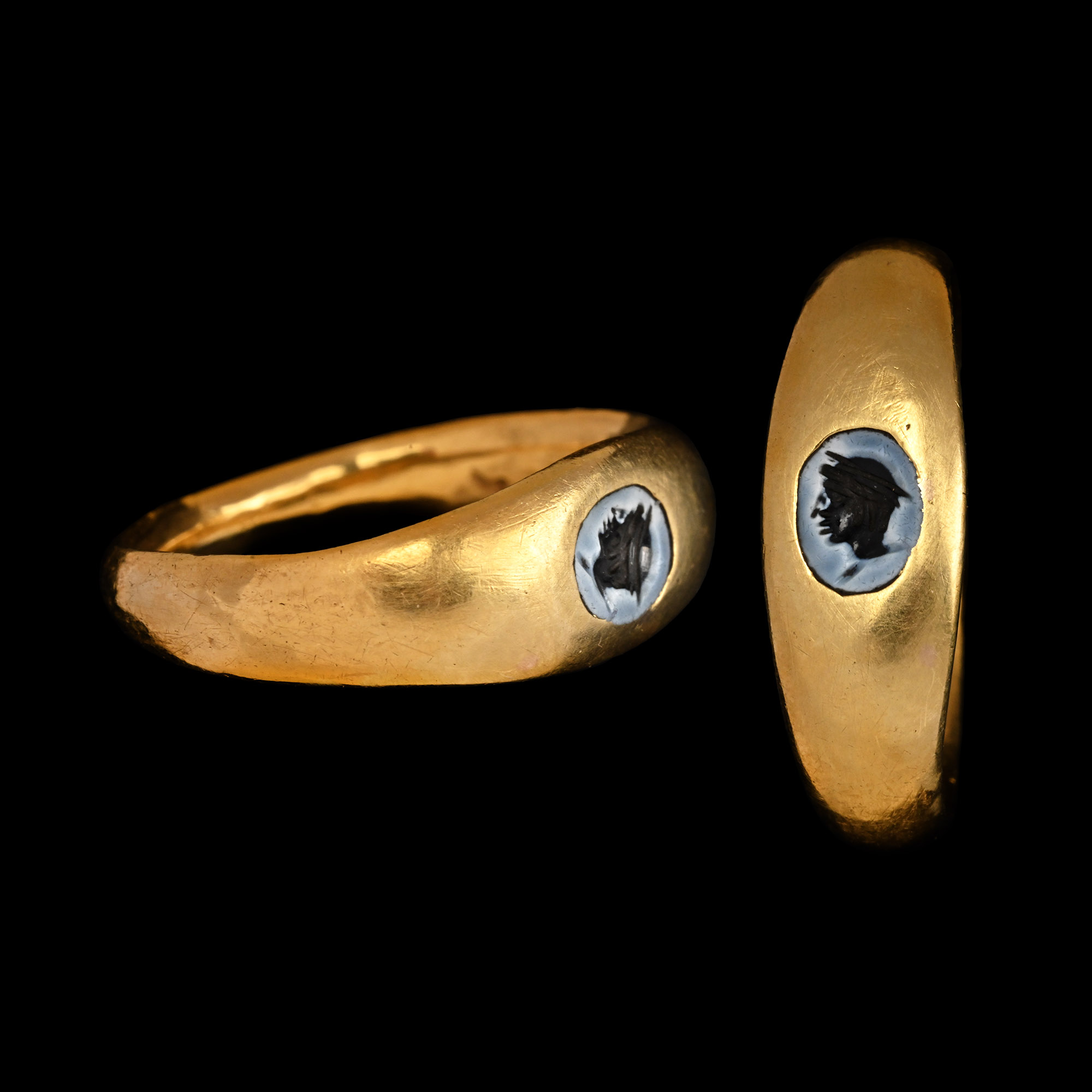
Roman Gold Ring with Nicolo Mercury Gemstone
2ND-3RD CENTURY A.D.
7/8 in. (6.44 grams, 22.32 mm overall, 18.37 mm internal diameter (approximate size British M, USA 6, Europe 12.46, Japan 12)).
D-section hoop with flared bezel, set with blue nicolo intaglio bearing a profile bust of a young male wearing a hat, possibly god Mercury.
ProvenanceUK private collection before 2000.
Acquired on the UK art market.
Private collection, London, UK.
This lot has been checked against the Interpol Database of stolen works of art and is accompanied by search certificate number no.12817-240728.
This lot has been cleared against the Art Loss Register database, and is accompanied by an illustrated lot declaration signed by the Head of the Antiquities Department, Dr Raffaele D'Amato.
Cf. The British Museum, 1917,0501.427; Ruseva-Slokoska, L., Roman Jewellery, Sofia, 1991, item 189, Type I, variant 3.
CONDITIONTimeLine Auctions follows a vetting process to ensure the authenticity and legality of all items, reinforcing our commitment to integrity and responsible trading. Each antiquity, antique, and coin lot undergoes thorough examination by a vetting committee of at least ten external specialists, professional trade association members, scientists, and archaeologists: Our Vetting Process
AUCTIONS:
TimeLine is a leading auction house specialising in antiquities, ancient art, collectables, natural history, coins, medals, and books. Our auctions offer museums, collectors, historians, and enthusiasts the opportunity to acquire unique and historically significant pieces.
LOT 0148
Roman Gold Ring with Nicolo Mercury Gemstone
Estimate £2,000 - 3,000€2,320 - 3,480 (for guidance only)$2,700 - 4,050 (for guidance only)
-
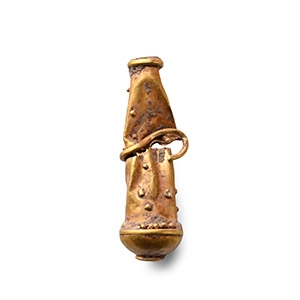
Roman Gold Hercules Club Pendant
1st-4th century A.D.Estimate: £150 - 200 (+bp*)
Opening Bid: £75
Hollow-form pendant with applied granules and wire decoration. 1.25 grams, 24 mm
Ex London, UK, gentleman's collection, 1980-1990s. This lot is accompanied by an illustrated lot declaration signed by the Head of the Antiquities Department, Dr Raffaele D'Amato. -
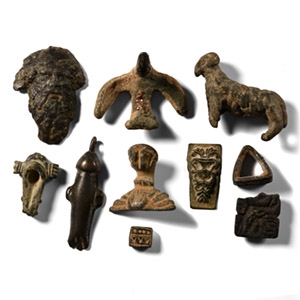
Roman and Other Bronze Artefact Group
1st-4th century A.D. and laterSold for (Inc. bp): £195
Including bust appliqué, model ram and other types. 118 grams total, 8-44 mm
From the collection of a gentleman, acquired on the London art market in the 1990s. This lot is accompanied by an illustrated lot declaration signed by the Head of the Antiquities Department, Dr Raffaele D'Amato. -
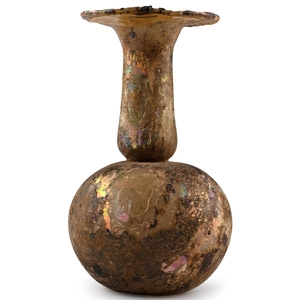
Roman Glass Bottle
3rd-4th century A.D.Sold for (Inc. bp): £130
With broad flange rim, tapering neck and globular body with narrow base. 27 grams, 82 mm
From the private collection of Kenneth Machin (1936-2020), Buckinghamshire, UK; his collection of antiquities and natural history was formed since 1948; thence by descent. This lot is accompanied by an illustrated lot declaration signed by the Head of the Antiquities Department, Dr Raffaele D'Amato.
