
Loading, please wait...


LOT 0864
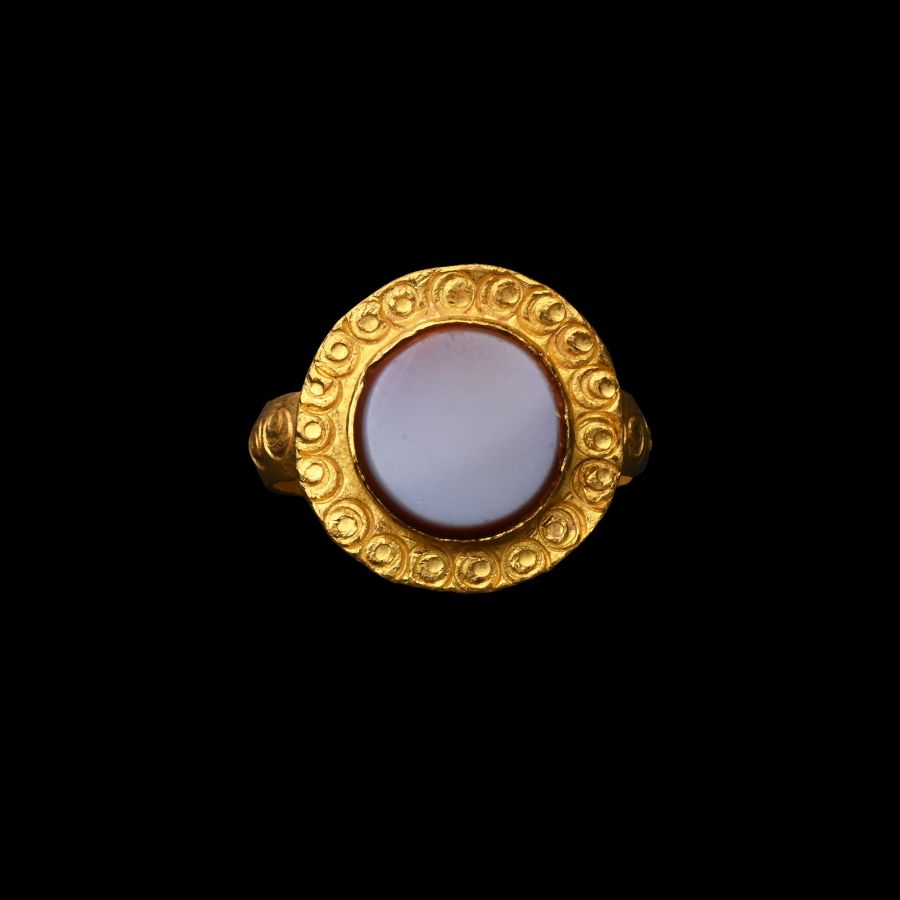
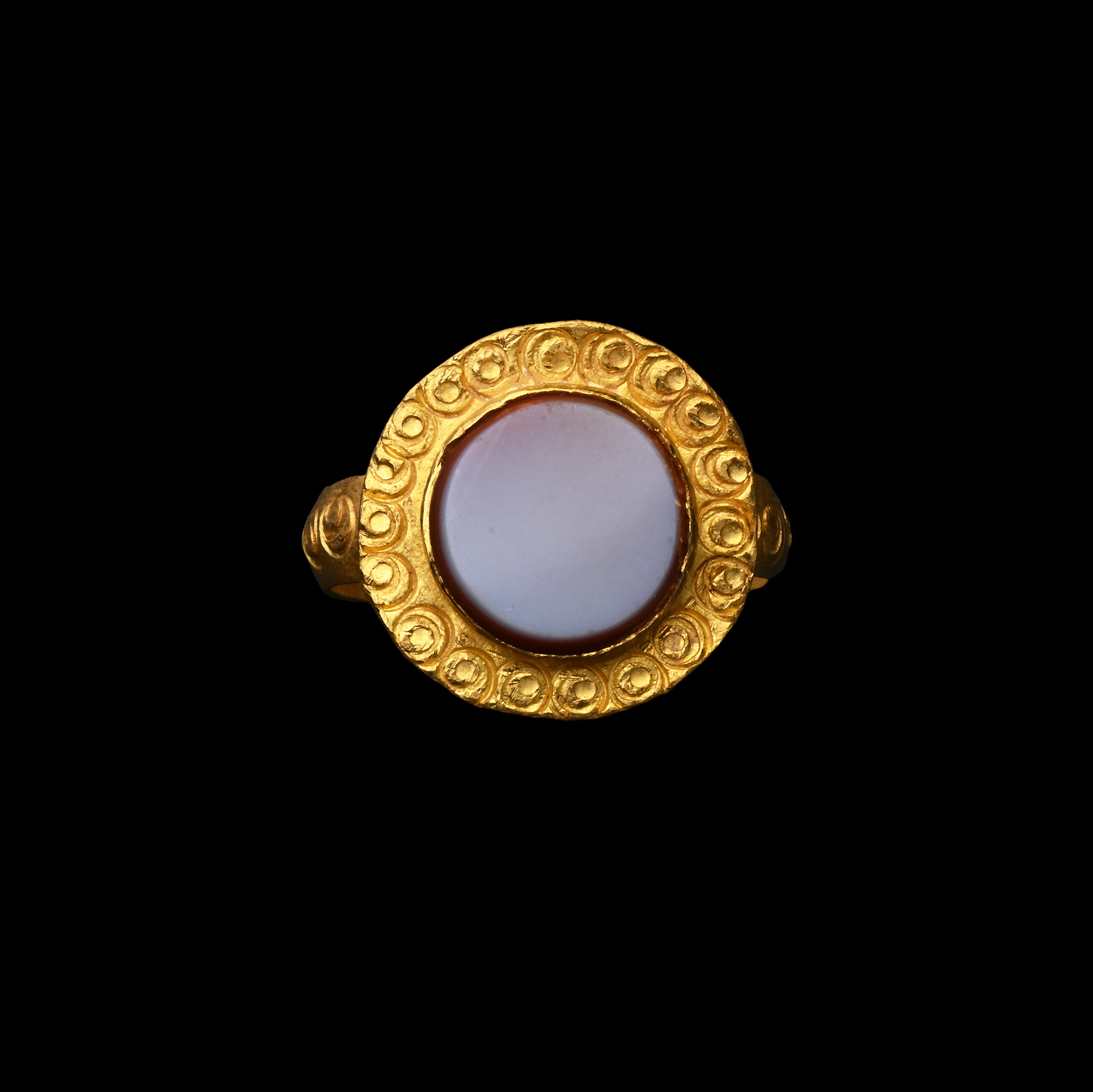
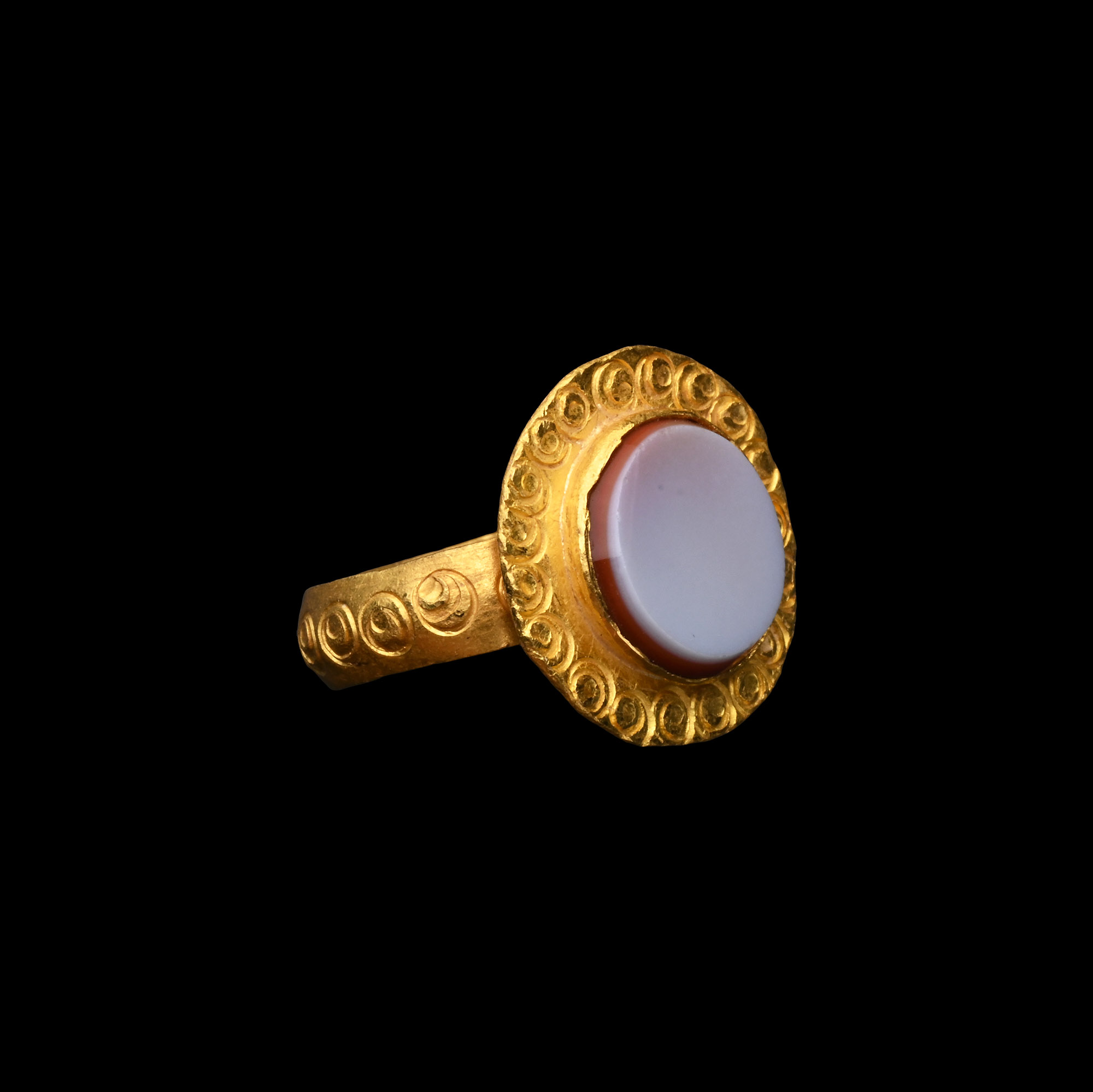
Roman Gold Ring with Nicolo Gemstone
CIRCA 3RD CENTURY A.D. OR LATER
3/4 in. (4.67 grams, 20.33 mm overall, 17.70 x 15.02 mm internal diameter (approximate size British K 1/2, USA 5 1/2, Europe 10.58, Japan 10)).
Comprising a D-section hoop with pairs of punched ring-and-dot motifs, a discoid flange to the bezel with similar decoration and a central cell with inset replacement nicolo cloison.
ProvenanceEx property of a London gentleman; acquired by his father in the 1970s; thence by descent.
Private collection, Suffolk, UK.
Cf. Ruseva-Slokoska, L., Roman Jewellery, Sofia, 1991, item 201, for type.
CONDITIONTimeLine Auctions follows a vetting process to ensure the authenticity and legality of all items, reinforcing our commitment to integrity and responsible trading. Each antiquity, antique, and coin lot undergoes thorough examination by a vetting committee of at least ten external specialists, professional trade association members, scientists, and archaeologists: Our Vetting Process
AUCTIONS:
TimeLine is a leading auction house specialising in antiquities, ancient art, collectables, natural history, coins, medals, and books. Our auctions offer museums, collectors, historians, and enthusiasts the opportunity to acquire unique and historically significant pieces.
-
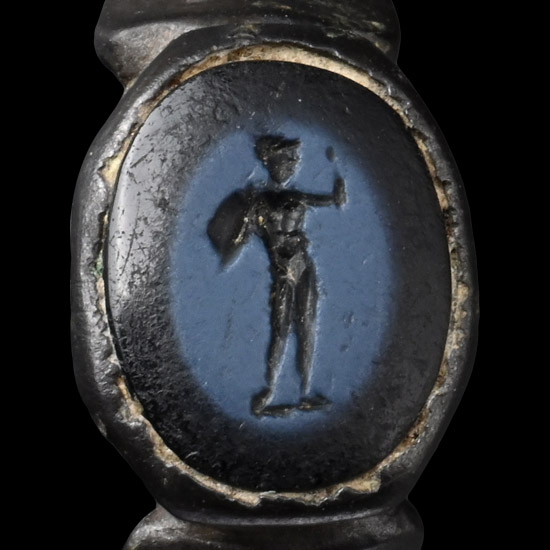
Roman Bronze Ring with Nicolo Mercury Gemstone
Circa 3rd-4th century A.D.Sold for (Inc. bp): £520
Carinated hoop with stepped shoulders, ellipsoid cell with inset nicolo intaglio of Mercury standing. 8.18 grams, 25.28 mm overall, 17.53 x 14.71 mm internal diameter (approximate size British J, USA 4 3/4, Europe 8.69, Japan 8)
From the private collection of Mr Brian Edwards, New Malden, Surrey, UK, formed from the late 1970s-early 1980s; thence by descent. Accompanied by the original collector's data sheet(s) with reference no.A104. -
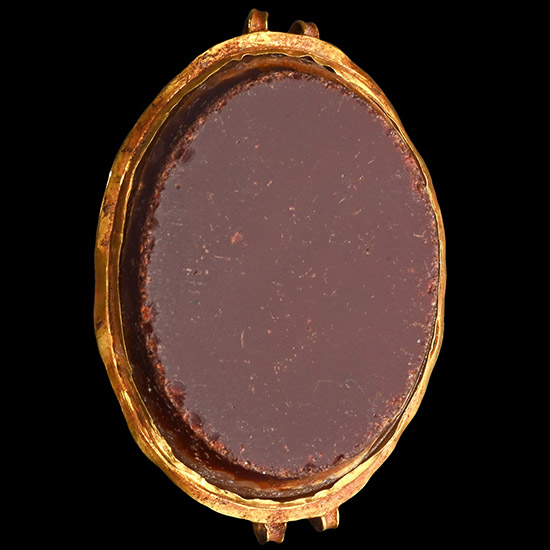
Roman Gold Cell with Jasper Cabochon
1st-3rd century A.D.Sold for (Inc. bp): £520
Ellipsoid in plan cell with flange rim and a pair of loops at each end for connection to a chain; inset jasper cloison. 9.63 grams, 34 mm
Acquired by a Swiss family in the mid-1980-1990, thence by descent. Private collection, since 1993.
The specimen has a good parallel with an element of a gold-chain necklace from the treasure of Nikolaevo. The use of stone to decorate Roman jewellery was very popular after the end of the 2nd century A.D., as is visible in the medallions of the Castellani and Frank Bequest collections in the British Museum. -
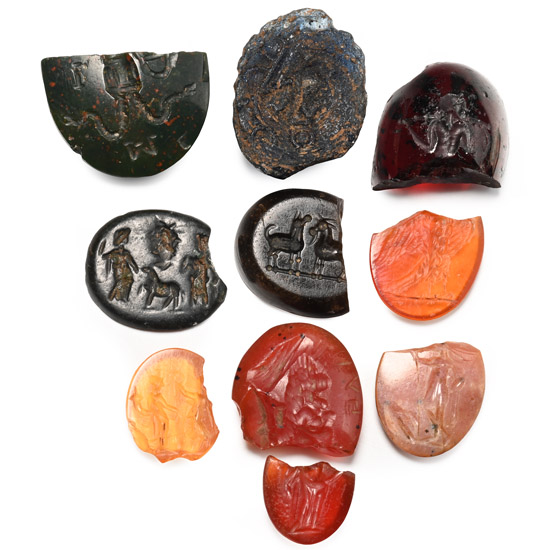
Roman Gemstone Group
2nd-3rd century A.D.Sold for (Inc. bp): £286
Including a warrior with a spear over his shoulder, a profile bust of Silenus with a partial Greek legend, Isis-Minerva with a cornucopia and supplicant, and other types; each supplied with a museum-quality impression. 14.59 grams total, 9-20 mm
From the private collection of a European gentleman (1942-2024), formed since the 1970s.
