
Loading, please wait...


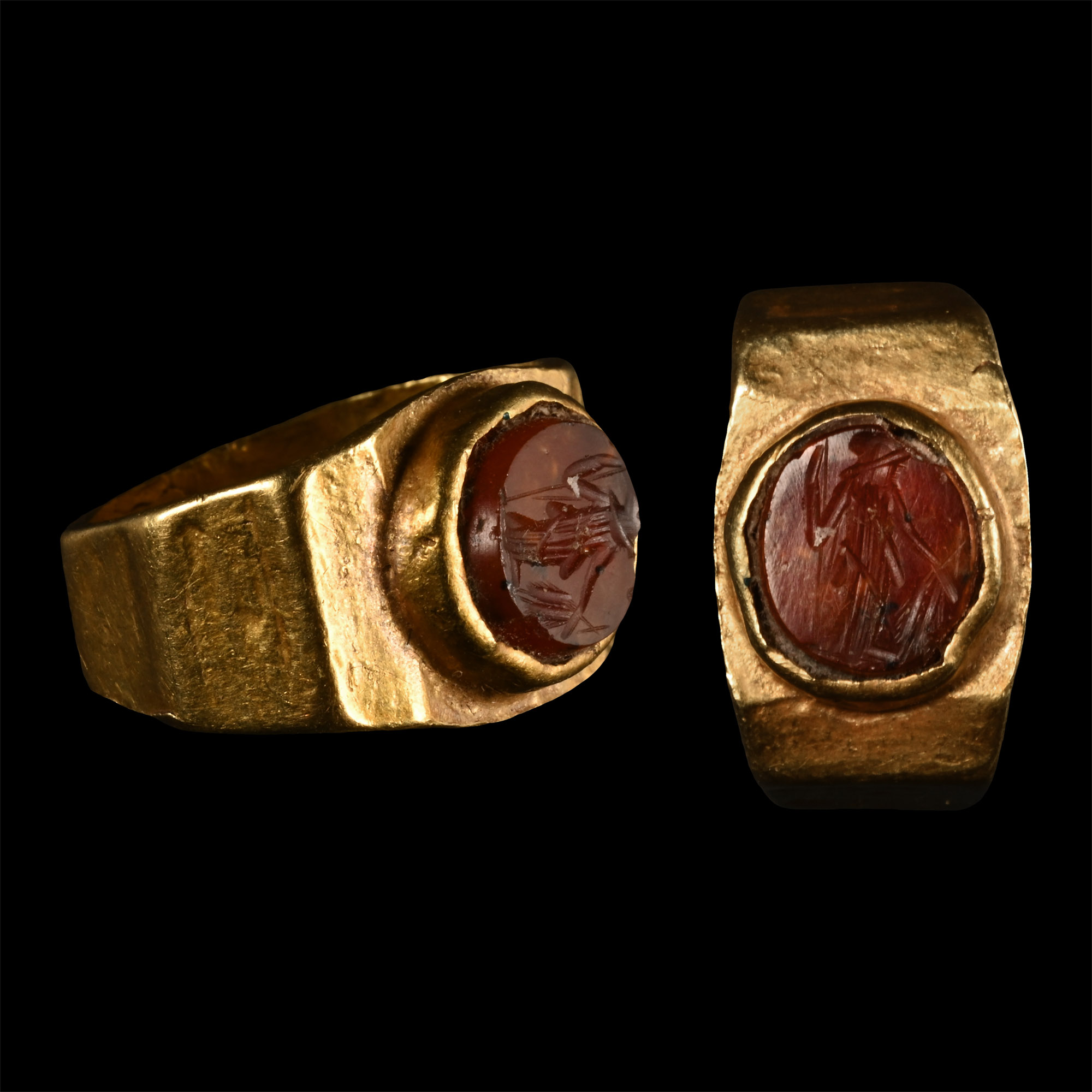
LOT 0092
Roman Gold Ring with Minerva Gemstone
MID 2ND CENTURY A.D.
3/4 in. (7.39 grams, 19.03 mm overall, 16.16 mm internal diameter (approximate size British G, USA 3 1/4, Europe 4.92, Japan 4)).
With tapering facetted hoop, plaque with cell and inset carnelian cloison, intaglio figure of Minerva with shield and spear.
ProvenanceAcquired from Notaras Coins & Antiquities, Suffolk, UK, before 2000.
Property of a Bedfordshire, UK, private collector.
Accompanied by an illustrated collector's identification tag.
This lot is accompanied by an illustrated lot declaration signed by the Head of the Antiquities Department, Dr Raffaele D’Amato.
Cf. Ruseva-Slokoska, L., Roman Jewellery, Sofia, 1991, item 188, for type.
CONDITIONTimeLine Auctions follows a vetting process to ensure the authenticity and legality of all items, reinforcing our commitment to integrity and responsible trading. Each antiquity, antique, and coin lot undergoes thorough examination by a vetting committee of at least ten external specialists, professional trade association members, scientists, and archaeologists: Our Vetting Process
AUCTIONS:
TimeLine is a leading auction house specialising in antiquities, ancient art, collectables, natural history, coins, medals, and books. Our auctions offer museums, collectors, historians, and enthusiasts the opportunity to acquire unique and historically significant pieces.
-
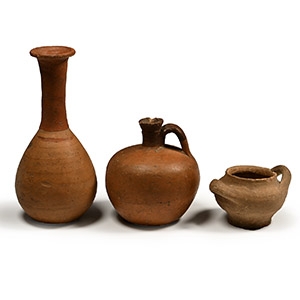
Roman Terracotta Vessel Group
1st-4th century A.D.Sold for (Inc. bp): £221
Comprising: a piriform vase; a squat jar with two loop handles; a barrel-shaped jar with trumpet-shaped neck and mouth. 172 grams total, 6.3-11.8 cm
Believed to have been part of the Duke of Northumberland collection. From an early 20th century collection. From a Hampshire, UK, private collection. This lot is accompanied by an illustrated lot declaration signed by the Head of the Antiquities Department, Dr Raffaele D’Amato. -
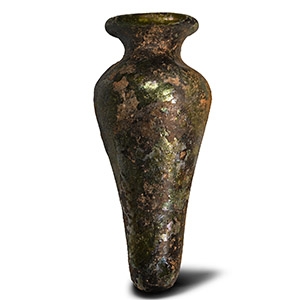
Roman Conical Green Glass Vessel
1st-3rd century A.D.Sold for (Inc. bp): £169
With broad rounded shoulder tapering to a conical foot, low cylindrical neck and everted mouth with rolled rim. 52 grams, 12.5 cm
Ex London art market 1990s. From a London, UK, collection. This lot is accompanied by an illustrated lot declaration signed by the Head of the Antiquities Department, Dr Raffaele D’Amato. -
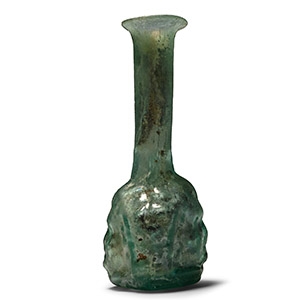
Roman Glass Janiform Ampulla
3rd century A.D.Estimate: £800 - 1,000 (‡+bp*)
Opening Bid: £360
Body formed as two addorsed putto-heads with long, narrow neck separated from the body by a constriction; funicular mouth. 48.9 grams, 11 cm
Ex Anita Zürrer-Bass (1928-2018), Switzerland, formed 1960s-1990s. Thence by descent. This lot is accompanied by an illustrated lot declaration signed by the Head of the Antiquities Department, Dr Raffaele D’Amato.
The body of this type of vessel is formed from two heads joined together at the back. The faces have protruding chins, full cheeks and turned-up noses. The hair, filling the space between the faces, is arranged into spherical curls. This kind of products were often realised in Syrian workshops and widespread across the empire. They are usually dated to the 3rd century A.D.
