
Loading, please wait...
LOT 0097
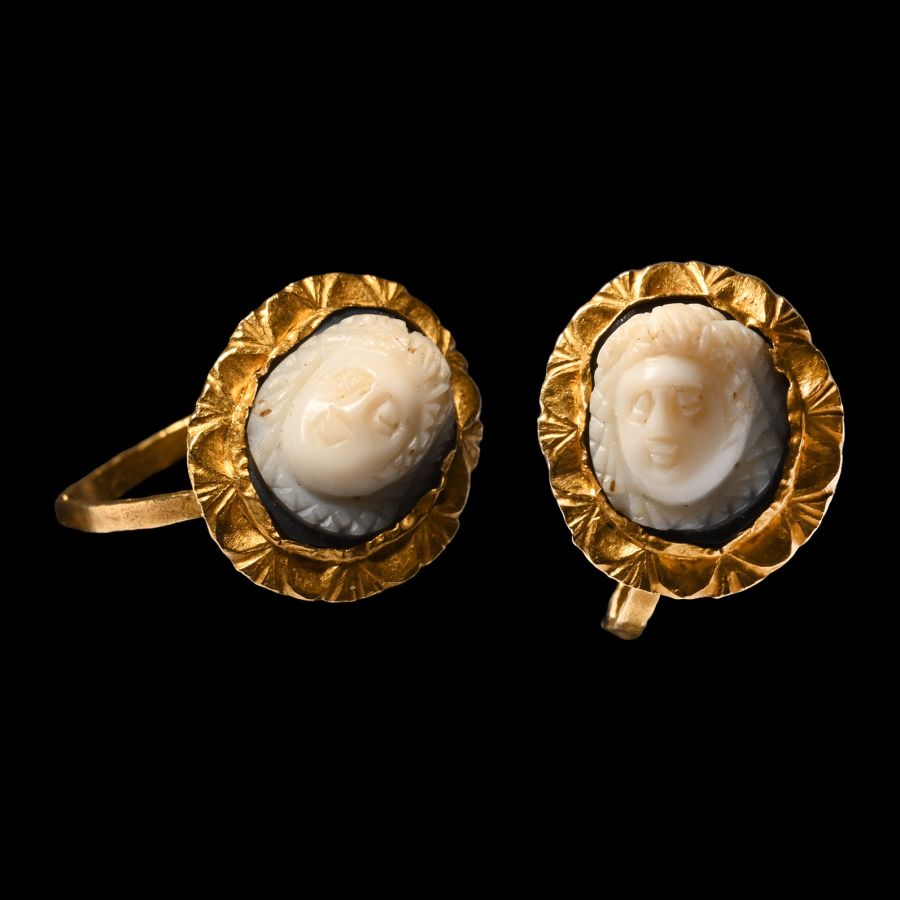
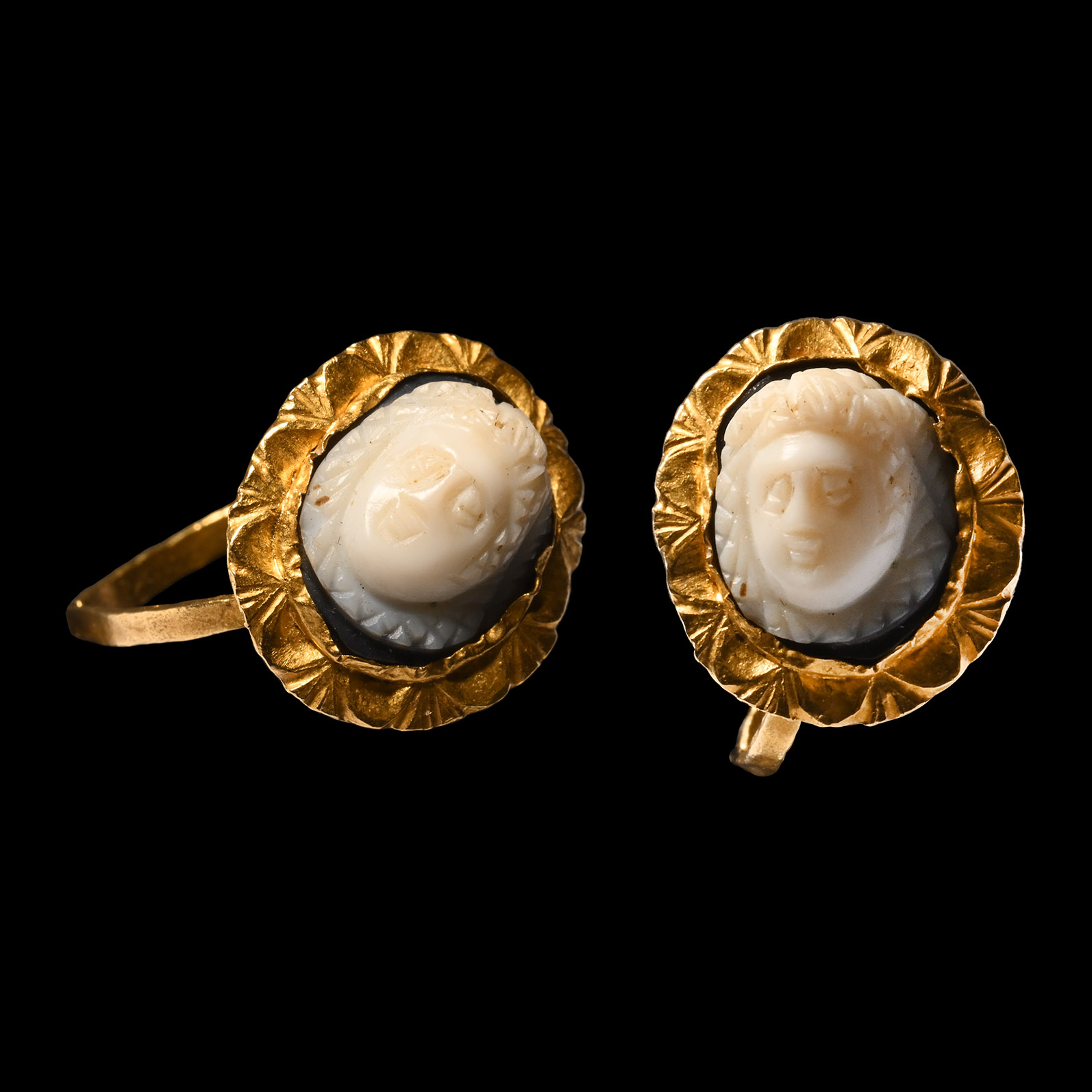
Roman Gold Ring with Medusa Cameo
2ND-3RD CENTURY A.D.
3/4 in. (2.15 grams, 20.20 mm overall, 12.55 mm internal diameter).
A gold finger ring with large cell forming the bezel, foliage detailing to the flared rim, inset cameo female mask in three-quarter view, hoop split.
ProvenanceUK private collection.
with Bertolami Fine Art, London, 22 April 2022, lot 197.
English private collection.
Cf. Marshall, F.H., Catalogue of the Finger Rings, Greek, Etruscan and Roman, in the Department of Antiquities, British Museum, London, 1907, item 511.
CONDITIONTimeLine Auctions follows a vetting process to ensure the authenticity and legality of all items, reinforcing our commitment to integrity and responsible trading. Each antiquity, antique, and coin lot undergoes thorough examination by a vetting committee of at least ten external specialists, professional trade association members, scientists, and archaeologists: Our Vetting Process
AUCTIONS:
TimeLine is a leading auction house specialising in antiquities, ancient art, collectables, natural history, coins, medals, and books. Our auctions offer museums, collectors, historians, and enthusiasts the opportunity to acquire unique and historically significant pieces.
-
.jpg)
Roman 'Thames' Samian Ware Stamped Fragment Group
1st-2nd century A.D.Sold for (Inc. bp): £104
A group of six Samian ware vessel bases labelled 'a-f', each stamped to the interior base; accompanied by an information sheet identifying the relevant workshop and approximate date: 'a. COSRVF Cosivs and Rufinus South Gaul late 1st century; b.Caddiron Caddiron Langres ?; c. BALBINVS F Balbinus (Fecit) Lubie early 2nd century; d.TITVRONIS O Tituro (officina workshop) Central Gaul early 2nd century; e. ALBVS F Albus Central Gaul early 2nd century; f. ]IVCVN ?'. 328 grams total, 4.2-13.7 cm
Found Billingsgate spoil from the Thames foreshore, London, UK. Acquired on the UK antiques market between 1974-1985. Albert Ward collection, Essex, UK. Accompanied by a typed original identification document from the Museum of London dated 29th August 1984. -
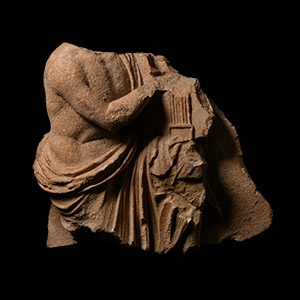
Roman Limestone Fragment of Draped Musician
Circa 1st century A.D.Sold for (Inc. bp): £1,430
A fragment of a carved limestone scene depicting a seated musician wearing a toga virilis draped to his shoulder and tucked at the waist, hanging over his bent knee supporting a lyre or cithara with seven strings. 1.98 kg, 17 cm
Ex Ingrid McAlpine, 1939-2018, London and Epsom, UK. -
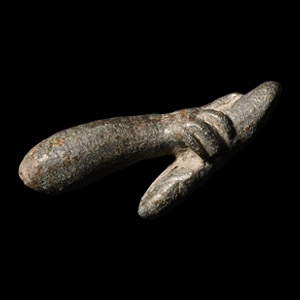
Roman Zeus Statuette Hand Holding Thunderbolt
3rd-4th century A.D.Sold for (Inc. bp): £59
A bronze right forearm and hand gripping a thunderbolt, from a larger statuette, likely of the god Zeus. 10 grams, 34 mm
Acquired in the late 1990s-2000. Property of an East London gentleman.
