
Loading, please wait...
_900x900.jpg "Roman Gold Ring with Jasper Gemstone with Dolphin")
_200x200.jpg "Roman Gold Ring with Jasper Gemstone with Dolphin")
_900x900.jpg "Roman Gold Ring with Jasper Gemstone with Dolphin")
_200x200.jpg "Roman Gold Ring with Jasper Gemstone with Dolphin")

.jpg "Roman Gold Ring with Jasper Gemstone with Dolphin")
.jpg "Roman Gold Ring with Jasper Gemstone with Dolphin")
LOT 0153
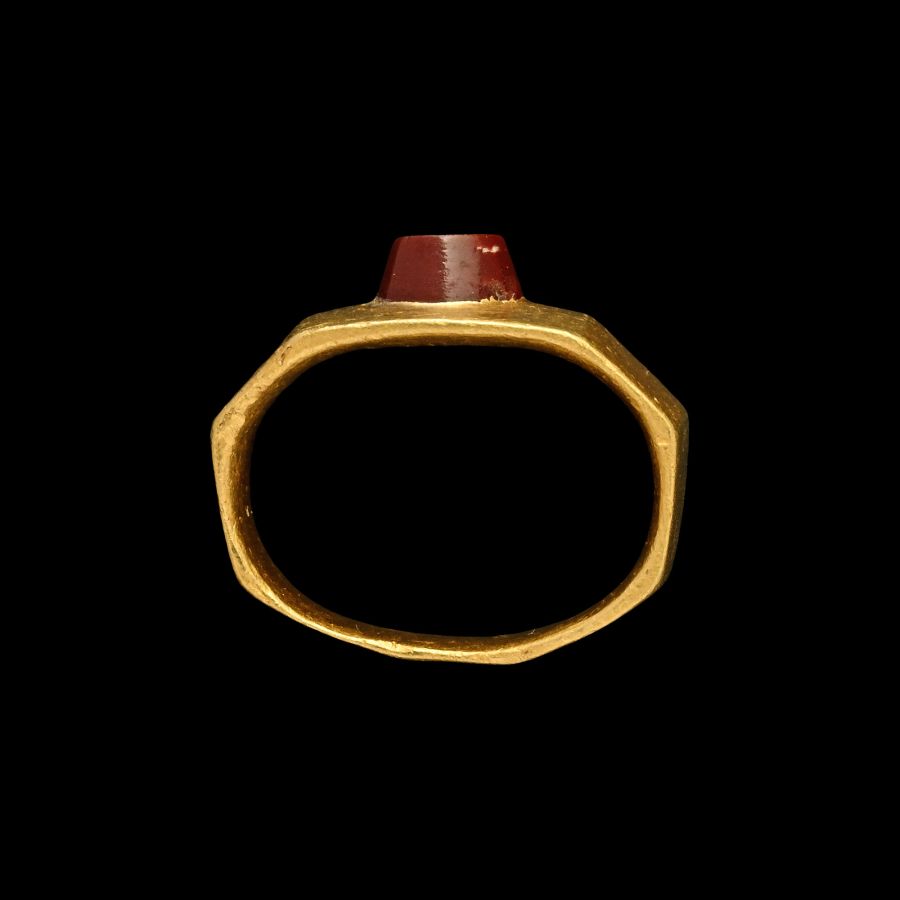
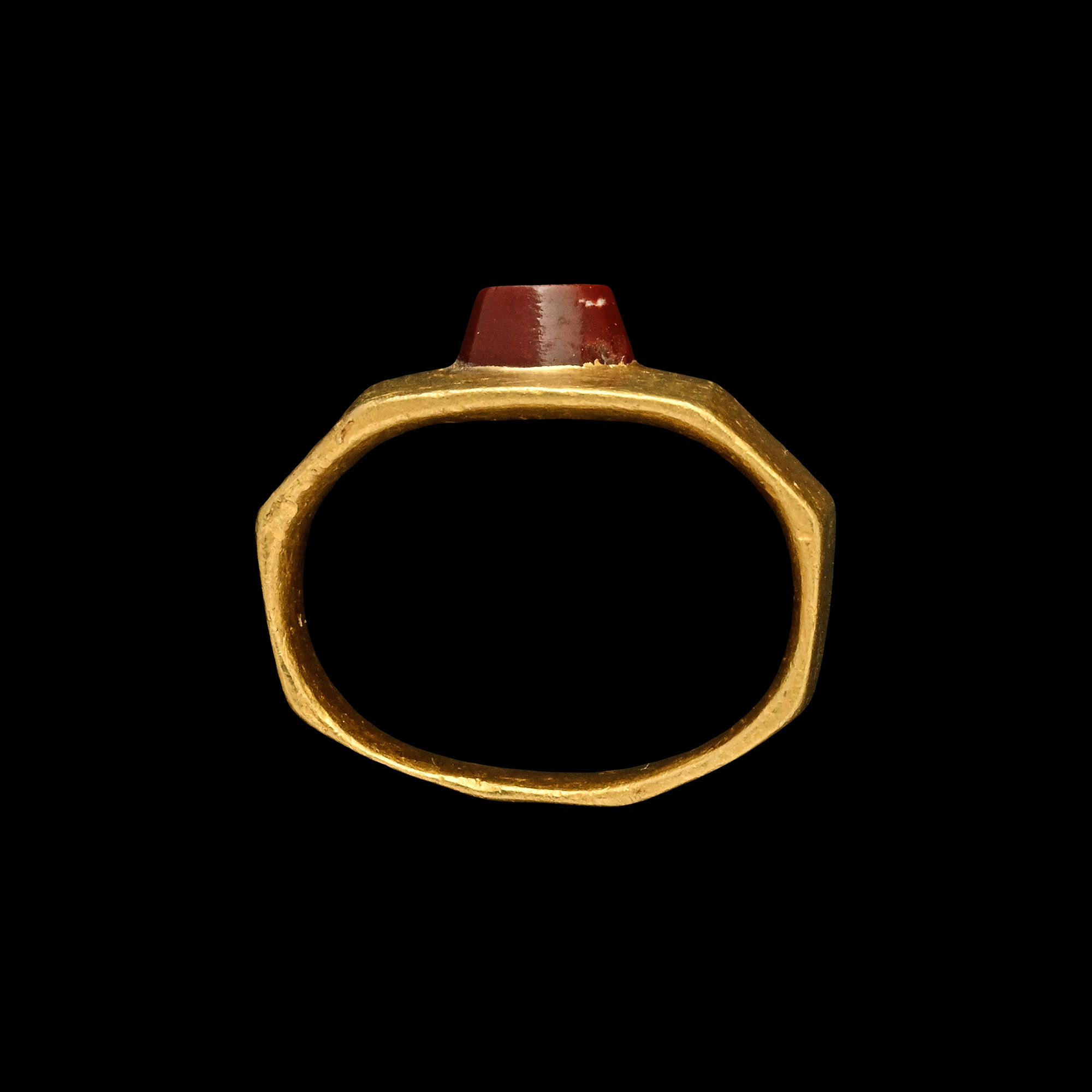
Roman Gold Ring with Jasper Gemstone with Dolphin
2ND-3RD CENTURY A.D.
3/4 in. (6.94 grams, 18.78 mm overall, 15.99 x 11.46 mm internal diameter (approximate size British E, USA 2 1/4, Europe 2.41, Japan 2)).
Facetted rectangular-section hoop with square bezel set with a tall oval intaglio engraved with a dolphin.
ProvenanceUK private collection before 2000.
London collection, acquired on the UK art market.
Cf. Ruseva-Slokoska, L., Roman Jewellery, Sofia, 1991, item 188, for type.
CONDITIONTimeLine Auctions follows a vetting process to ensure the authenticity and legality of all items, reinforcing our commitment to integrity and responsible trading. Each antiquity, antique, and coin lot undergoes thorough examination by a vetting committee of at least ten external specialists, professional trade association members, scientists, and archaeologists: Our Vetting Process
AUCTIONS:
TimeLine is a leading auction house specialising in antiquities, ancient art, collectables, natural history, coins, medals, and books. Our auctions offer museums, collectors, historians, and enthusiasts the opportunity to acquire unique and historically significant pieces.
LOT 0153
Roman Gold Ring with Jasper Gemstone with Dolphin
Estimate £1,000 - 1,400€1,160 - 1,620 (for guidance only)$1,350 - 1,890 (for guidance only)
-
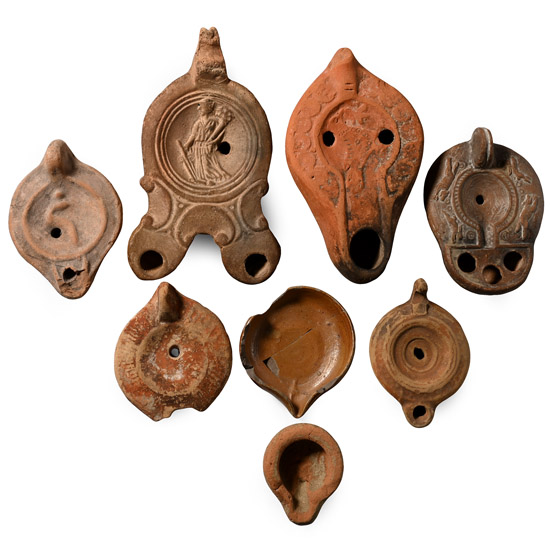
Roman Terracotta Oil Lamp Collection
1st century B.C.-6th century A.D.Sold for (Inc. bp): £416
Mixed group of eight oil lamps, including one with a triple nozzle and dogs chasing hares on the shoulder, a double-spouted oil lamp with Abundantia holding a cornucopia, one with a bird in profile holding a branch in its beak, and others. 743 grams total, 5.5-14.8 cm
From an important collection of lamps, Germany, 1970s. -
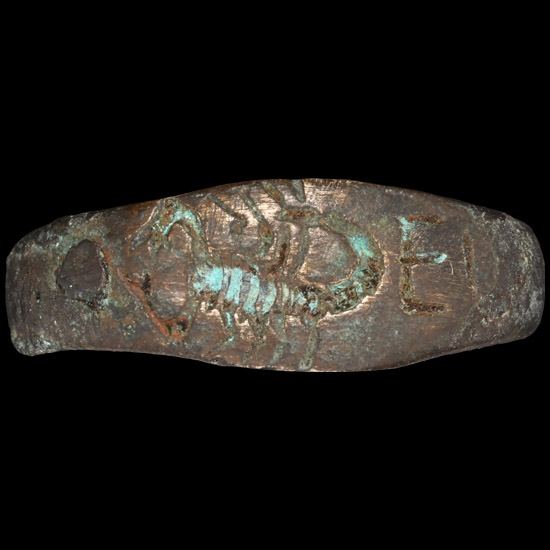
Roman Bronze Ring with Scorpion and EI
1st-2nd century A.D.Sold for (Inc. bp): £143
Featuring a flat-section hoop and a bezel with a scorpion with a raised tail and the letters 'EI'. 2.23 grams, 19.41 mm overall, 16.06 x 13.49 mm internal diameter (approximate size British H, USA 3 3/4, Europe 6.18, Japan 6)
From the private collection of a European gentleman (1942-2024), formed since the 1970s.
It is possible that the ring was carried by a Pretorian guardsman, as the scorpion was one of their emblems. -
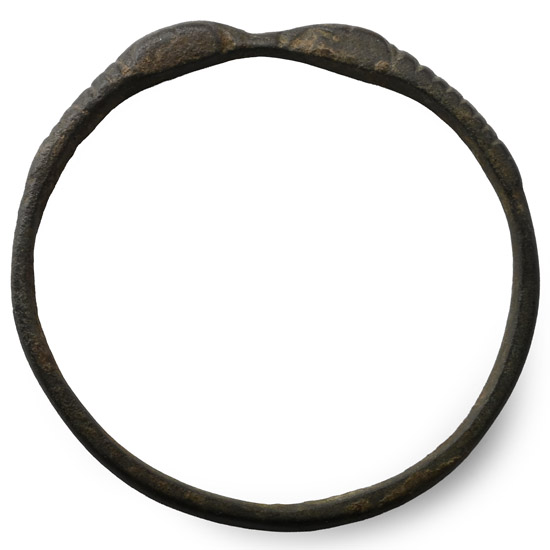
Roman Bronze Bracelet with Zoomorphic Terminals
2nd-4th century A.D.Sold for (Inc. bp): £52
Annular bracelet with D-section hoop and two opposing animal heads with ribbed necks. 26.3 grams, 63 mm
Ex P. Chapman collection, 1980s-1990s.
