
Loading, please wait...

LOT 0104
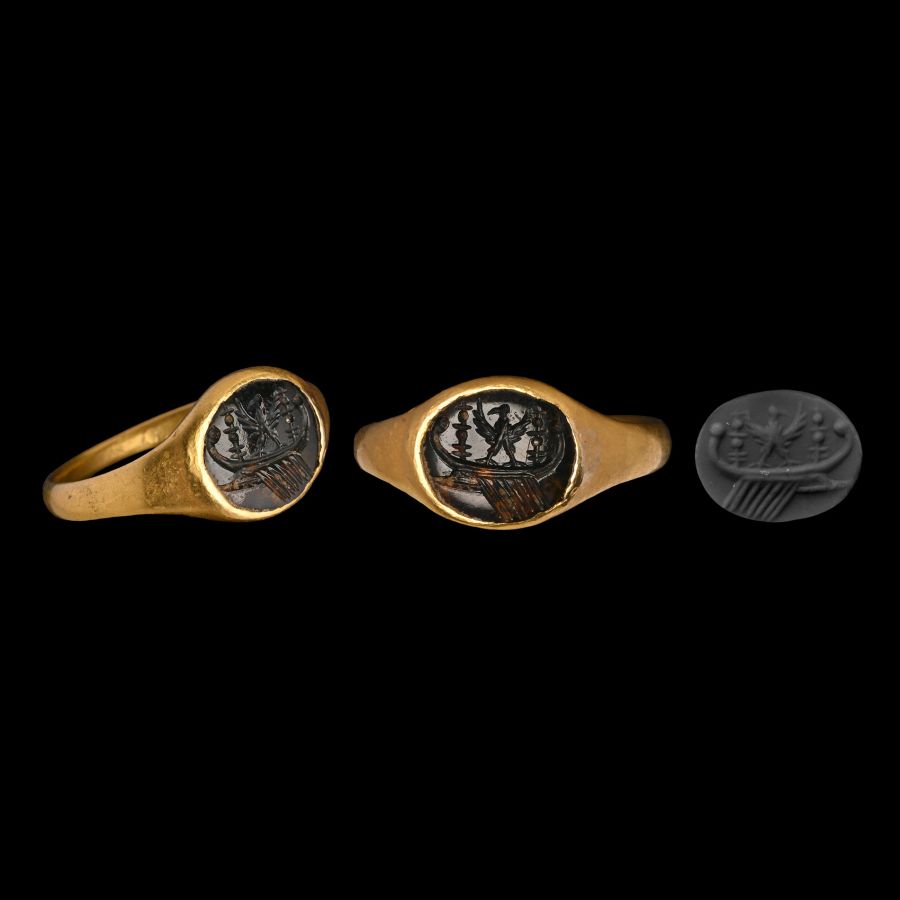
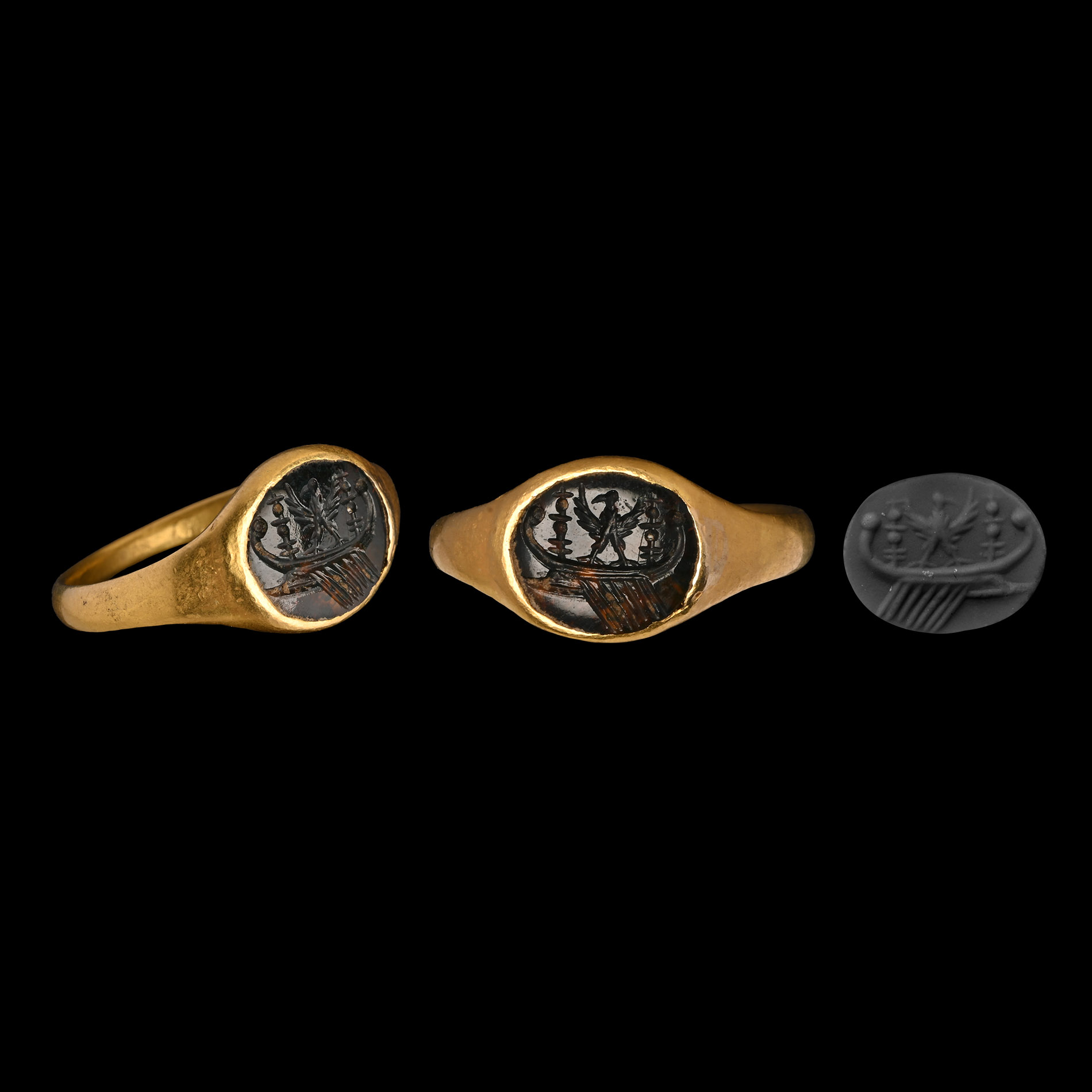
Roman Gold Ring with Jasper Bireme Gemstone
1ST-2ND CENTURY A.D.
7/8 in. (4.62 grams, 21.78 mm overall, 19.26 mm internal diameter (approximate size British M, USA 6, Europe 12.46, Japan 12)).
With discoid bezel and inset intaglio of a bireme with two military standards on deck flanking an eagle; supplied with a museum-quality impression.
ProvenanceAcquired on the London art market in the late 1980s-1990s.
From the family collection of an East London, UK, gentleman.
Cf. Ruseva-Slokoska, L., Roman Jewellery, Sofia, 1991, item 191, for type.
CONDITIONTimeLine Auctions follows a vetting process to ensure the authenticity and legality of all items, reinforcing our commitment to integrity and responsible trading. Each antiquity, antique, and coin lot undergoes thorough examination by a vetting committee of at least ten external specialists, professional trade association members, scientists, and archaeologists: Our Vetting Process
AUCTIONS:
TimeLine is a leading auction house specialising in antiquities, ancient art, collectables, natural history, coins, medals, and books. Our auctions offer museums, collectors, historians, and enthusiasts the opportunity to acquire unique and historically significant pieces.
-
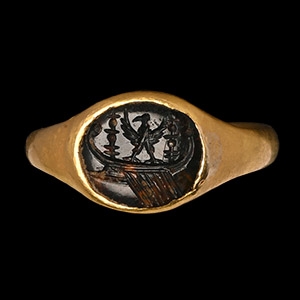
Roman Gold Ring with Jasper Bireme Gemstone
1st-2nd century A.D.Sold for (Inc. bp): £3,120
With discoid bezel and inset intaglio of a bireme with two military standards on deck flanking an eagle; supplied with a museum-quality impression. 4.62 grams, 21.78 mm overall, 19.26 mm internal diameter (approximate size British M, USA 6, Europe 12.46, Japan 12)
Acquired on the London art market in the late 1980s-1990s. From the family collection of an East London, UK, gentleman. -
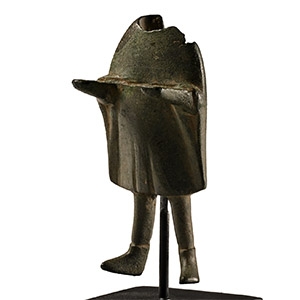
Roman Bronze Traveller Statuette
2nd-3rd century A.D.Sold for (Inc. bp): £91
Hollow-formed figure wearing a paenula and with hands extended to support a patera or salver; mounted on a custom-made stand. 35.8 grams total, 64 mm including stand
From a collection acquired on the UK art market from various auction houses and collections mostly before 2000. From an important Cambridgeshire estate; thence by descent. -
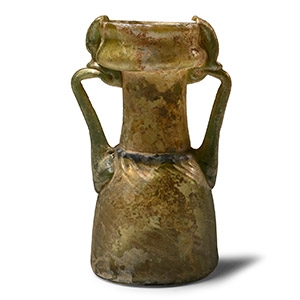
Roman Two-Coloured Sprinkler Flask
1st-4th century A.D.Estimate: £400 - 600 (+bp*)
Opening Bid: £200
With bell-shaped body, rolled lip at the shoulder, cylindrical neck and deep, tiered rim; internal shelf at shoulder level with small central opening; brilliant iridescence to inner and outer surfaces; pontil to base. 62 grams, 10 cm
From a London, UK, collection, 1990s.
