
Loading, please wait...


LOT 1013
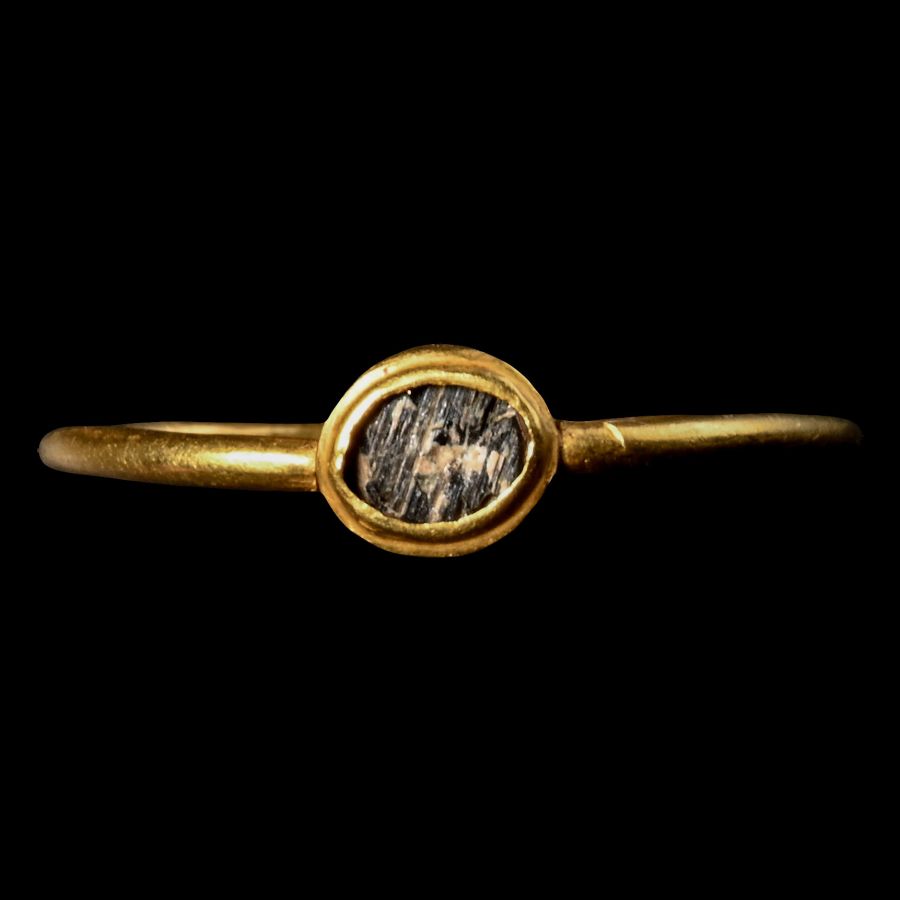
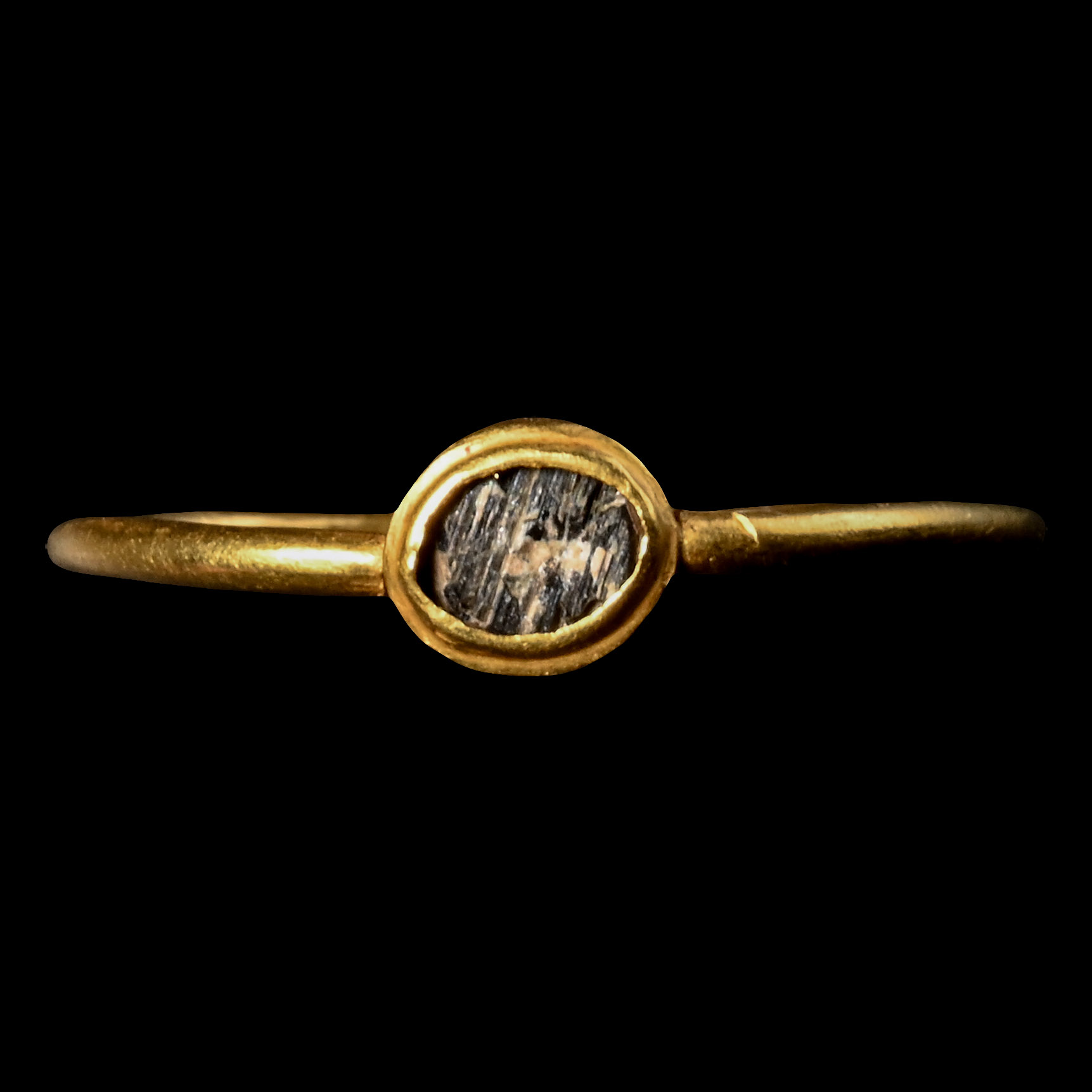
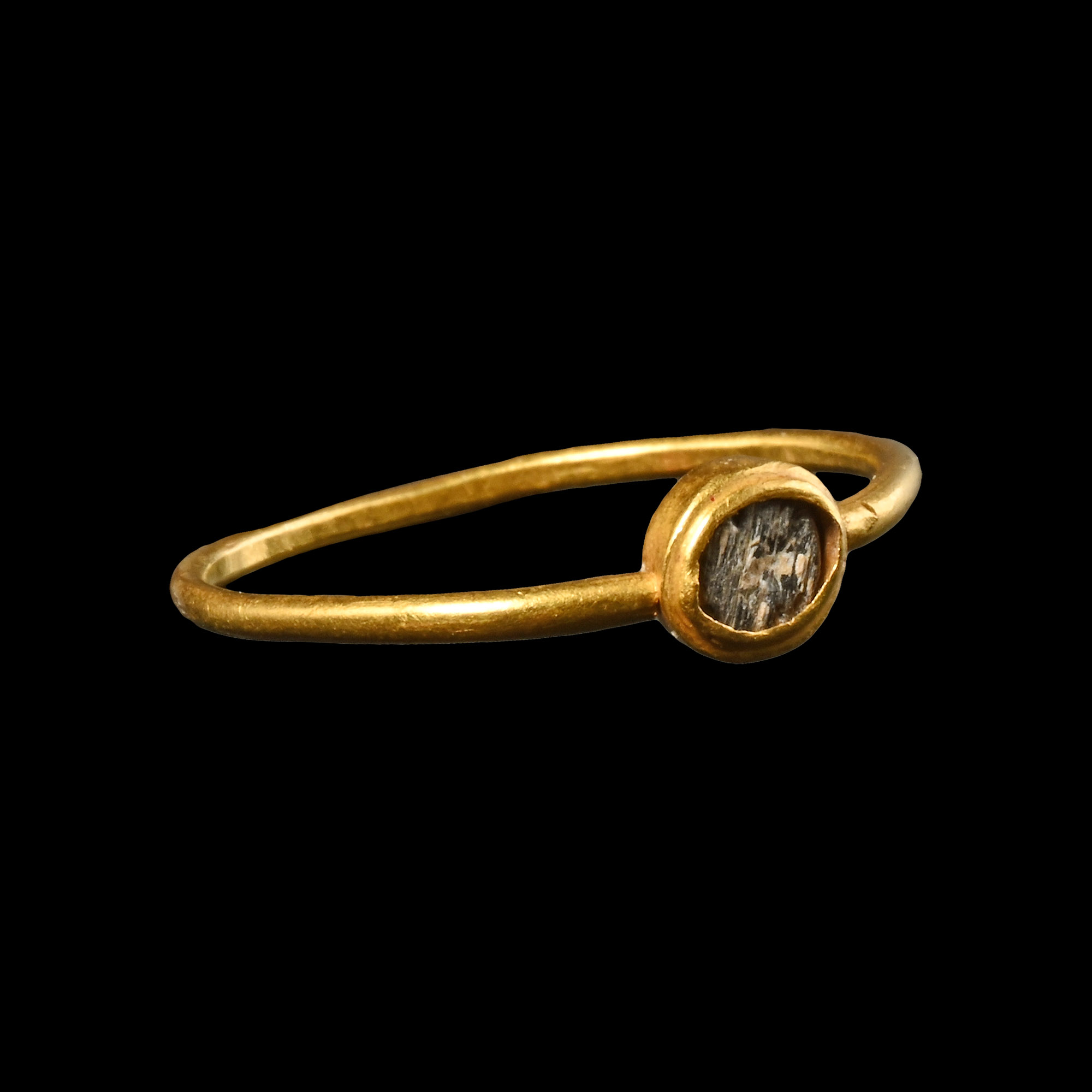
Roman Gold Ring with Glass Inlay
CIRCA 1ST-2ND CENTURY A.D.
3/4 in. (1.23 grams, 20.17 mm overall, 17.94 x 16.63 mm internal diameter (approximate size British O, USA 7, Europe 14.98, Japan 14)).
Round-section hoop with a discoid bezel set with a black glass bead, accompanied by a label reading 'Roman Gold Finger Ring. Wearable gold ring inset with a glass bead. 1st/2nd century AD'.
ProvenanceFrom the collection of a gentleman born in the late 19th century, formed 1940s-1970s.
From an old Staffordshire family collection; thence by descent.
Accompanied by an old identification ticket.
TimeLine Auctions follows a vetting process to ensure the authenticity and legality of all items, reinforcing our commitment to integrity and responsible trading. Each antiquity, antique, and coin lot undergoes thorough examination by a vetting committee of at least ten external specialists, professional trade association members, scientists, and archaeologists: Our Vetting Process
AUCTIONS:
TimeLine is a leading auction house specialising in antiquities, ancient art, collectables, natural history, coins, medals, and books. Our auctions offer museums, collectors, historians, and enthusiasts the opportunity to acquire unique and historically significant pieces.
LOT 1013
Roman Gold Ring with Glass Inlay
Estimate £300 - 400€350 - 460 (for guidance only)$410 - 540 (for guidance only)
Opening Bid
£150 (EUR 174; USD 203) +BP*
-
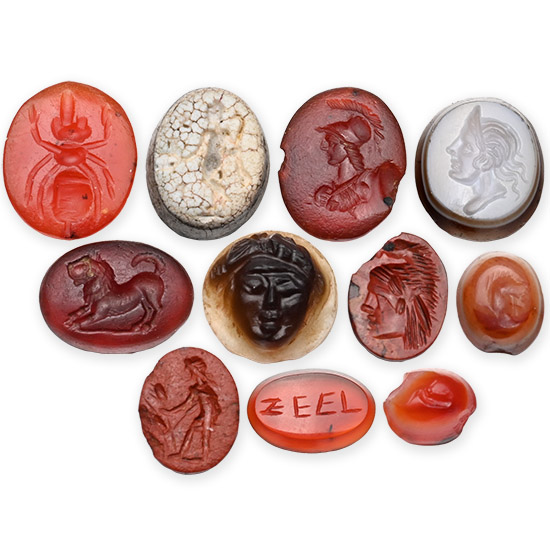
Large Roman Carnelian and Other Gemstone Collection
1st-2nd century A.D. and laterEstimate: £1,500 - 2,000 (+bp*)
Opening Bid: £750
Comprising eleven gemstones with various motifs, including: a cameo with a face, a profile bust wearing a filet, an insect with a stinger, a bust of Minerva, a lion on a baseline, a helmetted head of a warrior, a harvesting scene, two with a bird(?), an advancing nude female with an inscription before, and one inscribed 'ZEEL'. 5.33 grams total, 7-13 mm
Private collection, London. -
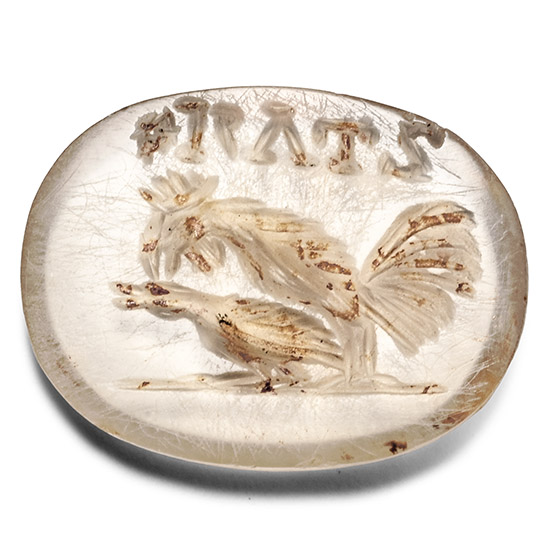
Roman Rock Crystal Gemstone of an Archigallus Priest
Circa 1st century B.C.-1st century A.D.Estimate: £800 - 1,000 (+bp*)
Bids: 1 | Current Bid: £250
Ellipsoid in plan with an engraved scene of a cockerel copulating with a hen, inscription above. 0.62 grams, 14 mm
Property of a European gentleman, acquired from the estate of a London collector (formed before 2000).
In ancient Rome, a cockerel, Latin gallus, was a symbol of virility and fertility. But gallus (plural galli) was also the term for a religious devotee and later for a priest of Cybele (Magna Mater). Often eunuchs, they performed ecstatic dances and rituals, sometimes even engaging in sexual acts as part of their religious practices. In Rome, the head of the Cybele priests was the archigallus, chosen by the quindecimviri sacris faciundis. Reliefs show that the archigallus was wearing luxurious and extravagant costumes and jewellery. This unique gemstone can be attributed to such an archigallus. The cult of Cybele/Magna Mater and the presence of galli also spread to Roman Britain, where it is attested, e.g. in Catterick and Corbridge. -
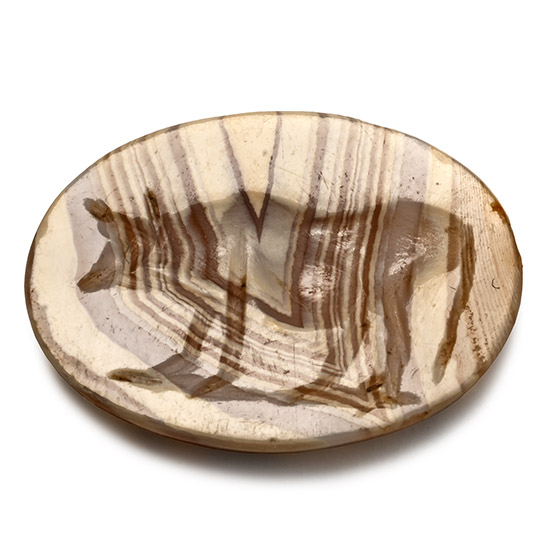
Roman Banded Agate Gemstone with Engraved Bull
1st-3rd century A.D.Estimate: £400 - 600 (‡+bp*)
Opening Bid: £180
Ellipsoid with carved standing bull in profile; supplied with a museum-quality impression. 0.64 grams, 14 mm
with Gorny & Mosch, Munich, Auction 145, 14 December 2005, no.205.
