
Loading, please wait...
LOT 0118
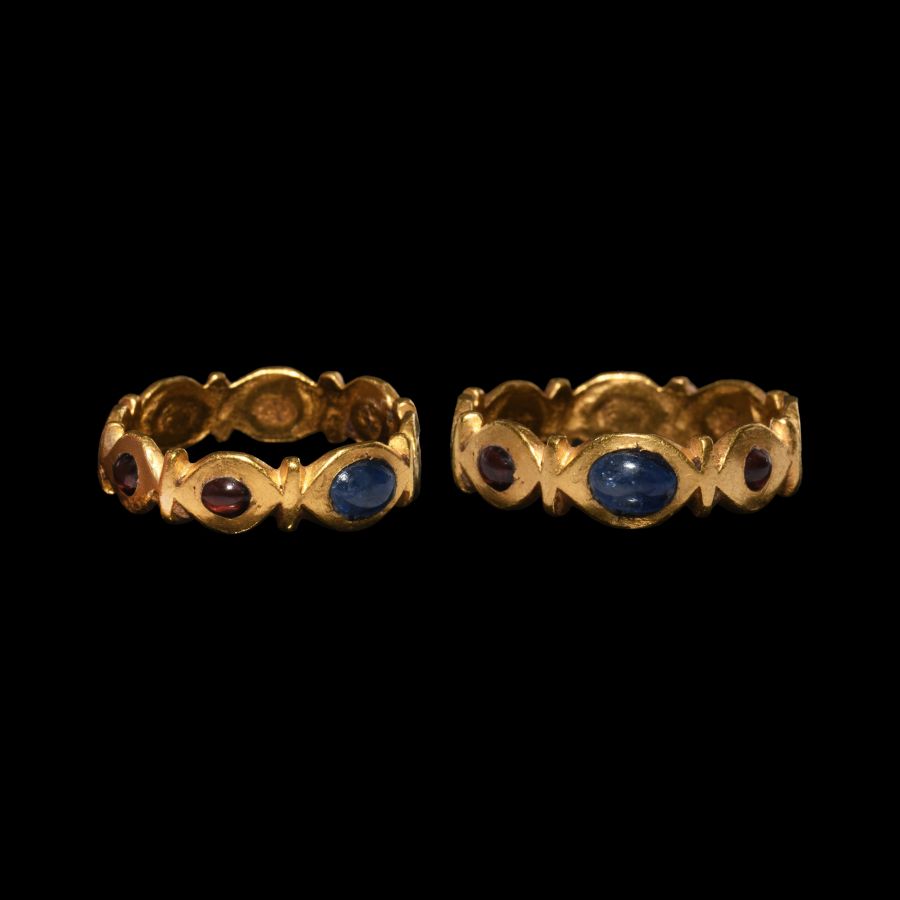
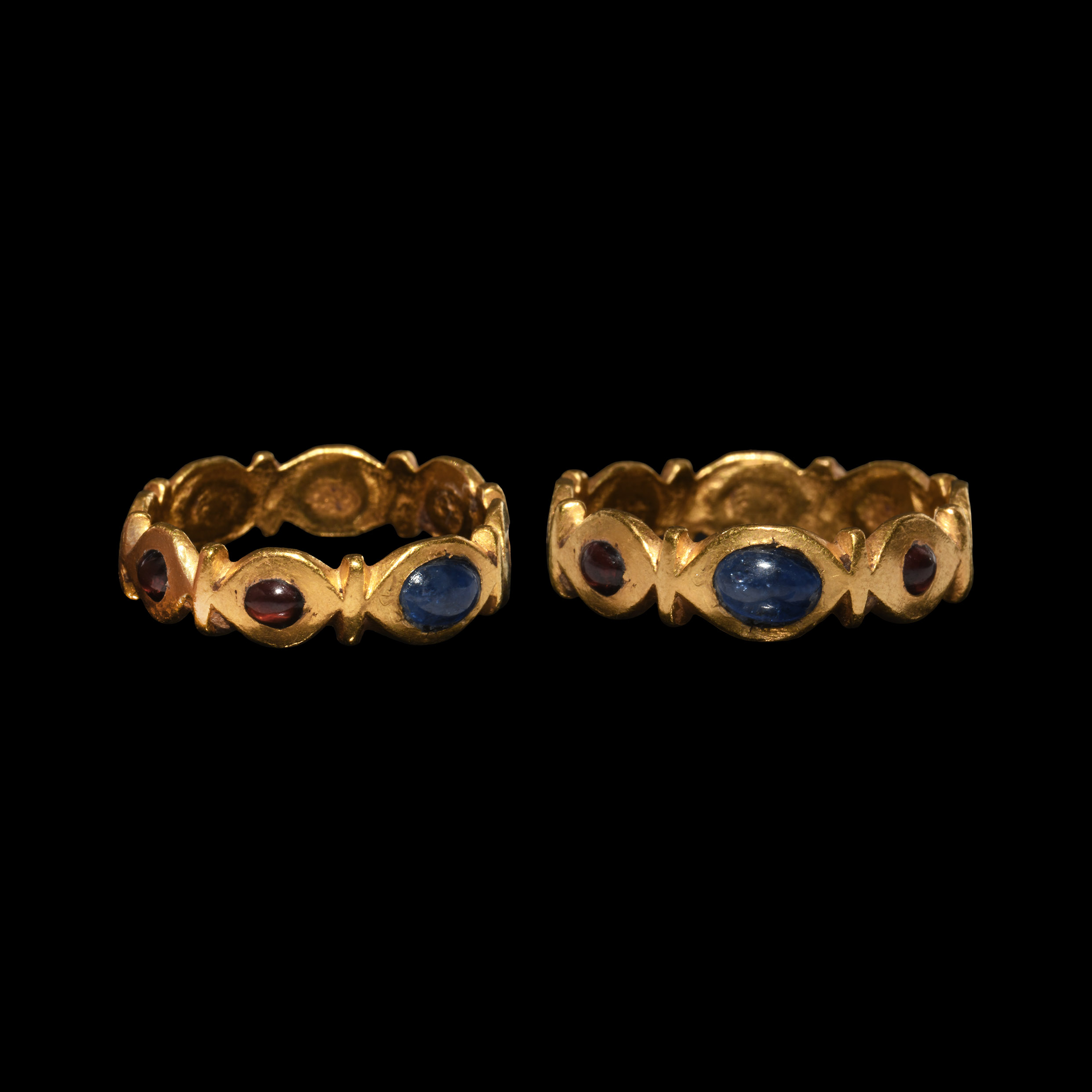
Roman Gold Ring with Gemstones
4TH-5TH CENTURY AD
3/4" (4.72 grams, 23.5mm overall, 19.2mm internal diameter (approximate size British P 1/2, USA 8, Europe 17.15, Japan 16)).
A gold ring worked from a single piece of gold, the hoop comprising oval plaques set with garnet and sapphire cabochons, interspersed with delicate gold bars.
ProvenanceProperty of a London gentleman; formerly acquired before 1970; accompanied by a copy of a four page report from Striptwist Ltd, a London-based company run by historical precious metal specialist Dr Jack Ogden, reference number 191014; an academic report by Dr Raffaele D'Amato; and an independent specialist report and valuation by graduate gemmologist and jewellery expert Anna Rogers, GIA GG, BA, Gem-A, ref. no. 0118/02/06/2020; this lot has been checked against the Interpol Database of stolen works of art and is accompanied by AIAD certificate number no.155124-10026.
LiteratureCf. Marshall, F.H., Dictionnaire Catalogue of the finger rings Greek, Etruscan & Roman in the departments of Antiquities of British Museum, London, 1968, p. 157, pl. XXV, n. 982; Spier, J., Ancient Gems and finger rings, Malibu, 1992, p. 132, n. 357; Ruseva-Slokoska, L., Roman Jewellery, Sofia, 1991, p. 99, for variant III, type 1.
FootnotesThe taste for precious and finely carved stones set on rings was introduced to Rome through contact with Greek culture. If originally the Romans wore the rings only on the fourth finger, very soon they wore them on three fingers of the hand. Quintilian reproached the orators who wore rings on all of their fingers, a custom which, he said, was appropriate only for dandies and women. Rings were not customarily worn on the middle finger owing to its association with an obscene gesture which survives to this day. Wearing a particularly large or heavy ring was considered a status symbol, and multiple rings could be worn on one finger.
CONDITIONTimeLine Auctions follows a vetting process to ensure the authenticity and legality of all items, reinforcing our commitment to integrity and responsible trading. Each antiquity, antique, and coin lot undergoes thorough examination by a vetting committee of at least ten external specialists, professional trade association members, scientists, and archaeologists: Our Vetting Process
AUCTIONS:
TimeLine is a leading auction house specialising in antiquities, ancient art, collectables, natural history, coins, medals, and books. Our auctions offer museums, collectors, historians, and enthusiasts the opportunity to acquire unique and historically significant pieces.

2nd-3rd century AD
Lot No. 1005
Sold for (Inc. premium): £4,500

1st-2nd century AD
Lot No. 1243
Sold for (Inc. premium): £38

1st-2nd century AD
Lot No. 1438
Sold for (Inc. premium): £163
