
Loading, please wait...
_900x900.jpg "Roman Gold Ring with Gem Depicting Alexander the Great Hunting")
_200x200.jpg "Roman Gold Ring with Gem Depicting Alexander the Great Hunting")
.jpg "Roman Gold Ring with Gem Depicting Alexander the Great Hunting")
LOT 0155
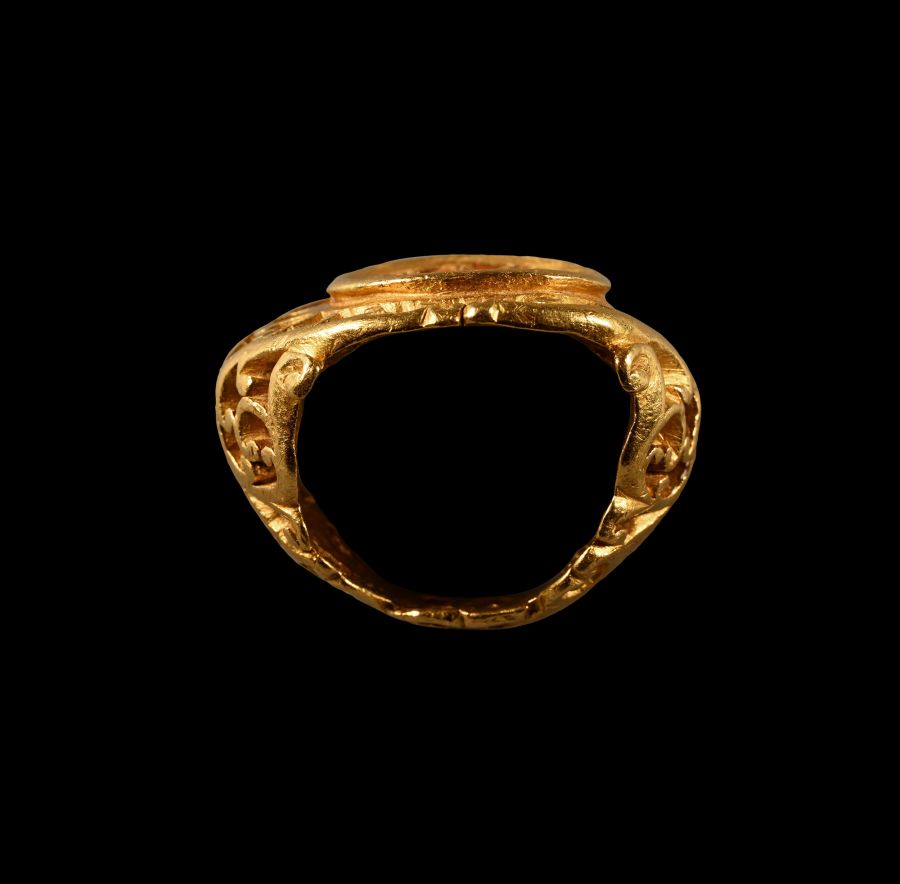
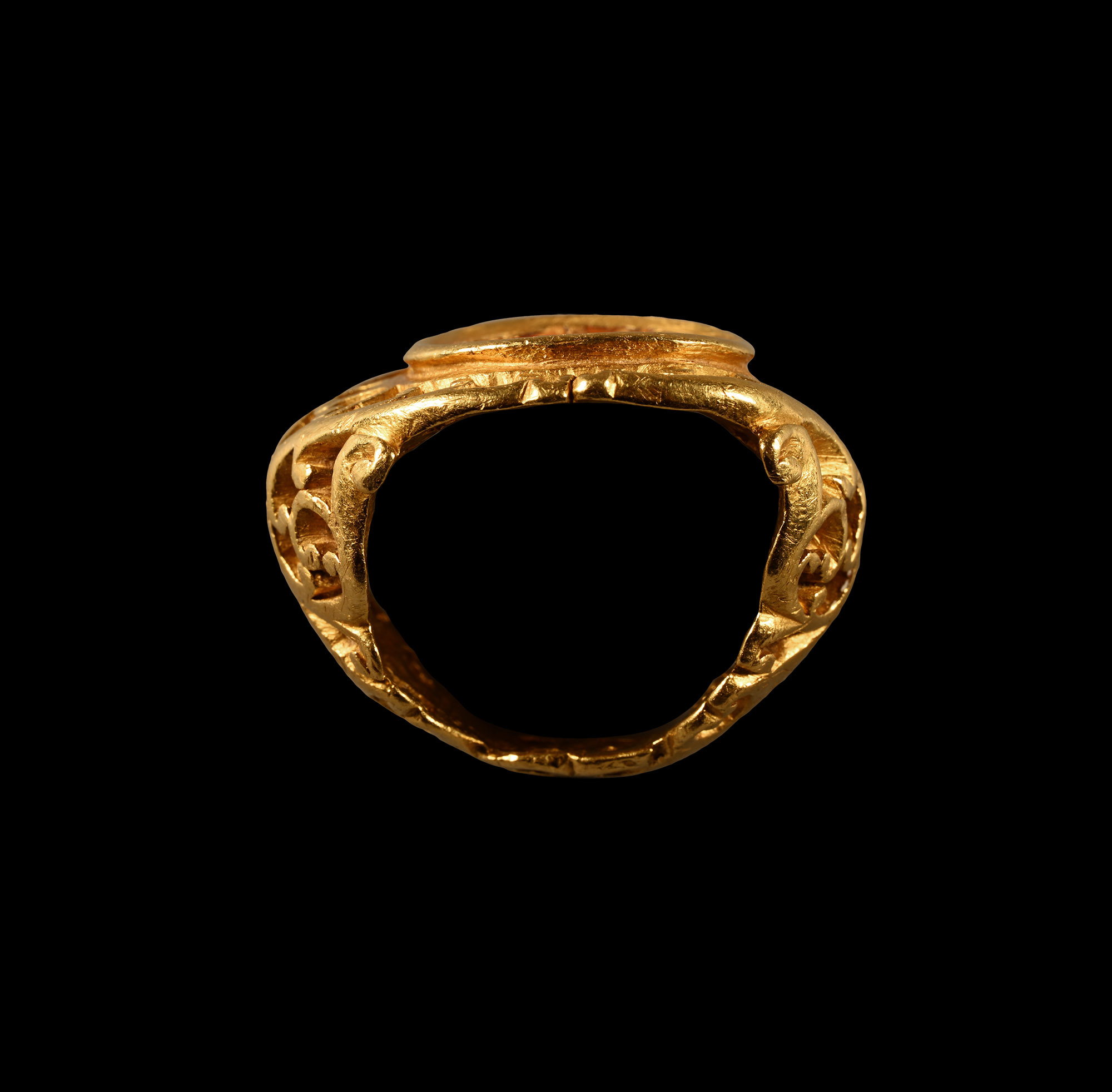
Roman Gold Ring with Gem Depicting Alexander the Great Hunting
3RD CENTURY A.D.
1 1/4 in. (33.97 grams, 31.98 mm overall, 20.67 mm internal diameter (approximate size British T, USA 9 1/2, Europe 21.26, Japan 20)).
Composed of a large openwork hoop and bezel set with a jasper gemstone, intaglio image of a mounted cavalryman wearing a high-crested pseudo Corinthian helmet and holding a barbed javelin in his hand, protecting his horse from the leaping lion attacking from the rear, a tree behind.
ProvenanceAcquired on the New York art market in 1995.
Ex French collection.
with Christie's, London, 25th April 2007, lot 187.
Important North West London collection.
Accompanied by a copy of a French cultural passport no.079872.
Accompanied by an academic report by Dr Raffaele D'Amato.
This lot has been checked against the Interpol Database of stolen works of art and is accompanied by a search certificate number no.11775-204565.
See Marshall, F.H., Harcourt-Smith, C., Catalogue of the Finger Rings, Greek, Etruscan and Roman, in the Department of Antiquities British Museum, London, 1907, item 801, for similar gold ring; Ruseva-Slokoska, L., Roman Jewellery, Sofia, 1991, item 214, for type; for comparable lion hunting scene see Boardman, J., Greek Gems and finger rings, early Bronze Age to Late Classical, London, 1973 (2001), nos.924,1070.
FootnotesThe massive size, shape and the volute decoration is typical of the 3rd century A.D. and similar rings are visible in the collections of the British Museum and Mainz State Museum. The subject of the intaglio is made with great skill, exquisite artistry and engraved in fine detail. The lion hunt theme is typical of the Hellenistic world since the time of Alexander the Great.
CONDITIONTimeLine Auctions follows a vetting process to ensure the authenticity and legality of all items, reinforcing our commitment to integrity and responsible trading. Each antiquity, antique, and coin lot undergoes thorough examination by a vetting committee of at least ten external specialists, professional trade association members, scientists, and archaeologists: Our Vetting Process
AUCTIONS:
TimeLine is a leading auction house specialising in antiquities, ancient art, collectables, natural history, coins, medals, and books. Our auctions offer museums, collectors, historians, and enthusiasts the opportunity to acquire unique and historically significant pieces.
LOT 0155
Roman Gold Ring with Gem Depicting Alexander the Great Hunting
Estimate £30,000 - 40,000€34,800 - 46,400 (for guidance only)$40,500 - 54,000 (for guidance only)
-
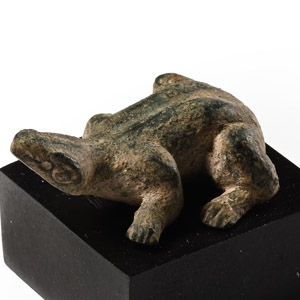
Romano Bronze Standing Frog Statuette
1st-4th century A.D.Estimate: £200 - 300 (+bp*)
Opening Bid: £111
Modelled in the round with naturalistic detailing, with head raised. 27 grams, 33 mm
‘The Ancient Menagerie Collection’ formerly the property of a Cambridgeshire lady, collected since the 1990s and acquired from auctions and dealers throughout Europe and the USA, now ex London collection. -
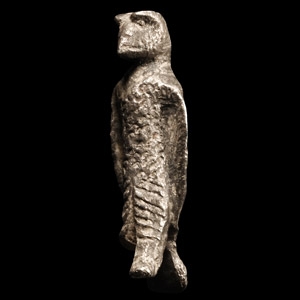
Roman Silver Standing Eagle Statuette
1st-4th century A.D.Sold for (Inc. bp): £104
Modelled in the round with naturalistic detailing, wings held slightly open. 10.9 grams, 34 mm
‘The Ancient Menagerie Collection’ formerly the property of a Cambridgeshire lady, collected since the 1990s and acquired from auctions and dealers throughout Europe and the USA, now ex London collection. -
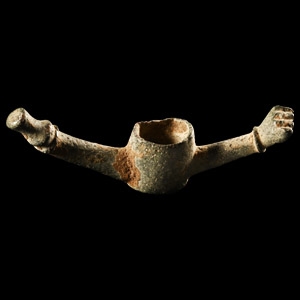
Roman Bronze Phallic and Fist Fitting
1st-4th century A.D.Estimate: £150 - 200 (+bp*)
Opening Bid: £75
The central circular socket flanked by a stylised phallus on one side and an extended arm with clenched fist on the other. 12.8 grams, 57 mm
From the collection of a Cambridge lady, 1990s.
