
Loading, please wait...
LOT 0717
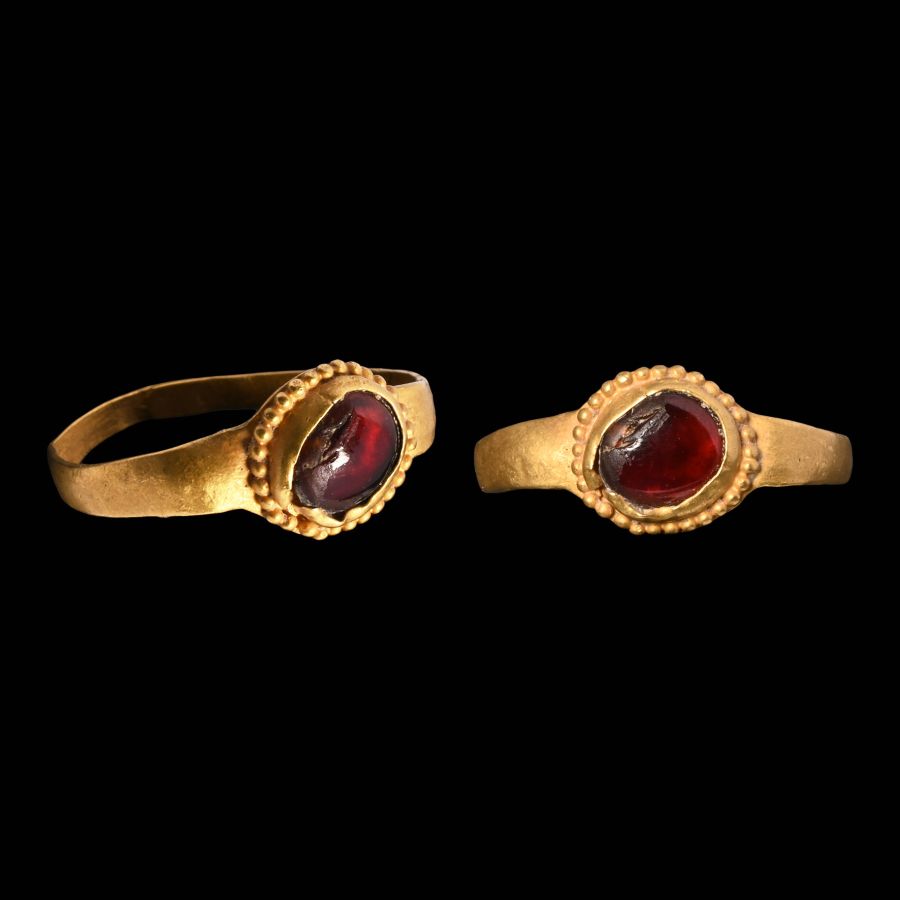
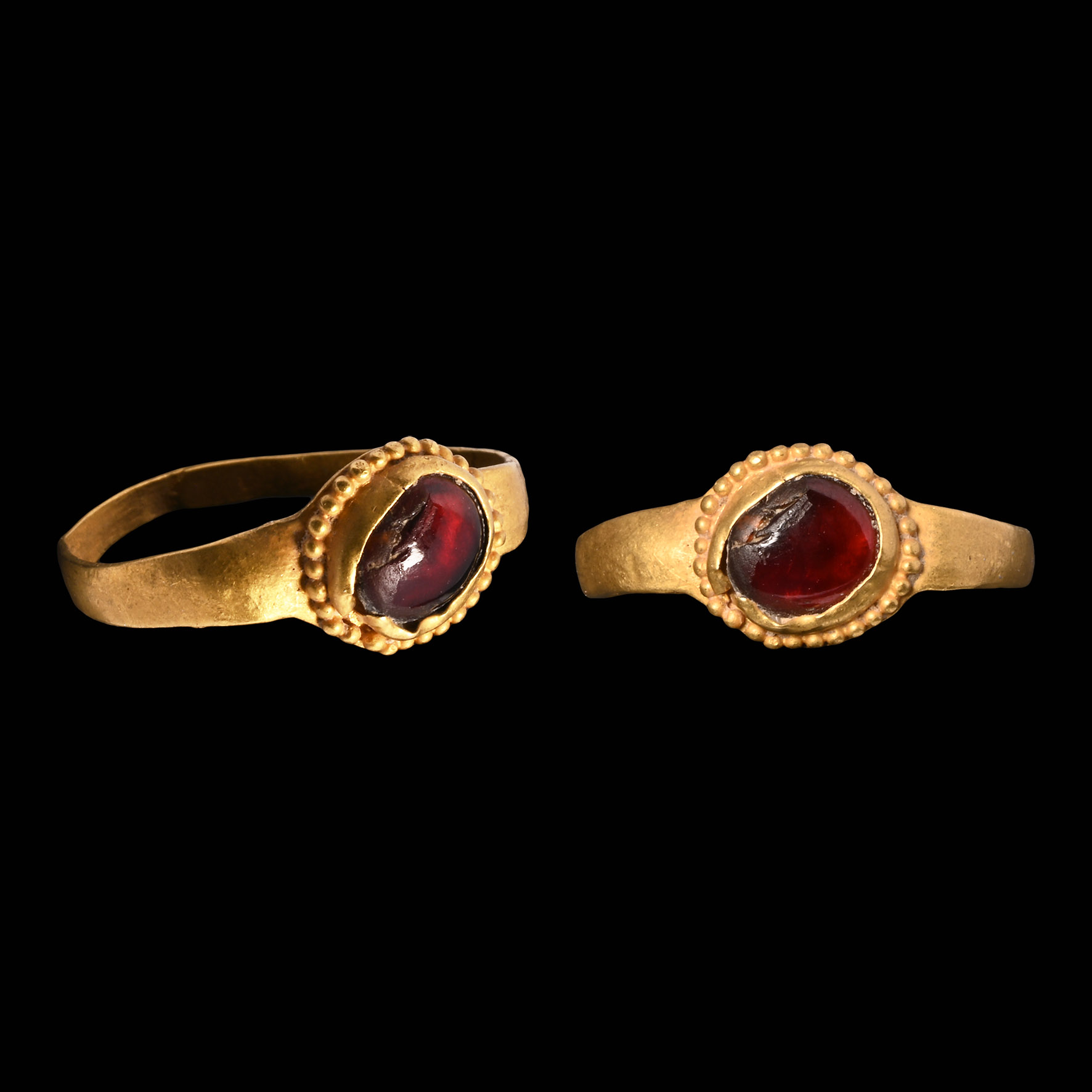
Roman Gold Ring with Garnet
3RD-4TH CENTURY A.D.
3/4 in. (1.56 grams, 17.01 mm overall, 13.30 x 15.50 mm internal diameter (approximate size British G, USA 3 1/4, Europe 4.92, Japan 4)).
Comprising a slender hoop with discoid bezel and central cell surrounded by a beaded wire collar, inset garnet cabochon
ProvenanceFrom a late Japanese specialist collector, 1970-2000s.
LiteratureCf. Chadour, A.B., Rings. The Alice and Louis Koch Collection, volume I, Leeds, 1994, item 432, for type.
CONDITIONTimeLine Auctions follows a vetting process to ensure the authenticity and legality of all items, reinforcing our commitment to integrity and responsible trading. Each antiquity, antique, and coin lot undergoes thorough examination by a vetting committee of at least ten external specialists, professional trade association members, scientists, and archaeologists: Our Vetting Process
AUCTIONS:
TimeLine is a leading auction house specialising in antiquities, ancient art, collectables, natural history, coins, medals, and books. Our auctions offer museums, collectors, historians, and enthusiasts the opportunity to acquire unique and historically significant pieces.
-
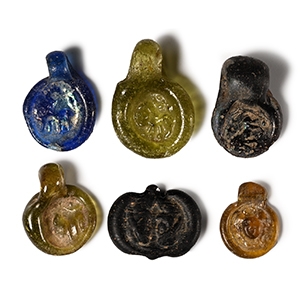
Roman Decorated Glass Pendant Group
1st-2nd century A.D.Sold for (Inc. bp): £416
Comprising six discoid pendants with impressed motifs, five with integral loops; four with an image of an advancing lion, one with a facing medusa head, and one with two opposing male heads, pierced twice for suspension. 11.12 grams total, 17-26 mm
London, UK gallery, 1971-early 2000s. -
.jpg)
Roman Figural Carnelian Gemstone
Circa 1st century A.D.Sold for (Inc. bp): £390
With crouching young nude satyr milking a goat, frond to the rear; supplied with a museum-quality impression. 0.65 grams, 14 mm
From the collection of a Swiss gentleman formed in Europe from 1970-1980s; thence by descent from the family in London. -
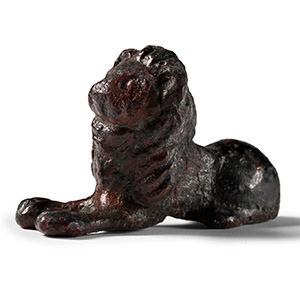
Roman Bronze Lion Statuette
1st-3rd century A.D.Sold for (Inc. bp): £117
Crouching adult male lion with forepaws extended. 24.7 grams, 36 mm wide
Acquired in the late 1960s-early 1970s. Ex property of a European gentleman. Acquired on the UK art market in 2015. Property of a Kent lady collector.
