
Loading, please wait...
LOT 0622
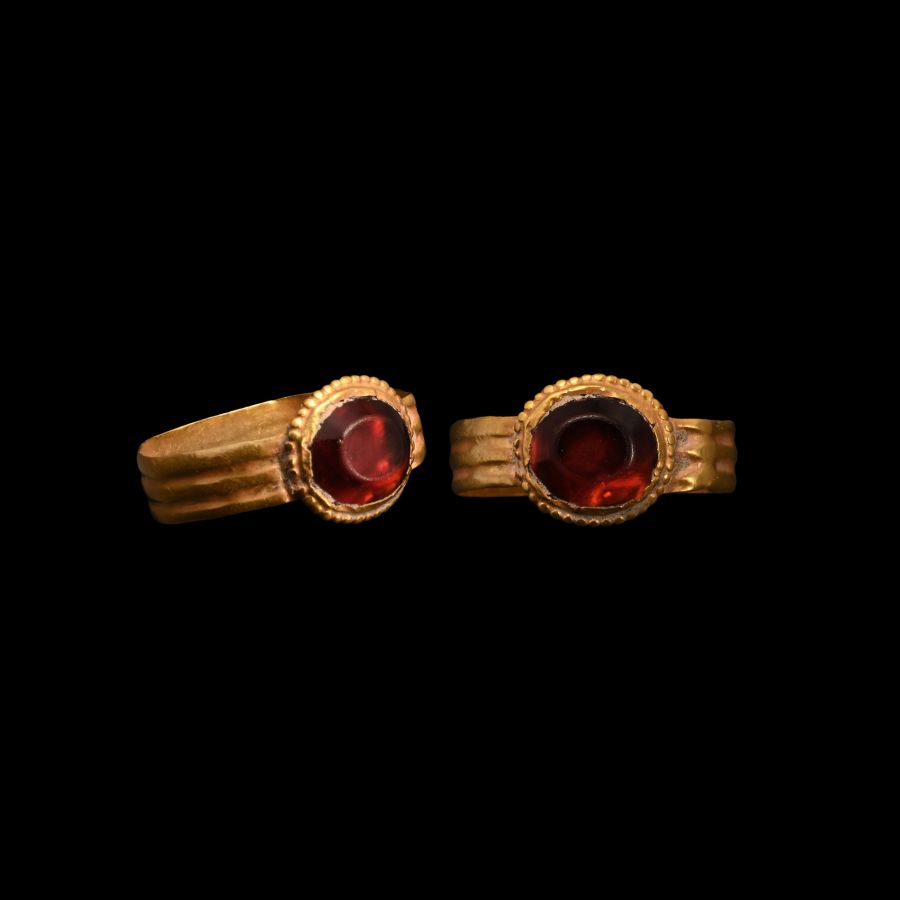
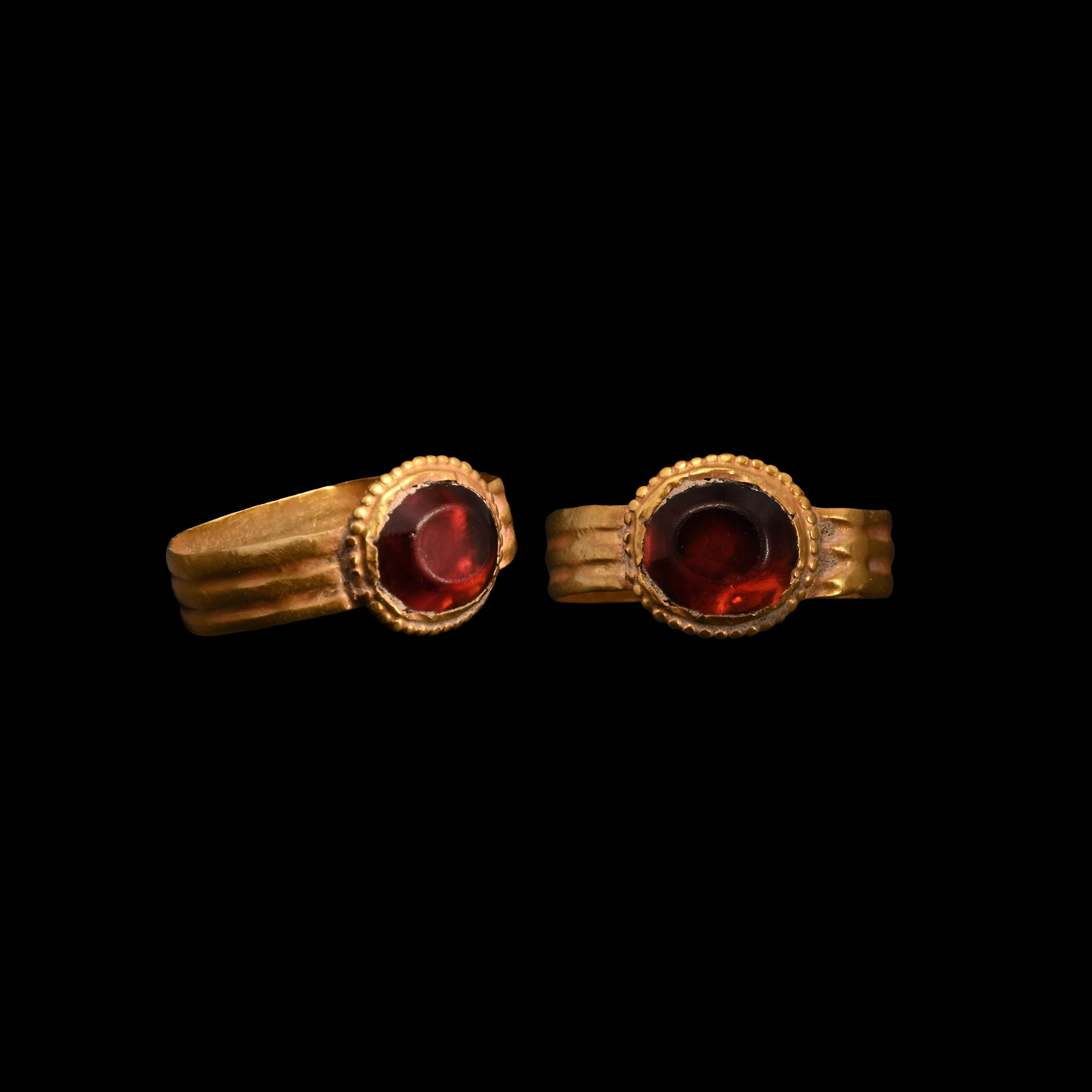
Roman Gold Ring with Garnet Gemstone
1ST CENTURY B.C.-1ST CENTURY A.D.
5/8 in. (0.99 grams, 16.41 mm overall, 14.20 mm internal diameter (approximate size British F 1/2, USA 3, Europe 4.3, Japan 4)).
A gold ring composed of a flat-section hoop with decorative channelling, oval bezel with granulated border, set with a flat-top polished garnet gemstone.
ProvenanceAcquired 1970-2000s.
Ex Abelita family collection.
TimeLine Auctions follows a vetting process to ensure the authenticity and legality of all items, reinforcing our commitment to integrity and responsible trading. Each antiquity, antique, and coin lot undergoes thorough examination by a vetting committee of at least ten external specialists, professional trade association members, scientists, and archaeologists: Our Vetting Process
AUCTIONS:
TimeLine is a leading auction house specialising in antiquities, ancient art, collectables, natural history, coins, medals, and books. Our auctions offer museums, collectors, historians, and enthusiasts the opportunity to acquire unique and historically significant pieces.
-
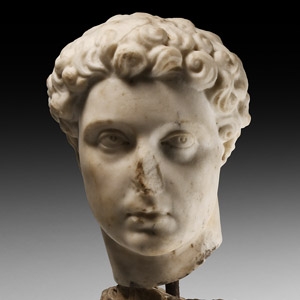
Roman Marble Head on Corinthian Capital Section
2nd-3rd century A.D. or laterSold for (Inc. bp): £3,900
A 2nd-3rd century A.D. Roman marble Corinthian capital fragment carved with acanthus leaves; together with a 16th-17th century A.D. reworked male head modelled in the round with naturalistic detailing. 16.2 kg total, 44 cm high including stand
Acquired on the UK art market. English private collection. This lot has been checked against the Interpol Database of stolen works of art and is accompanied by search certificate no.11623-199751. -
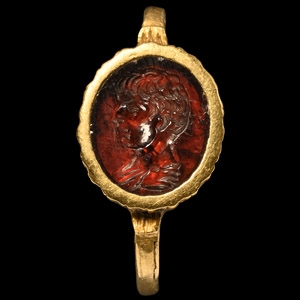
Roman Ring with Imperial Portrait
2nd century A.D. or laterSold for (Inc. bp): £2,470
A gold finger ring with narrow hoop, disc bezel with fluted rim, inset garnet intaglio male bust with Julian hairstyle. 4.68 grams, 25.34 mm overall, 23.40 mm internal diameter (approximate size British P 1/2, USA 7 3/4, Europe 16.86, Japan 16)
Acquired 1980-2015. Ex Abelita family collection. This lot has been checked against the Interpol Database of stolen works of art and is accompanied by search certificate no.11620-199234. -
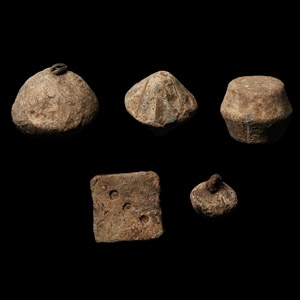
Roman Steelyard and Other Weight Group
1st-4th century A.D.Sold for (Inc. bp): £26
A group of various weights comprising three biconical steelyard weights each with the remains of the iron loop, a barrel-shaped weight with five dots to one end, and a tabular-shaped weight with three large stamped dimples to one fate surface. 478 grams total, 24-34 mm
Found Rodings, Essex, UK. Acquired on the UK antiques market between 1974-1985. Albert Ward collection, Essex, UK.
