
Loading, please wait...
LOT 0713
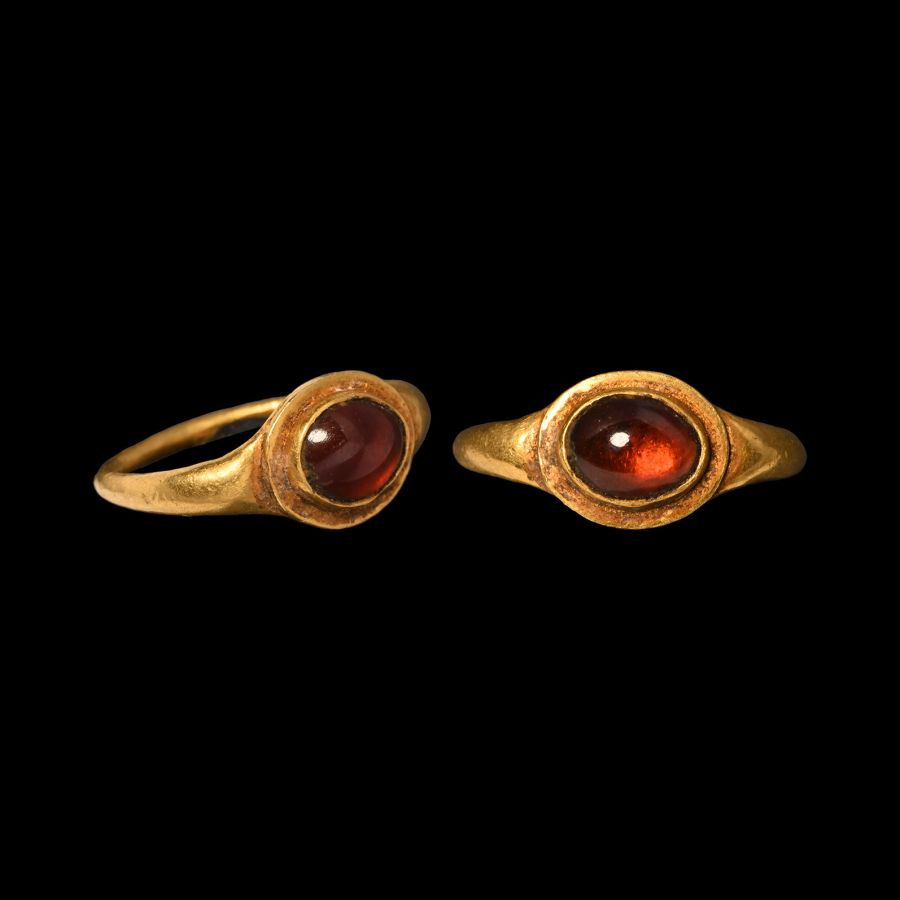
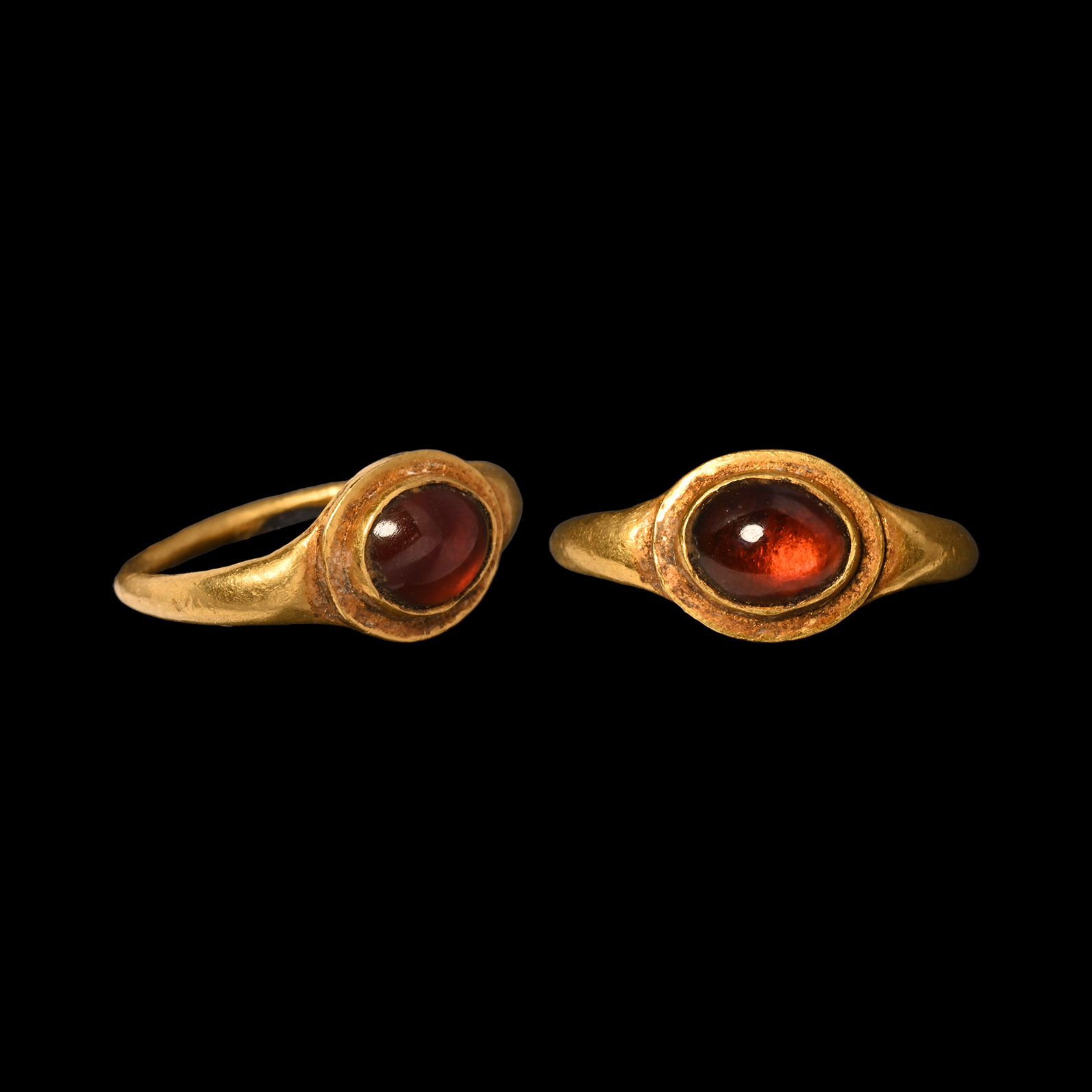
Roman Gold Ring with Garnet Cabochon
1ST-3RD CENTURY B.C.
1/2 in. (1.25 grams, 14.67 mm overall, 12.36 mm internal diameter).
A gold ring with raised oval bezel inset deep red cabochon garnet.
ProvenanceAcquired early 1990s.
Ex private American collection; thence by descent.
Private collection since 1998.
TimeLine Auctions follows a vetting process to ensure the authenticity and legality of all items, reinforcing our commitment to integrity and responsible trading. Each antiquity, antique, and coin lot undergoes thorough examination by a vetting committee of at least ten external specialists, professional trade association members, scientists, and archaeologists: Our Vetting Process
AUCTIONS:
TimeLine is a leading auction house specialising in antiquities, ancient art, collectables, natural history, coins, medals, and books. Our auctions offer museums, collectors, historians, and enthusiasts the opportunity to acquire unique and historically significant pieces.
-
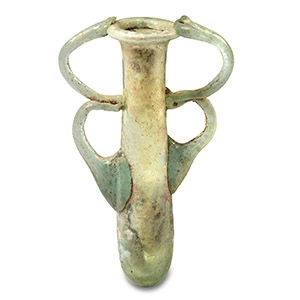
Roman Double-Handled Unguentarium
1st-4th century A.D.Sold for (Inc. bp): £338
An aqua glass unguentarium or double cosmetic tube of tubular form with rolled rim, two twin-looped applied handles; iridescent surfaces. 41 grams, 10.1 cm high
Acquired early 1990s. Ex private American collection; thence by descent. Private collection since 1998. -
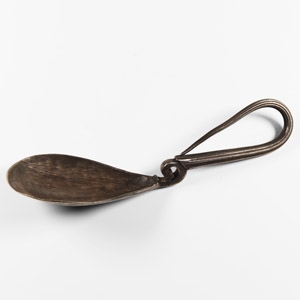
Roman Silver Swan-Neck Spoon
4th century A.D.Estimate: £1,000 - 1,400 (‡+bp*)
Opening Bid: £500
A silver cochlea spoon with scroll and swan-neck junction of bowl with stem; the flat-section stem narrowing to a point and returned to meet the shank. 22.1 grams, 10.9 cm
Acquired early 1990s. Ex private American collection; thence by descent. Private Swiss collection since 1998. -
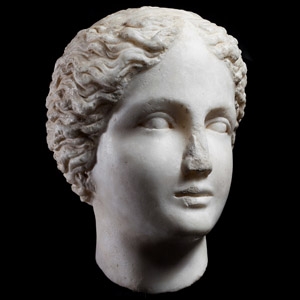
Roman Marble Head of a Young Woman
2nd century A.D.Sold for (Inc. bp): £16,900
A skilfully carved life-size marble head of a female (possibly Artemis, a Muse or an Amazon) with centrally parted hair composed of wavy strands and tied in a ponytail at the back; serene facial expression, almond-shaped eyes and small mouth with slightly parted lips; some restoration; mounted on a custom-made display stand. 14 kg total, 38 cm high including stand
Ex private collection, Monaco, 1960s-1970s. Acquired from the Monaco Fine Arts on 4th November 1992. Private collection of Mr & Mrs Daniel, Monaco. Acquired by the present owner from David Aaron Gallery in 2019. Accompanied by an academic report by Dr Raffaele D’Amato. This lot has been checked against the Interpol Database of stolen works of art and is accompanied by searcher certificate number no.11569-197722.
The youthful head seems to be based on the Greek Attic Artemis Colonna type of the 4th century B.C. The composition of the head is powerful with a serene countenance, its physiognomy replete with the idealised quality characteristic of Greek classical sculpture. This classic influence is best seen in the perfect almond- shaped eyes with their sharply carved lids as well as the smooth contour of the face. The rich handling of the coiffure and the smooth quality of the face can suggest a date sometime during the Hadrianic (117 to 138 A.D.) or early Antonine periods.
