
Loading, please wait...
LOT 0740
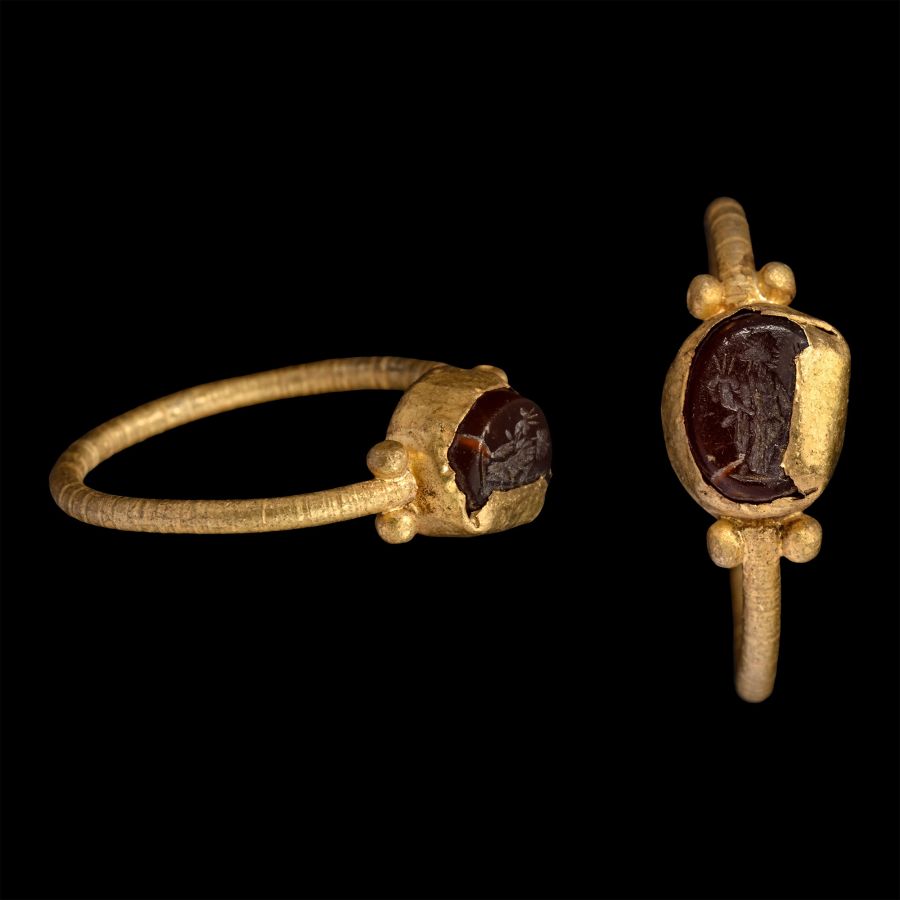
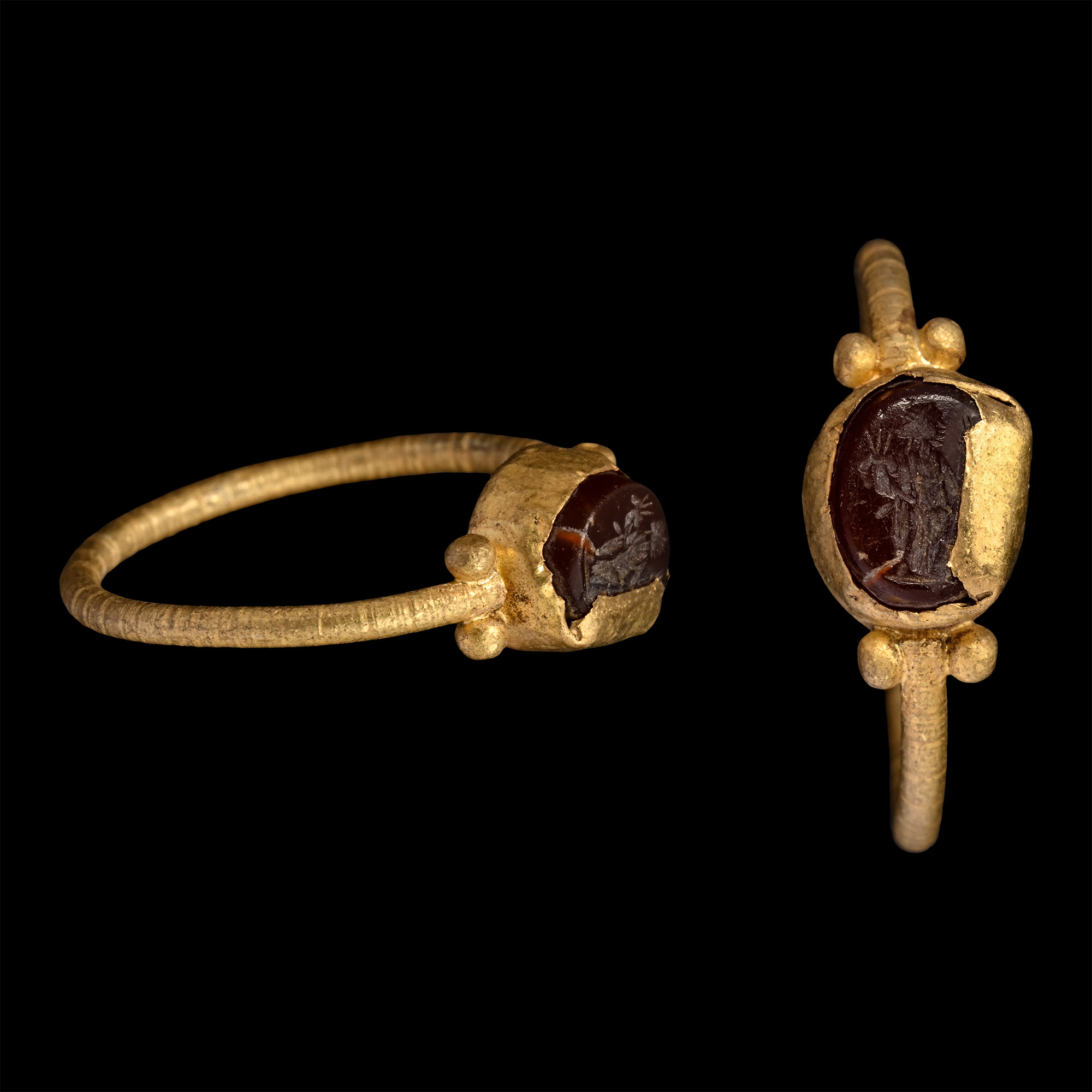
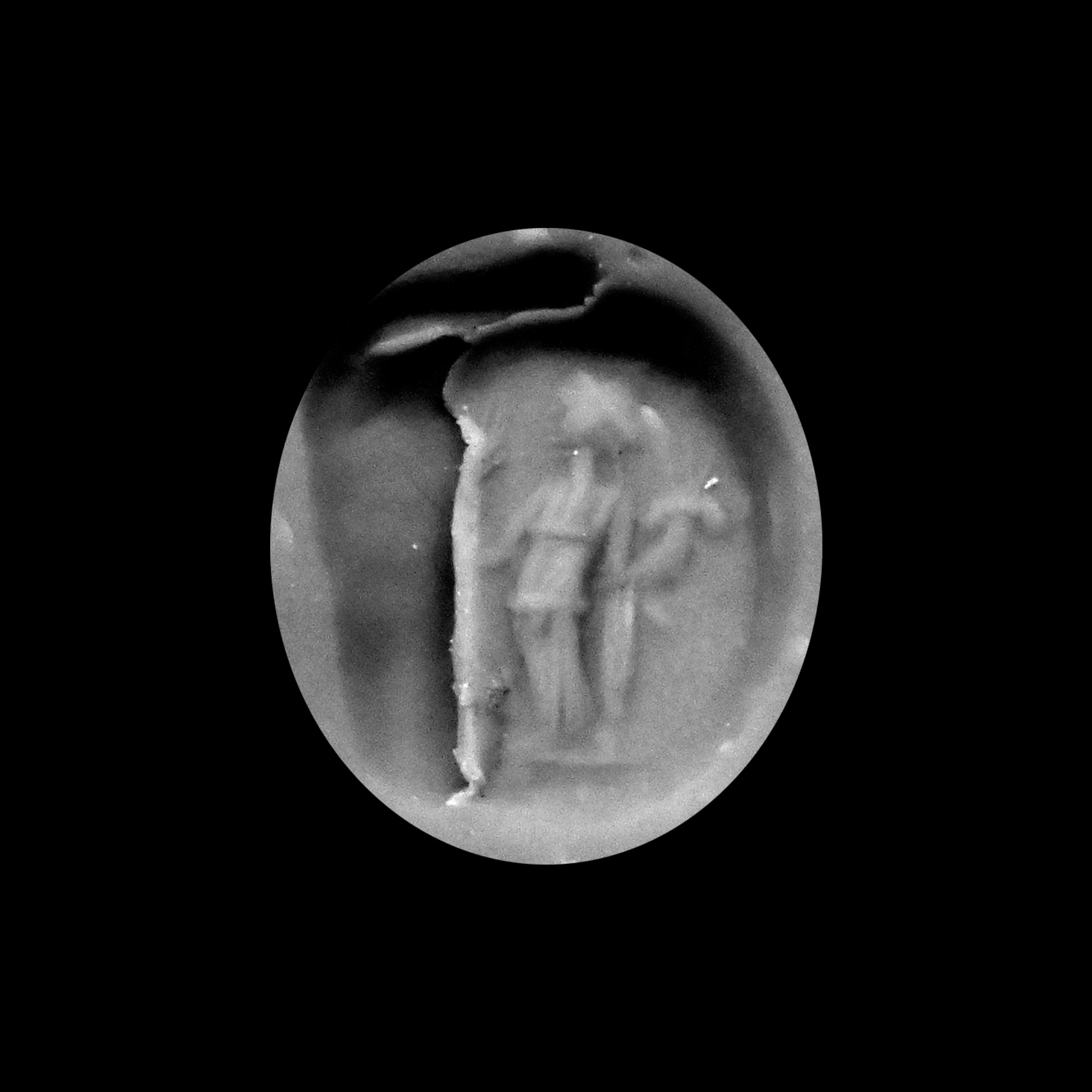
Roman Gold Ring with Fortuna Gemstone
2ND-3RD CENTURY A.D.
1 in. (3.17 grams, 23.57 mm overall, 18.42 mm internal diameter (approximate size British Q, USA 8, Europe 17.49, Japan 16)).
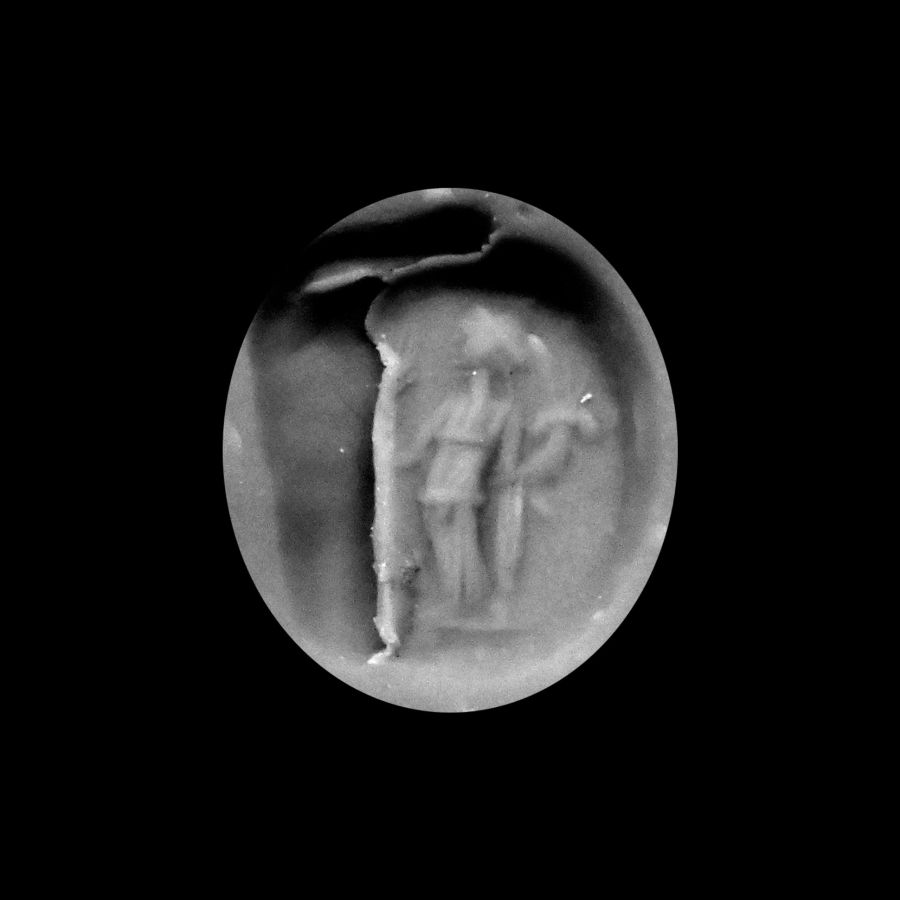
Slender hoop with notches to the shoulders, pairs of granules at the junction with the rectangular cell with inset carnelian intaglio Fortuna with a cornucopia; supplied with a museum-quality impression.
ProvenanceEx German art market, 2000s.
Acquired from an EU collector living in London.
From the collection of a Surrey, UK, gentleman.
Cf. Ruseva-Slokoska, L., Roman Jewellery, Sofia, 1991, item 222, for type.
CONDITIONTimeLine Auctions follows a vetting process to ensure the authenticity and legality of all items, reinforcing our commitment to integrity and responsible trading. Each antiquity, antique, and coin lot undergoes thorough examination by a vetting committee of at least ten external specialists, professional trade association members, scientists, and archaeologists: Our Vetting Process
AUCTIONS:
TimeLine is a leading auction house specialising in antiquities, ancient art, collectables, natural history, coins, medals, and books. Our auctions offer museums, collectors, historians, and enthusiasts the opportunity to acquire unique and historically significant pieces.
-
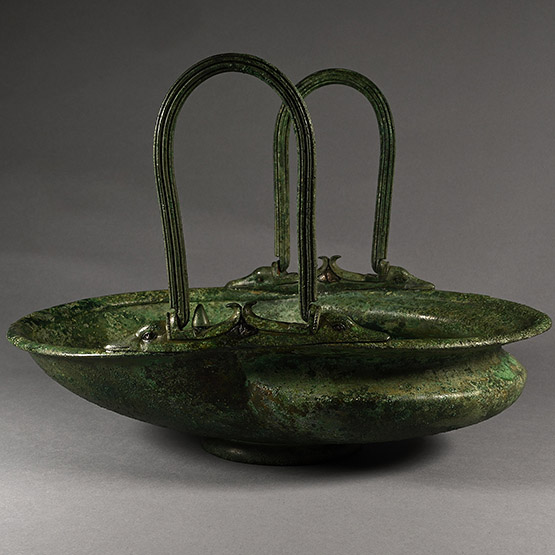
Roman Bronze Basket-Vase
1st-2nd century A.D.Estimate: £15,000 - 20,000 (‡+bp*)
Opening Bid: £7,500
Ellipsoid in plan with low basal ring and thick convex rim, carination to the forward end; hinges to each lateral rim, the knuckles formed as addorsed duck-heads each with scrolled panel to the rear retaining the pivot of the ribbed D-shaped handles. 1.68 kg, 28 cm
Acquired in Switzerland, 1996. Private collection, Europe. Accompanied by an academic report by Dr Raffaele D'Amato. Accompanied by a copy of an Art Loss Register certificate dated 30th April 2004. This lot has been checked against the Interpol Database of stolen works of art and is accompanied by search certificate number no.12363-226688.
This vessel (lanx) was part of Roman and provincial bronze instrumentum domesticum, i.e. culinary or domestic utility ware. The form of the bowl resembles a type of helmet with carination to the front, the handles placed as hinged cheek-protectors. -
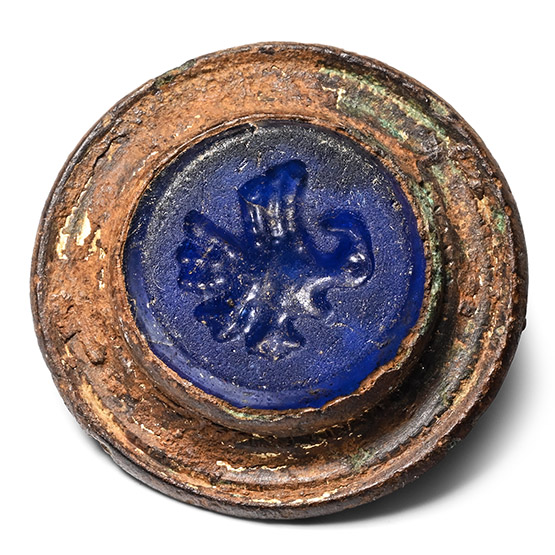
Roman Gilt Bronze Plate Brooch with Blue Eagle Intaglio
Circa 2nd-3rd century A.D.Sold for (Inc. bp): £130
Discoid plate brooch with concentric rings to the tondo, central cell with blue glass insert, intaglio image of a bird with one wing raised and head reversed; pin-lug and catch to reverse. 13.8 grams, 31.7 mm
From an old West Country, UK, collection, sold at auction. From the private collection of a West Midlands lady collector.
The style of the bird image shows possible Sasanian influence. -
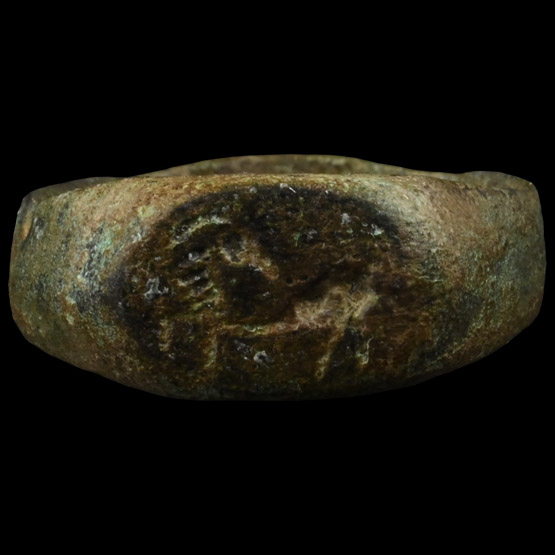
Romano-Celtic Bronze Ring with Goat Facing Back
1st-3rd century A.D.Sold for (Inc. bp): £33
Comprising a wide hoop and an oval bezel with an incuse image of a horned quadruped facing back. 6.97 grams, 25.41 mm overall, 19.09 mm internal diameter (approximate size British S, USA 9, Europe 20, Japan 19)
Acquired on the UK and EU art market before 2000. From the private collection of a Surrey, UK, gentleman.
