
Loading, please wait...
LOT 0145
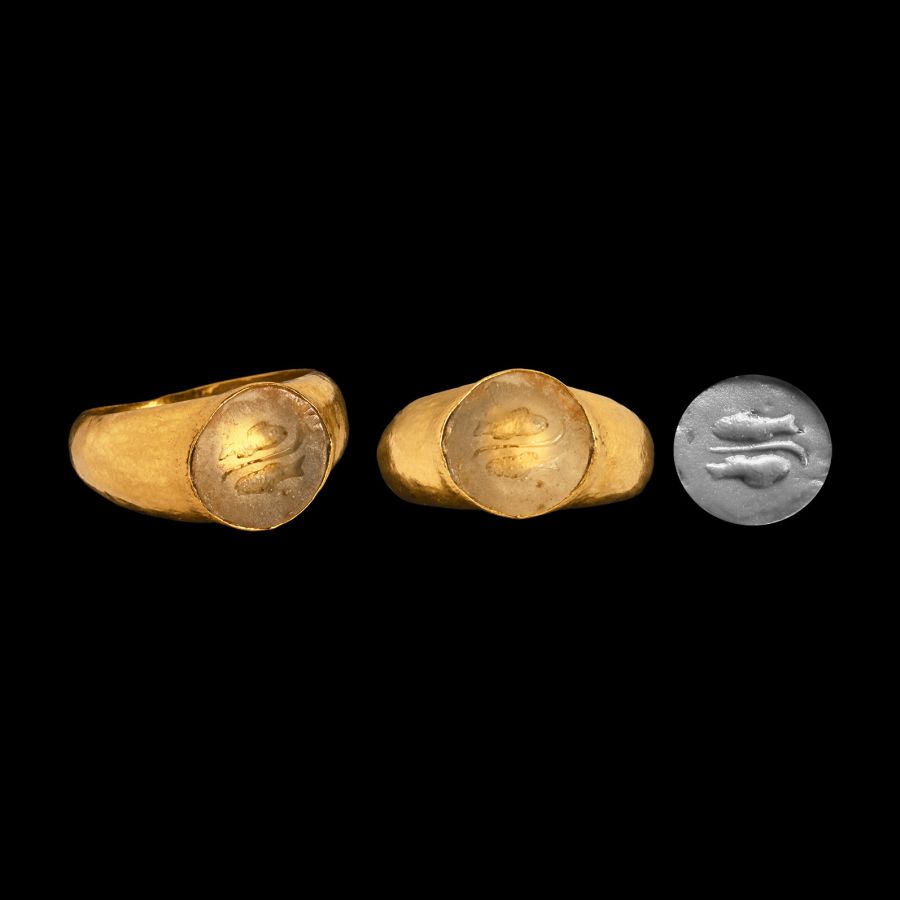
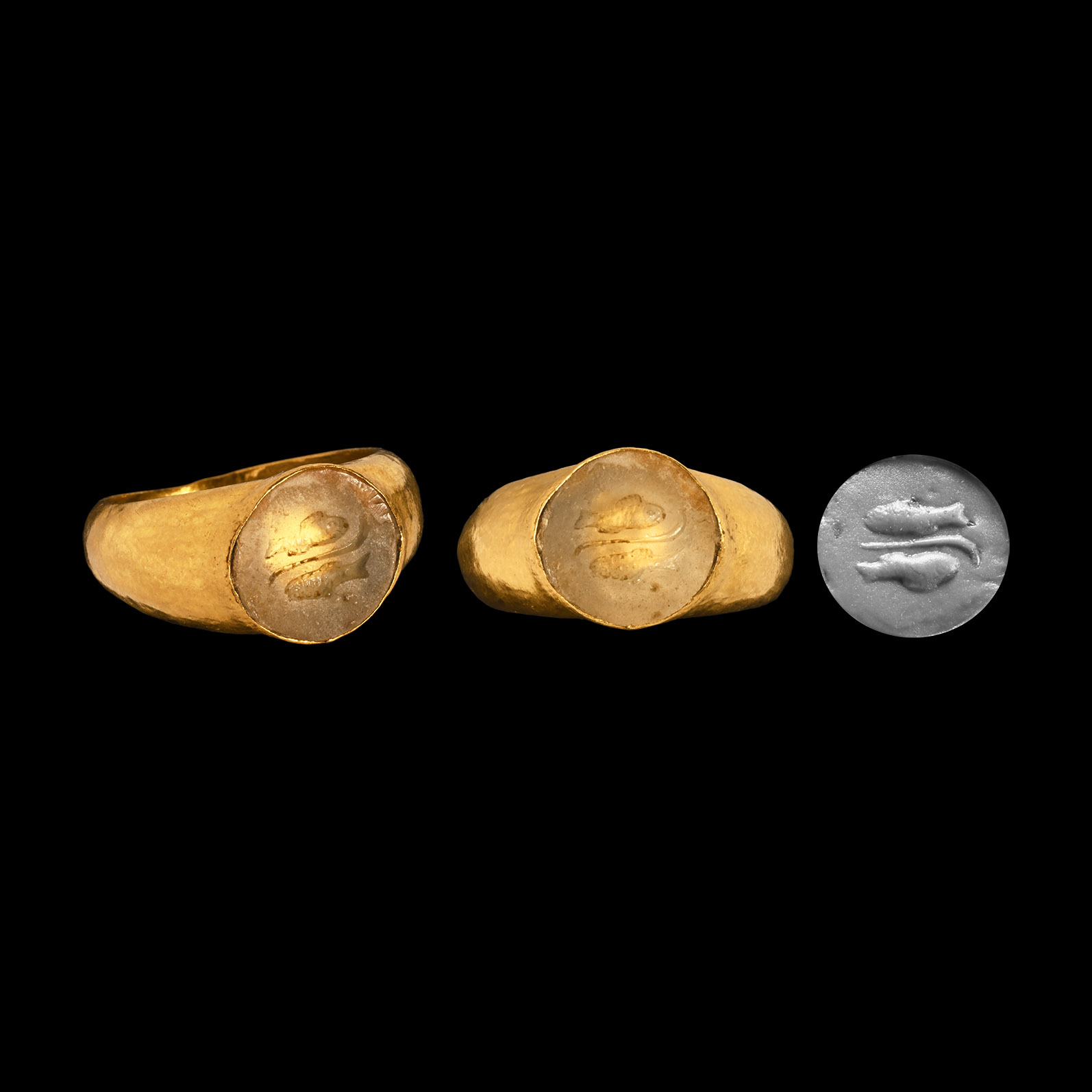
Roman Gold Ring with Fish Gemstone
3RD-4TH CENTURY A.D.
1 in. (6.11 grams, 26.55 mm overall, 20.73 mm internal diameter (approximate size British W 1/2, USA 11 1/4, Europe 25.6, Japan 24)).
A hollow-formed gold finger ring with inset glass intaglio of two fishes placed tête-bêche; the astrological symbol for the Pisces constellation.
ProvenanceEnglish private collection.
LiteratureCf. Chadour, A.B., Rings. The Alice and Louis Koch Collection, volume I, Leeds, 1994, item 353, for type.
CONDITIONTimeLine Auctions follows a vetting process to ensure the authenticity and legality of all items, reinforcing our commitment to integrity and responsible trading. Each antiquity, antique, and coin lot undergoes thorough examination by a vetting committee of at least ten external specialists, professional trade association members, scientists, and archaeologists: Our Vetting Process
AUCTIONS:
TimeLine is a leading auction house specialising in antiquities, ancient art, collectables, natural history, coins, medals, and books. Our auctions offer museums, collectors, historians, and enthusiasts the opportunity to acquire unique and historically significant pieces.
-
.jpg)
Roman Gold Ring with Hermes Gemstone
Late 2nd-early 3rd century A.D.Sold for (Inc. bp): £650
A hollow-formed gold finger ring with inset jasper intaglio of Mercury (Hermes) standing wearing a cloak, holding a caduceus in one hand and a coin-purse in the other. 3.88 grams, 25.81 mm overall, 16.69 mm internal diameter (approximate size British H 1/2, USA 4, Europe 6.81, Japan 6)
Swiss private collection. with Geneve Encheres, Switzerland, 14 December 2017, lot 853. English private collection. -
.jpg)
Roman Marble Seated Hound Statue
1st-2nd century A.D.Sold for (Inc. bp): £4,680
An acephalic seated marble dog carved in the round with anatomical detailing; mounted on a custom-made display stand. 24.4 kg total, 46 cm high including stand
Ex Mr U.C. collection, Belgium, formed in the 1950s. English private collection. This lot has been checked against the Interpol Database of stolen works of art and is accompanied by search certificate no.11630-199755. -
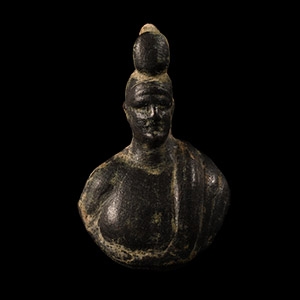
Roman Mount with Flavian Emperor
Late 1st century A.D.Estimate: £300 - 400 (+bp*)
Opening Bid: £150
A copper-alloy appliqué protome in the form of the Flavian Emperor Vespasian, frontal bust in half relief, wearing an exomis leaving his right shoulder uncovered, solid suspension ring to the top of the head. 52.3 grams, 60 mm
Acquired 1969-1999. London collection of the late Mr S.M., thence by descent.
The realism in the details is remarkable and was achieved through fine modelling. This protome was perhaps set in a medallion to decorate the lower terminal of a fulcrum, an S-shaped couch attachment almost always made of metal which was fastened to the side of a wooden headboard to serve as an elbow-rest on a couch (kline).
