
Loading, please wait...
LOT 0159
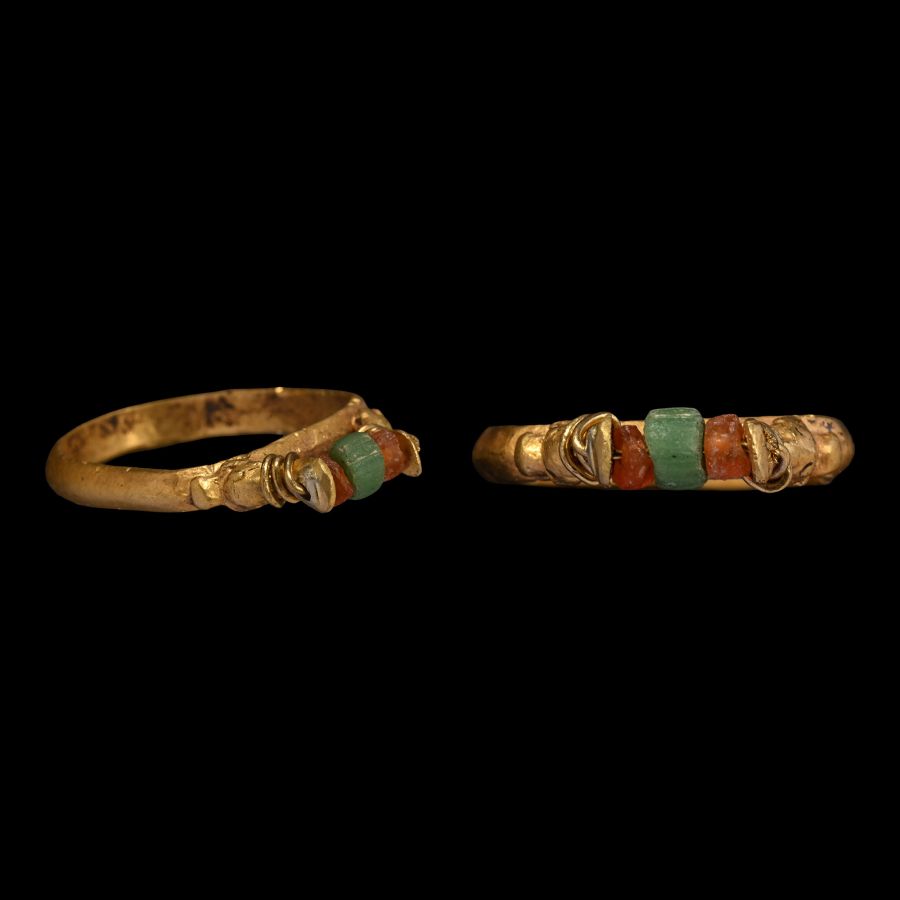
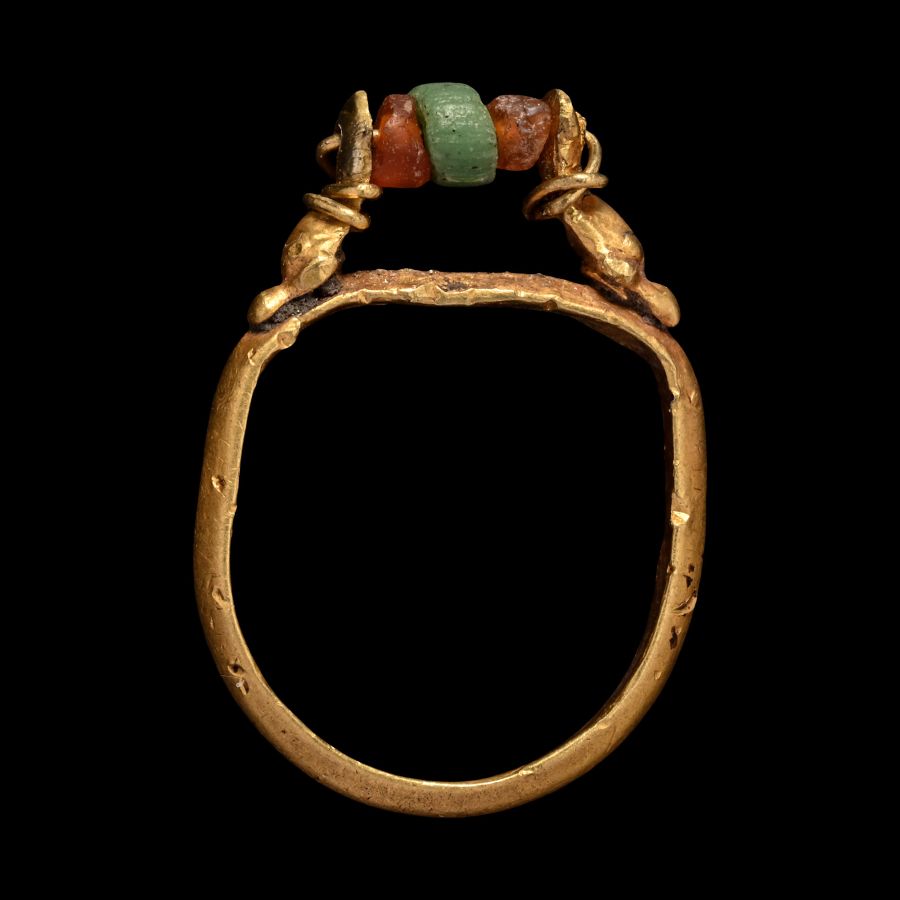
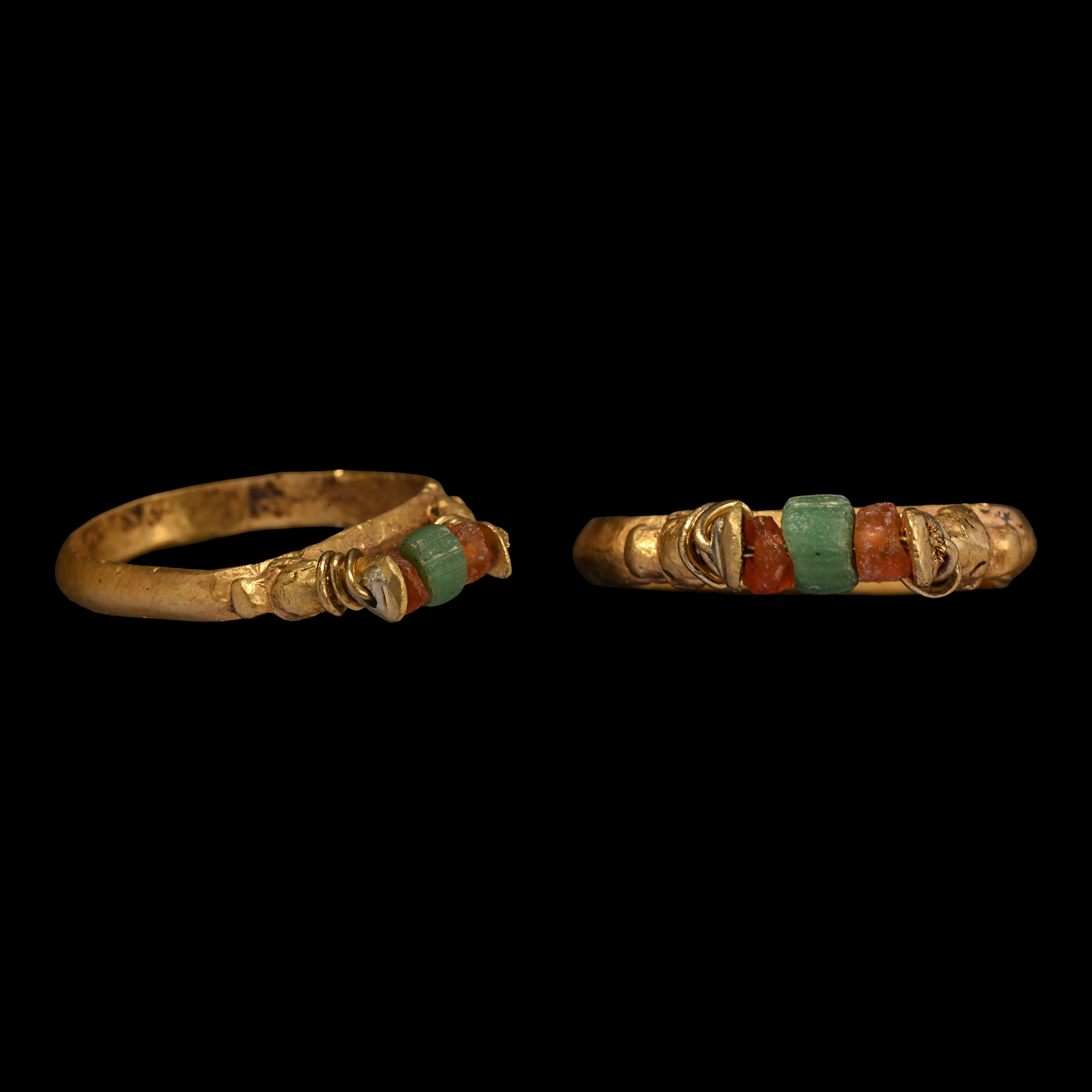
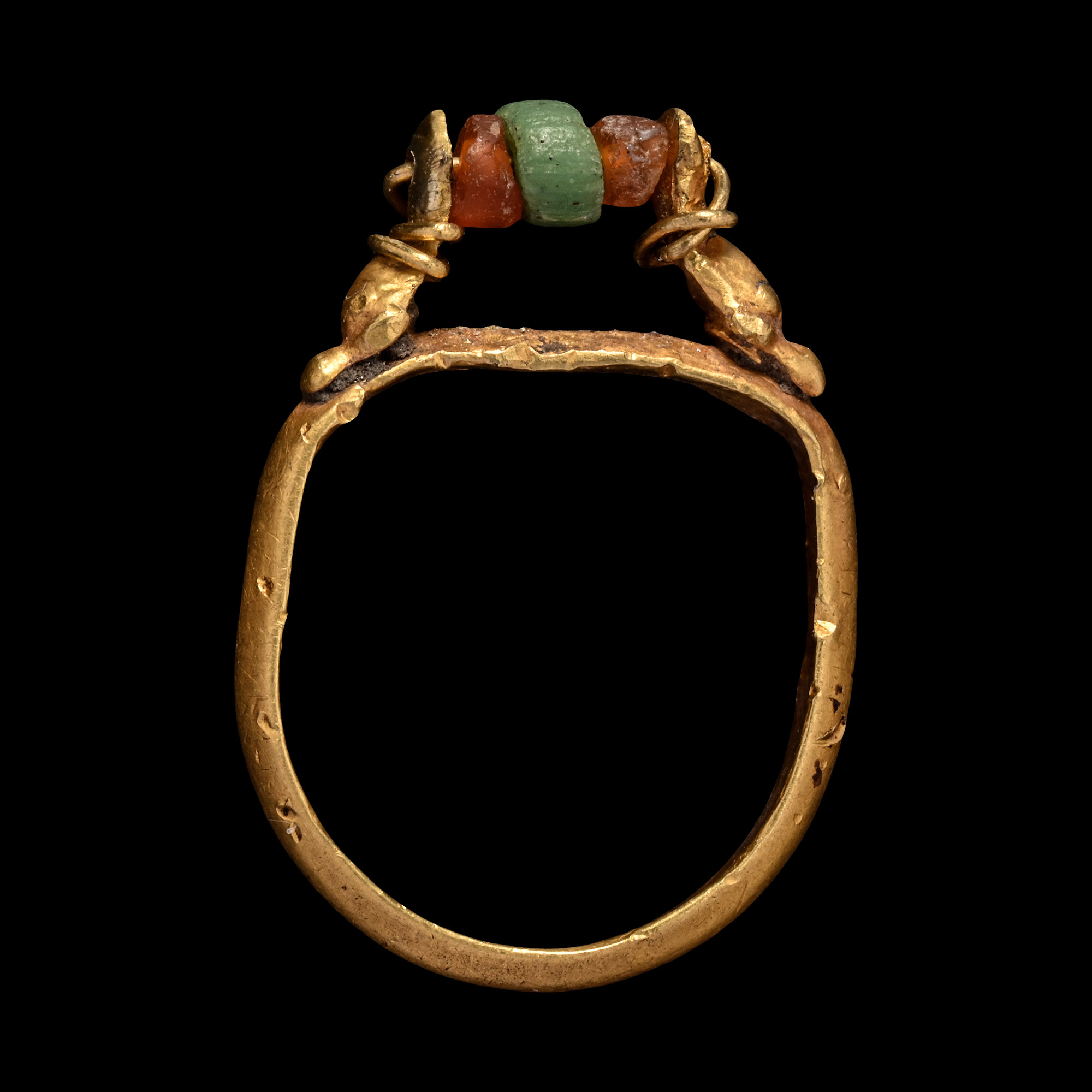
Roman Gold Ring with Dolphins Supporting Beads
1ST CENTURY A.D.
1 in. (4.24 grams, 26.14 mm overall, 15.47 x 16.96 mm internal diameter (approximate size British J, USA 4 3/4, Europe 8.69, Japan 8)).
D-section hoop with shoulders formed as addorsed dolphins, the tails pierced to accept a wire with three glass seed beads.
ProvenanceEx Cambridgeshire, UK, gentleman's collection, 1980-1990s.
LiteratureCf. Chadour, A.B., Rings. The Alice and Louis Koch Collection, volume I, Leeds, 1994, item 216, for type.
CONDITIONTimeLine Auctions follows a vetting process to ensure the authenticity and legality of all items, reinforcing our commitment to integrity and responsible trading. Each antiquity, antique, and coin lot undergoes thorough examination by a vetting committee of at least ten external specialists, professional trade association members, scientists, and archaeologists: Our Vetting Process
AUCTIONS:
TimeLine is a leading auction house specialising in antiquities, ancient art, collectables, natural history, coins, medals, and books. Our auctions offer museums, collectors, historians, and enthusiasts the opportunity to acquire unique and historically significant pieces.
LOT 0159
Roman Gold Ring with Dolphins Supporting Beads
Estimate £1,000 - 1,400€1,160 - 1,620 (for guidance only)$1,350 - 1,890 (for guidance only)
-
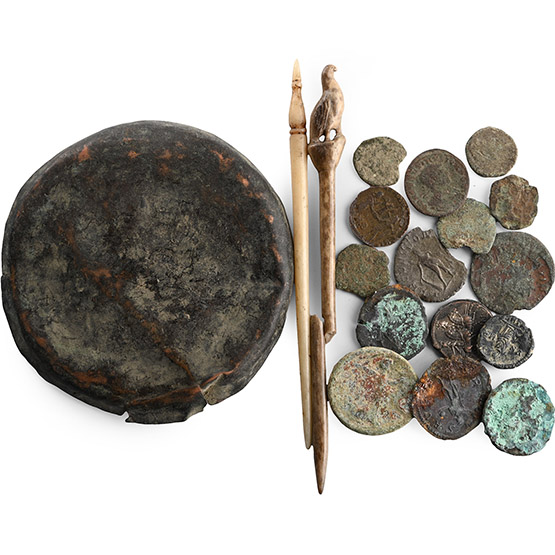
Roman Bronze and Other Artefact and Coin Group
1st-4th century A.D.Sold for (Inc. bp): £124
Comprising several bronze coins, two bone pins (one broken) and a flat discoid mount with upturned rim. 76.7 grams total, 1.4-10.6 cm
UK gallery, early 2000s. -
.jpg)
Roman Silver Ring with Gemstone of Cupid Riding a Dolphin
2nd-3rd century A.D.Sold for (Inc. bp): £715
With an inset onyx gemstone, intaglio of a boy riding on the back of a dolphin and wielding a whip; supplied with a museum-quality impression. 9.29 grams, 27.65 mm overall, 20.67 mm internal diameter (approximate size British O, USA 7, Europe 14.98, Japan14
Private collection, before 1975. Private collection, England. -
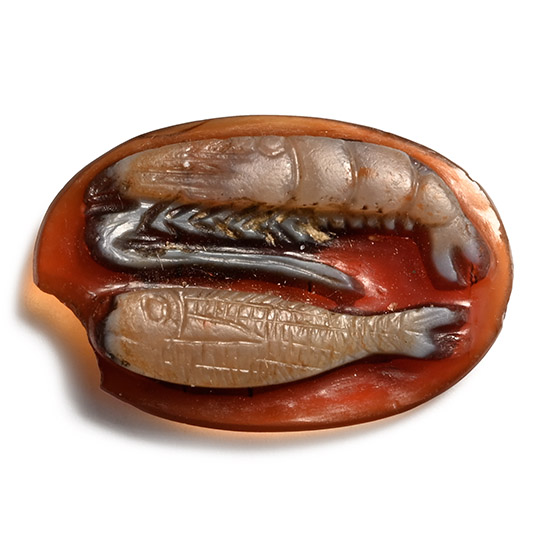
Roman Sardonyx Cameo of Fish and Shrimp
2nd-4th century A.D.Sold for (Inc. bp): £2,600
Ellipsoid plaque with reserved fish with scale detailing to the flank, shrimp with segmented body. 0.90 grams, 17 mm
Private English collection, formed between the late 1970s and early 1990s. Private collection, London, UK.
