
Loading, please wait...
LOT 0094
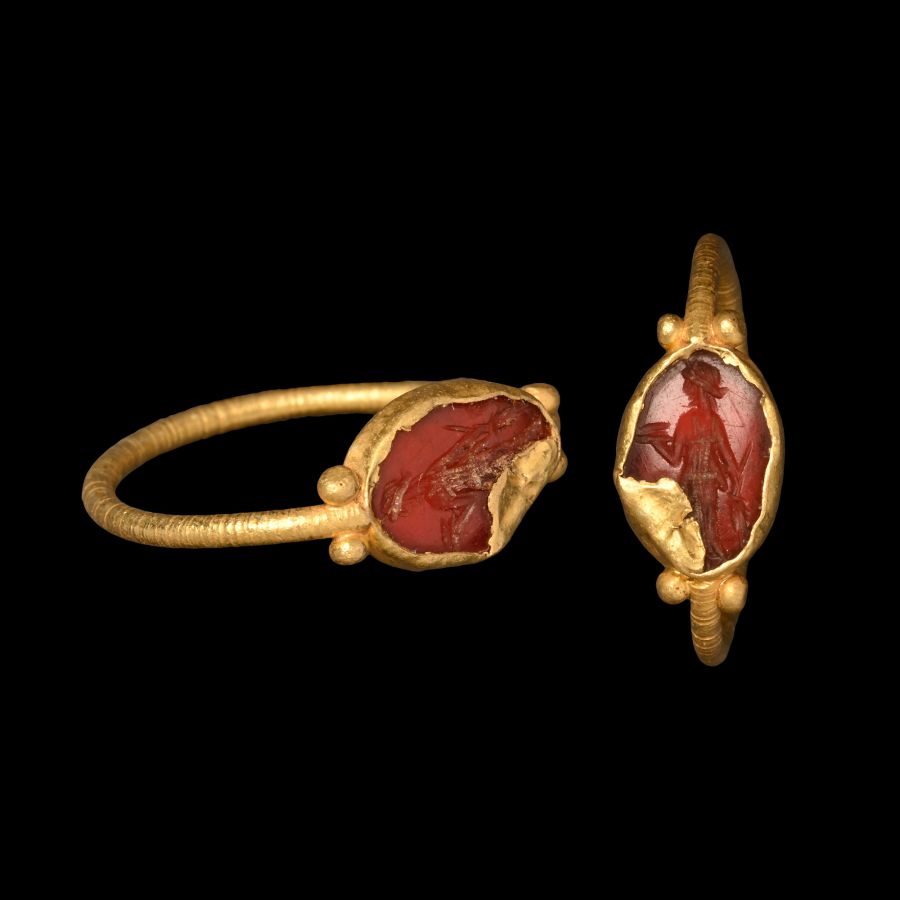
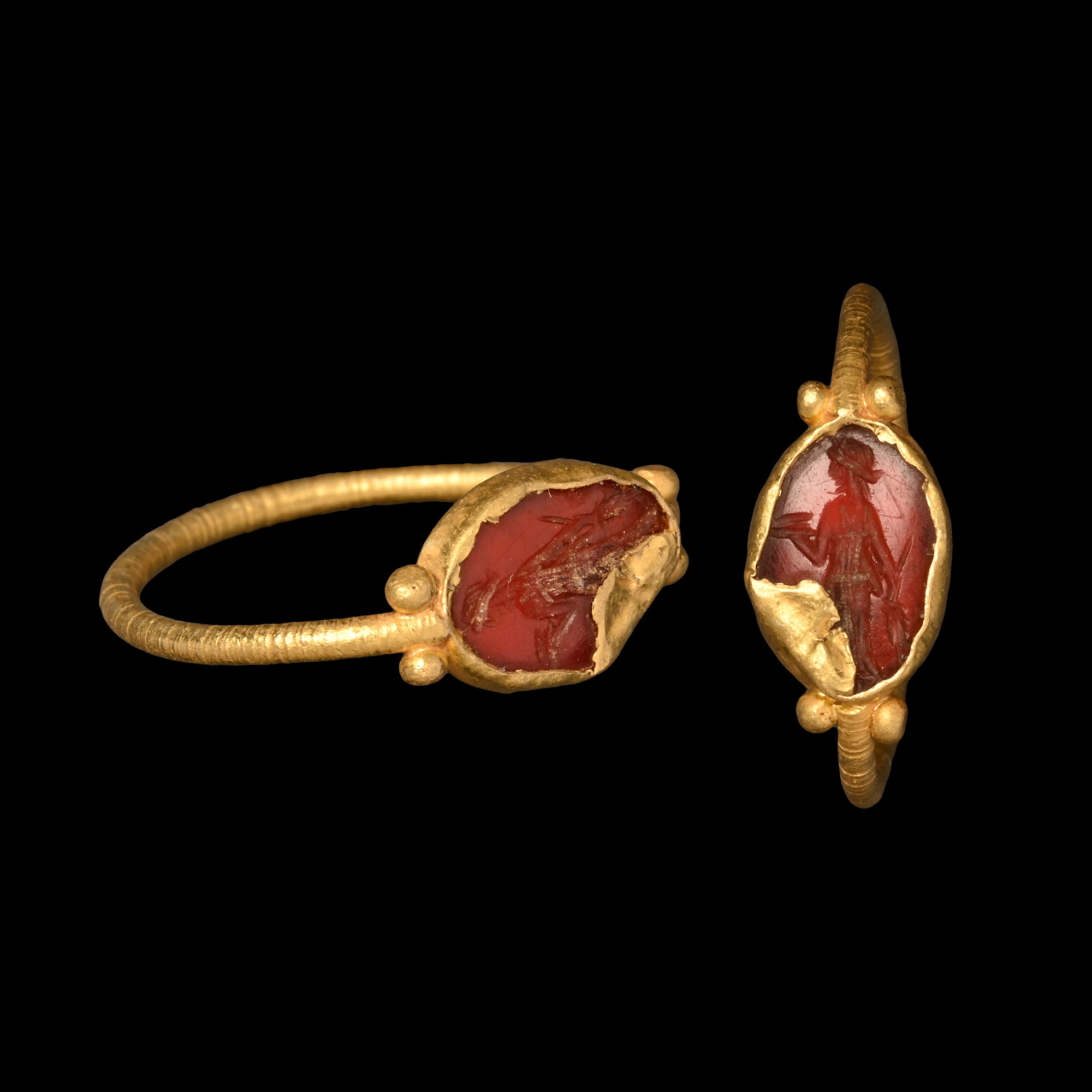
Roman Gold Ring with Diana Gemstone
2ND-3RD CENTURY A.D.
1 in. (3.11 grams, 23.25 mm overall, 19.94 mm internal diameter (approximate size British R, USA 8 1/2, Europe 18 3/4, Japan 18)).
Slender hoop with pairs of granules flanking the ellipsoid cell with inset carnelian intaglio of Diana standing and holding a patera; stone chipped and gold frame extended to compensate.
ProvenanceEx German art market, 2000s.
Acquired from an EU collector living in London.
From the collection of Surrey, UK, gentleman.
This lot is accompanied by an illustrated lot declaration signed by the Head of the Antiquities Department, Dr Raffaele D’Amato.
Cf. Chadour, A.B., Rings. The Alice and Louis Koch Collection, volume I, Leeds, 1994, item 368.
CONDITIONTimeLine Auctions follows a vetting process to ensure the authenticity and legality of all items, reinforcing our commitment to integrity and responsible trading. Each antiquity, antique, and coin lot undergoes thorough examination by a vetting committee of at least ten external specialists, professional trade association members, scientists, and archaeologists: Our Vetting Process
AUCTIONS:
TimeLine is a leading auction house specialising in antiquities, ancient art, collectables, natural history, coins, medals, and books. Our auctions offer museums, collectors, historians, and enthusiasts the opportunity to acquire unique and historically significant pieces.
-
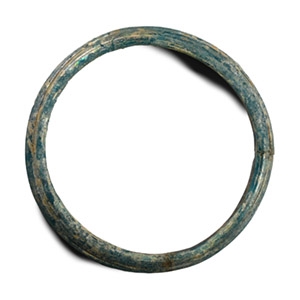
Very Large Roman Blue Glass Arm-Ring Bangle
Circa 4th century A.D.Sold for (Inc. bp): £124
D-shaped in section with slightly ribbed outer face. 31 grams, 92 mm
From an old English collection. Acquired from Alan Cherry, Bournemouth, UK, circa 2004. Ian Wilkinson collection, Nottinghamshire, UK, formed since 1985. This lot is accompanied by an illustrated lot declaration signed by the Head of the Antiquities Department, Dr Raffaele D’Amato.
The mass production of glass in ancient Rome prompted the development of glass jewellery of unique qualities. The ancient Romans considered jewellery to be an essential accessory, being a public display of the wealth of high social classes. Recent excavations have provided better information on the use of glass for necklaces and bracelets, and in some cases it has been possible to understand the exact arrangement of the jewellery. -

Roman 'Kidderminster' Lead Dice
1st-2nd century A.D.Sold for (Inc. bp): £33
Roughly cuboid in form with rounded edges and some mineral accretion; punched-point markings disposed 1:2, 3:4, 5:6; with dealer's tickets. 30.5 grams, 17 mm
Found Kidderminster, Worcestershire, UK, by Mrs Bate. From the private collection of Colin Narbeth, UK, 1990s, with collection reference no.62. Accompanied by a small typed identification card by Colin Narbeth. This lot is accompanied by an illustrated lot declaration signed by the Head of the Antiquities Department, Dr Raffaele D’Amato. -
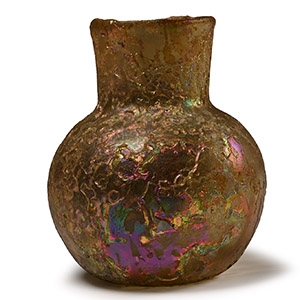
Roman Yellow Glass Spherical Bottle
2nd-4th century A.D.Sold for (Inc. bp): £221
Spherical, slightly squat body with dimpled underside to base; short, flared cylindrical neck; deposits remaining in the interior, and iridescence to the exterior. 43.9 grams, 71 mm
Old collection label "1769". Ex Viviane Alioth. This lot is accompanied by an illustrated lot declaration signed by the Head of the Antiquities Department, Dr Raffaele D’Amato.
