
Loading, please wait...
_900x900.jpg "Roman Gold Ring with Carnelian Gemstone with Bust of a Goddess")
_200x200.jpg "Roman Gold Ring with Carnelian Gemstone with Bust of a Goddess")
.jpg "Roman Gold Ring with Carnelian Gemstone with Bust of a Goddess")
LOT 0175
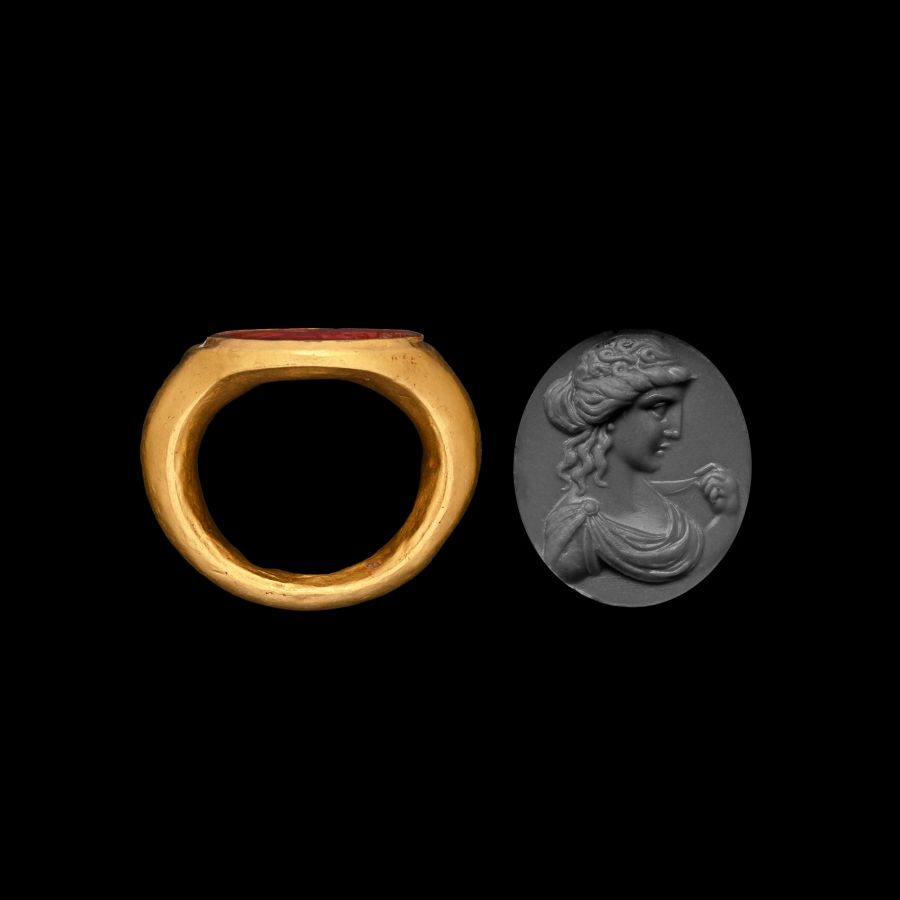
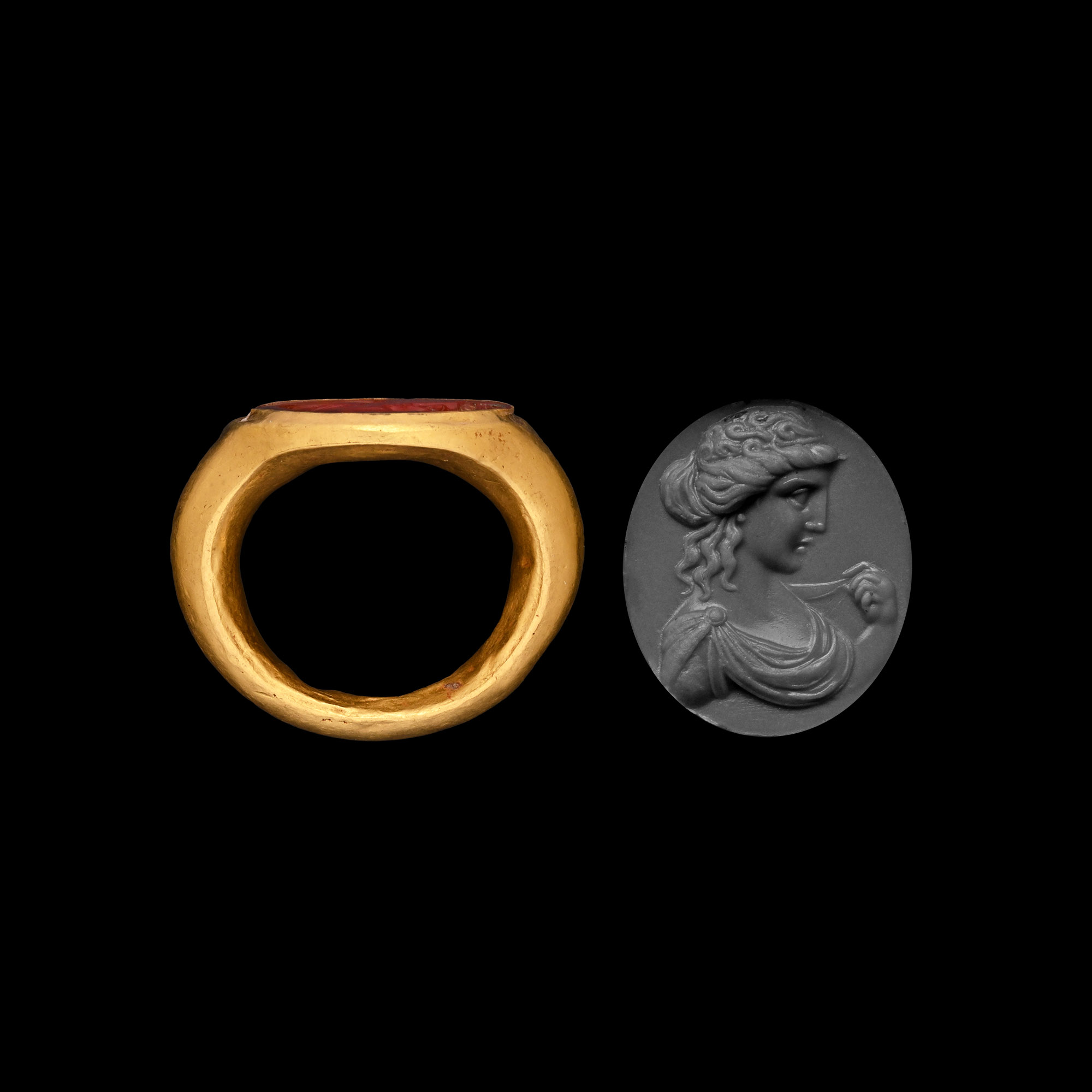
Roman Gold Ring with Carnelian Gemstone with Bust of a Goddess
2ND-3RD CENTURY A.D.
1 1/8 in. (9.46 grams, 29.95 mm overall, 19.70 x 17.34 mm internal diameter (approximate size British P 1/2, USA 7 3/4, Europe 16.86, Japan 16)).
Hollow-formed shank and bezel with inset cloison intaglio profile of a female bust with a diadem, inspecting a jewel hung around her neck.
ProvenancePrivate collection, acquired on the German art market in 1992; thence by descent.
This lot has been checked against the Interpol Database of stolen works of art and is accompanied by search certificate number no.13181-249302.
Cf. for the shape of ring Chadour, A.B., Rings. The Alice and Louis Koch Collection, volume I, Leeds, 1994, item 157, for type; no.360, for a head of Minerva with similar characteristics.
FootnotesThe gem motif represents a deity, most probably Aphrodite-Venus, although we cannot exclude less important divinities, such as Flora or a nymph.
CONDITIONTimeLine Auctions follows a vetting process to ensure the authenticity and legality of all items, reinforcing our commitment to integrity and responsible trading. Each antiquity, antique, and coin lot undergoes thorough examination by a vetting committee of at least ten external specialists, professional trade association members, scientists, and archaeologists: Our Vetting Process
AUCTIONS:
TimeLine is a leading auction house specialising in antiquities, ancient art, collectables, natural history, coins, medals, and books. Our auctions offer museums, collectors, historians, and enthusiasts the opportunity to acquire unique and historically significant pieces.
LOT 0175
Roman Gold Ring with Carnelian Gemstone with Bust of a Goddess
Estimate £20,000 - 30,000€23,200 - 34,800 (for guidance only)$27,000 - 40,500 (for guidance only)
-
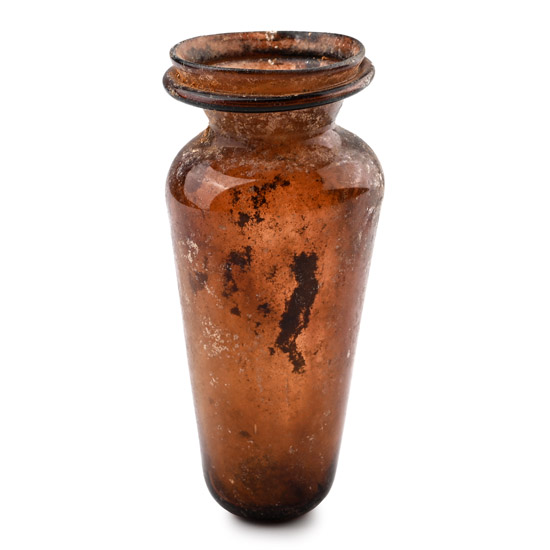
Roman Aubergine Glass Flask
3rd-4th century A.D.Estimate: £250 - 350 (+bp*)
Opening Bid: £125
Core-formed with a slightly dimpled base, deep shoulder and short neck, mouth with a flared rim and applied trail to give a stepped appearance. 43 grams, 99 mm
From a specialist collection of glass, acquired from dealerships during the 1990s. -
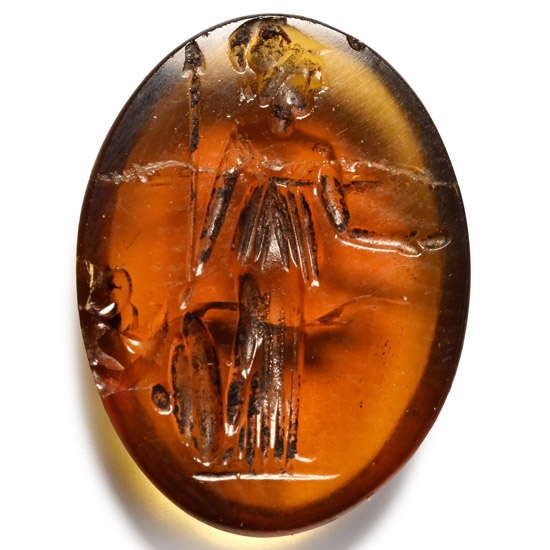
Roman Gemstone with Minerva
2nd century A.D.Estimate: £150 - 200 (+bp*)
Opening Bid: £70
Plano-convex in section with incuse image of Minerva standing with one hand extended, holding her spear and shield. 1.18 grams, 17 mm
Acquired 1970s-1996. Property of a North American collector. London collection, 2016.
In Rome, the Athena Promachos type occurs on imperial silver medallions of Domitian (struck in 92 AD), since Minerva was his personal protector. On gems, it became very common from the end of the 1st century BC onwards, even on the magical gemstones. -
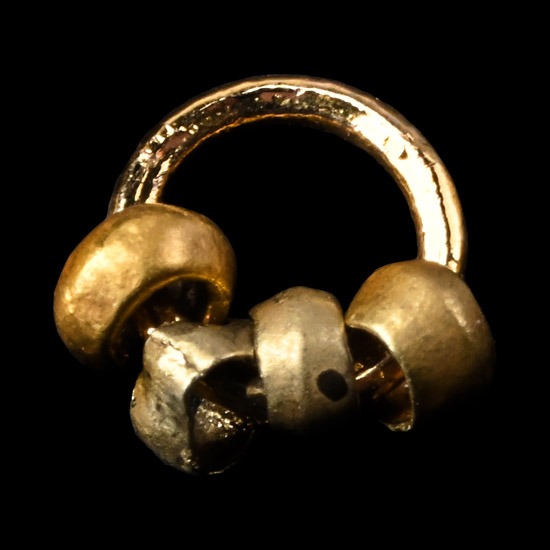
Eastern Roman Gold Bead Group on Loop
3rd century B.C.-3rd century A.D.Sold for (Inc. bp): £46
Comprising four annular beads on a later gold-coloured loop. 0.21 grams, 5 mm
Ex private British collection, formed in the 1980s. Property of a West Northamptonshire, UK, gentleman.
