
Loading, please wait...

LOT 0596
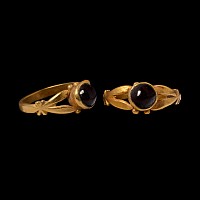
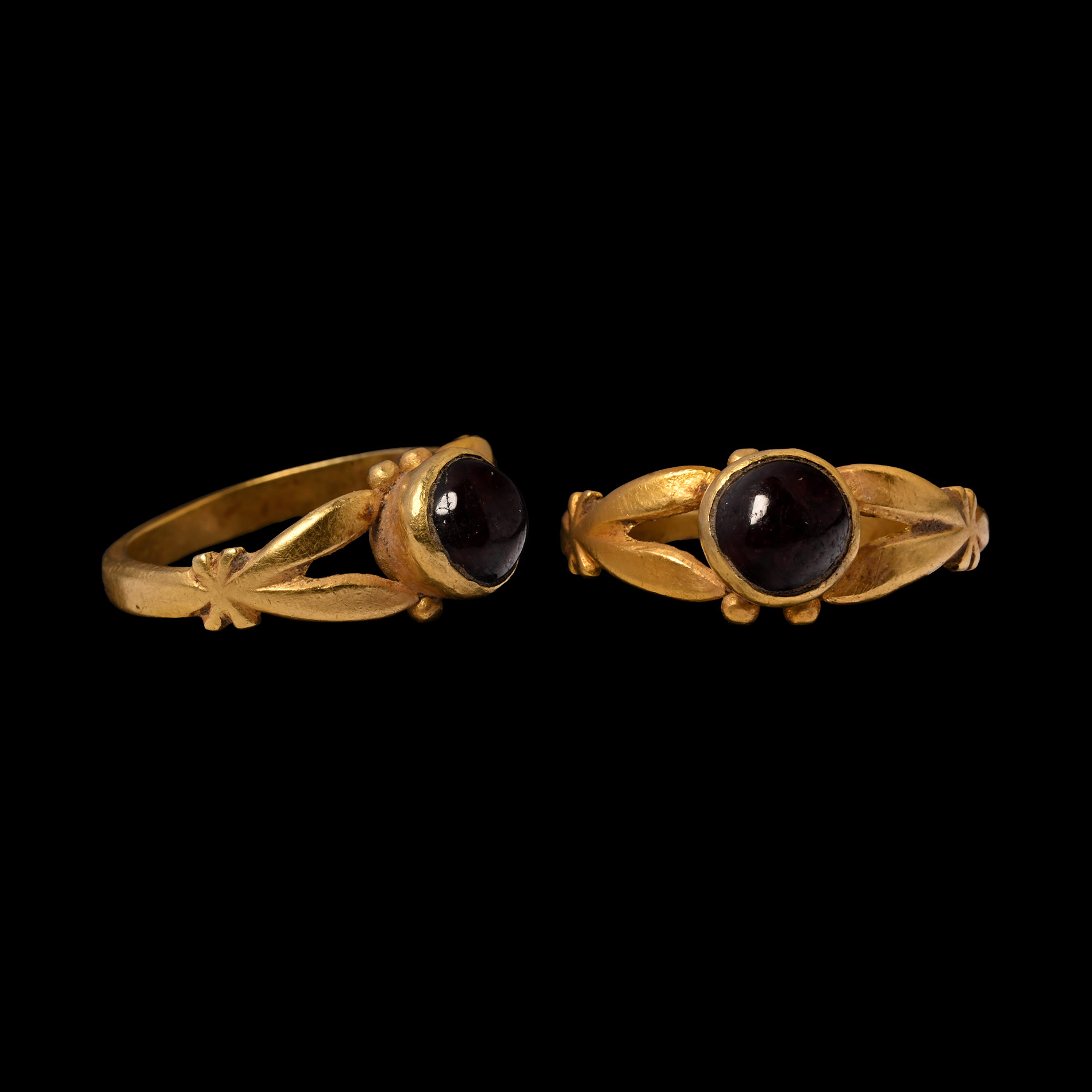
Roman Gold Ring with Cabochon Garnet
4TH-5TH CENTURY A.D.
7/8 in. (3.38 grams, 22.73 mm overall, 16.13 mm internal diameter (approximate size British K 1/2, USA 5 1/2, Europe 10.58, Japan 10)).
With bifid openwork shoulders and cupped cell, inset cabochon garnet.
ProvenanceAcquired on the London art market in the late 1980s-1990s.
From the family collection of an East London, UK, gentleman.
Cf. Ruseva-Slokoska, L., Roman Jewellery, Sofia, 1991, item 207, for type.
CONDITIONTimeLine Auctions follows a vetting process to ensure the authenticity and legality of all items, reinforcing our commitment to integrity and responsible trading. Each antiquity, antique, and coin lot undergoes thorough examination by a vetting committee of at least ten external specialists, professional trade association members, scientists, and archaeologists: Our Vetting Process
AUCTIONS:
TimeLine is a leading auction house specialising in antiquities, ancient art, collectables, natural history, coins, medals, and books. Our auctions offer museums, collectors, historians, and enthusiasts the opportunity to acquire unique and historically significant pieces.
-
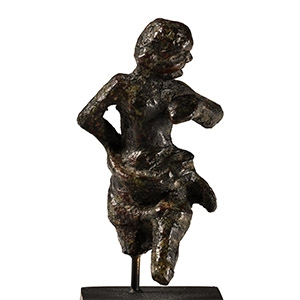
Roman Bronze Dancing Woman Statuette
Circa 2nd century A.D.Sold for (Inc. bp): £72
Modelled in dynamic pose with her peplos slipping loose from her shoulders and held at her waist by her right hand; head turned and left hand held at the breast; possibly a Maenad; mounted on a custom-made stand. 40.3 grams total, 63 mm including stand
From a collection acquired on the UK art market from various auction houses and collections mostly before 2000. From an important Cambridgeshire estate; thence by descent.
Maenads were followers of Dionysus whose rites were characterised by vigorous dancing to loud music and crashing cymbals, in which the revellers whirled and became drunk, and incited each another to greater abandon. -
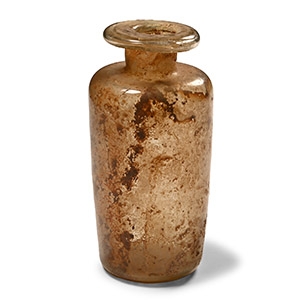
Roman Glass Bottle with Short Neck
3rd-4th century A.D.Sold for (Inc. bp): £104
Mould-blown bottle comprising a flat-based tubular body and bell-shaped neck with applied flange rim. 46 grams, 95 mm
From a family collection mostly formed in the 1940s-1950s, thence by descent. -
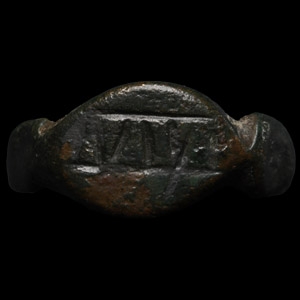
Roman Bronze Ring with 'may he live' Inscription
2nd-3rd century A.D.Sold for (Inc. bp): £52
With scrolled shoulders, ellipsoid bezel, low-relief inscription 'VIVA[T]' (may he live). 2.73 grams, 19.43 mm overall, 15.22 mm internal diameter (approximate size British I 1/2, USA 4 1/2, Europe 8.07, Japan 7)
UK private collection before 2000. Acquired on the UK art market. Property of a London gentleman.
