
Loading, please wait...
LOT 0723
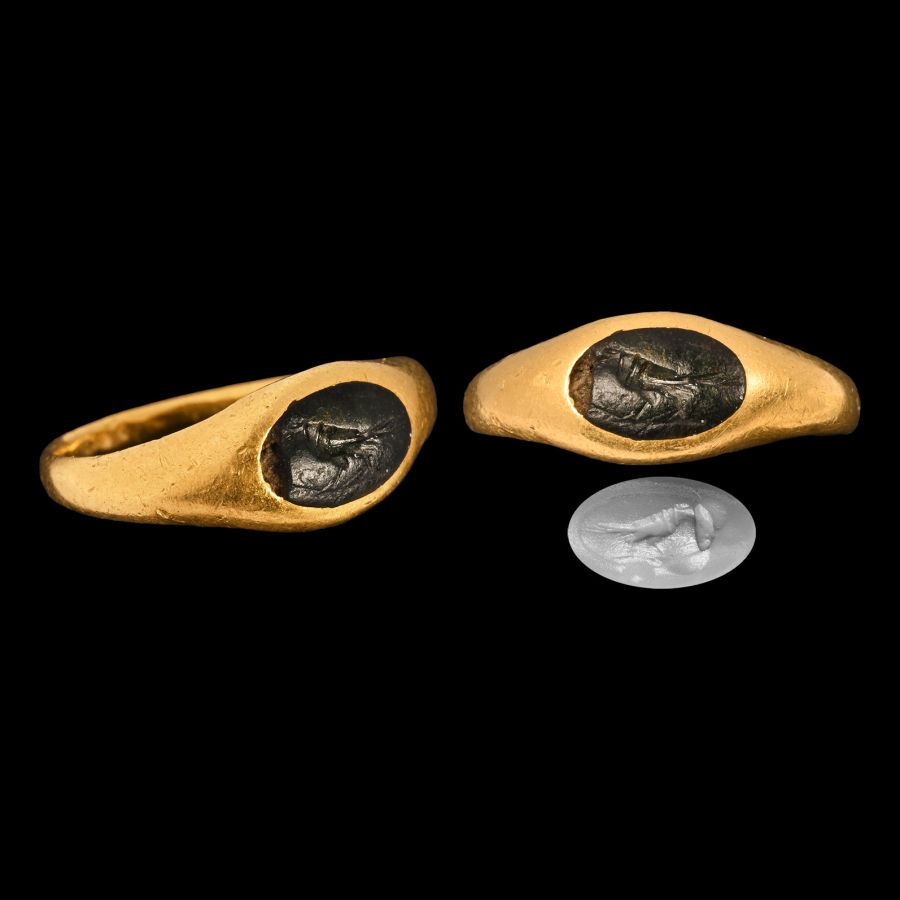
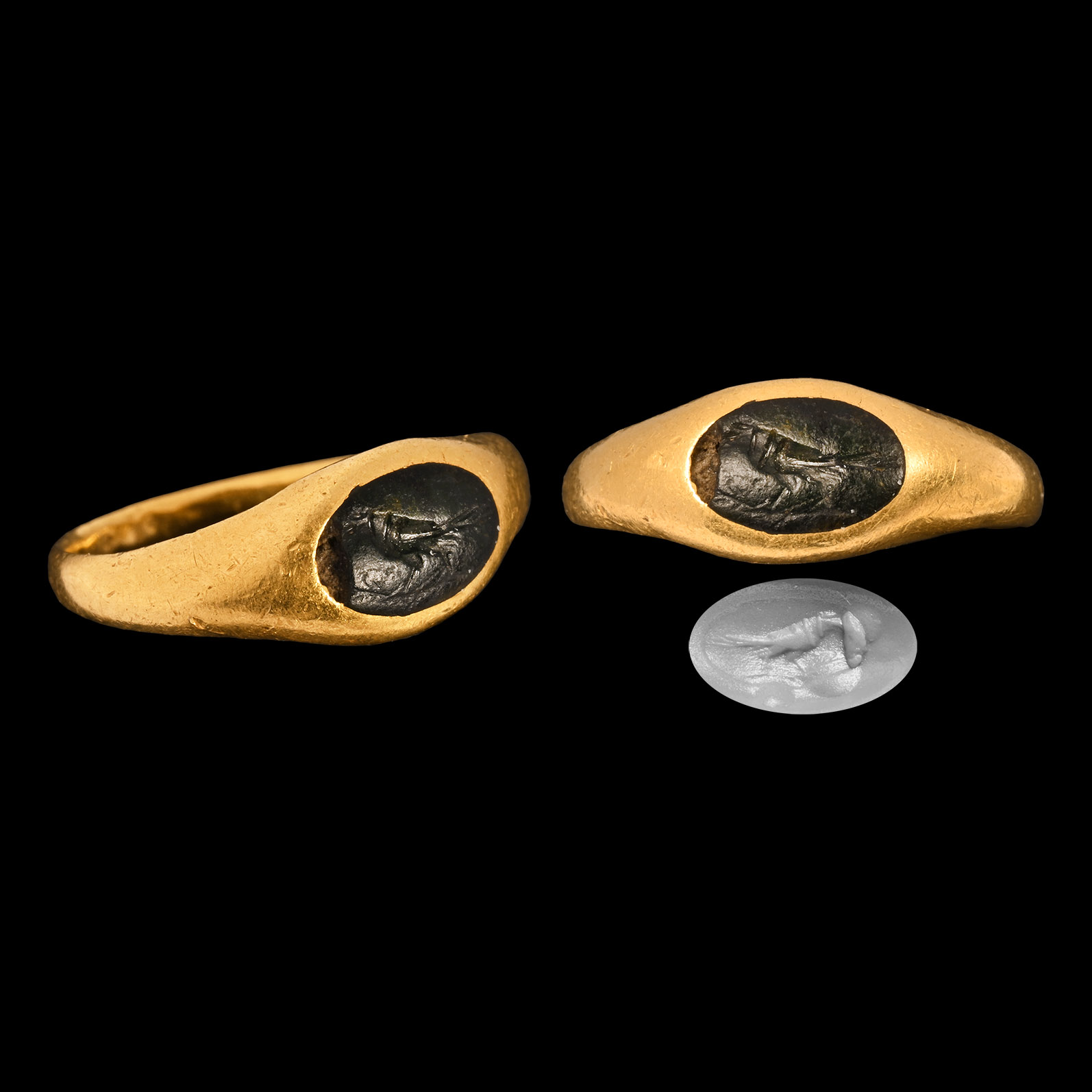
Roman Gold Ring with Bird Gemstone
2ND CENTURY A.D.
1/2 in. (2.00 grams. 14.97 mm overall, 13.23 mm internal diameter).
A slender gold finger ring with inset green glass intaglio of a perching bird.
ProvenanceAcquired at Auction.
English private collection.
Cf. Ruseva-Slokoska, L., Roman Jewellery, Sofia, 1991, item 193, for type.
CONDITIONTimeLine Auctions follows a vetting process to ensure the authenticity and legality of all items, reinforcing our commitment to integrity and responsible trading. Each antiquity, antique, and coin lot undergoes thorough examination by a vetting committee of at least ten external specialists, professional trade association members, scientists, and archaeologists: Our Vetting Process
AUCTIONS:
TimeLine is a leading auction house specialising in antiquities, ancient art, collectables, natural history, coins, medals, and books. Our auctions offer museums, collectors, historians, and enthusiasts the opportunity to acquire unique and historically significant pieces.
LOT 0723
Roman Gold Ring with Bird Gemstone
Estimate £400 - 600€460 - 700 (for guidance only)$540 - 810 (for guidance only)
-
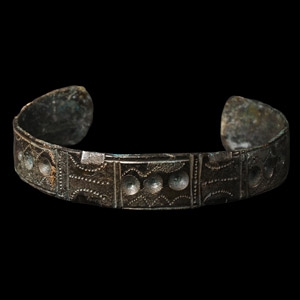
Roman Decorated Bracelet
Circa 1st-2nd century A.D.Sold for (Inc. bp): £156
A copper-alloy bracelet formed as a penannular hoop with rounded terminals, the exterior face divided into rectangular segments, each decorated with one of various repeating decorative schemes: five recessed dots with pricked dotted borders; dotted arcs and lines; horizontal cluster of three recessed dots with dotted chevrons above and below; slender vertical panels with central dotted columns. 24.5 grams, 65 mm
Acquired since the 1970s. Ex property of an Austrian private collector. -
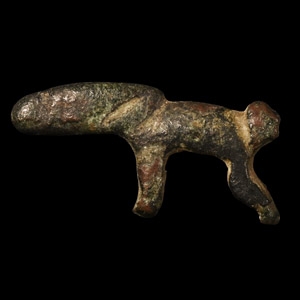
Roman Phallic Pendant
1st-4th century A.D.Sold for (Inc. bp): £72
A bronze pendant or other item, formed as a four-legged animal with a phallic head. 2.29 grams, 22.3 mm
Acquired in the 1990s. UK private collection. Property of a Sussex, UK, teacher. -
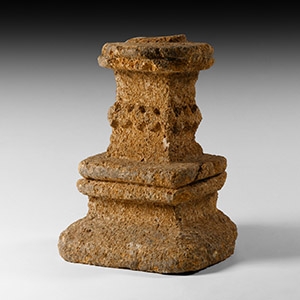
Roman Limestone Column
1st century A.D. or laterSold for (Inc. bp): £169
A surviving section from a small limestone architectural pedestal column base with remains of cylindrical column to top, decorated with a collar of conjoined lozenges. 936 grams, 13.5 cm high
Acquired before 2000. UK art market. Property of an Essex gentleman.
