
Loading, please wait...
LOT 0208
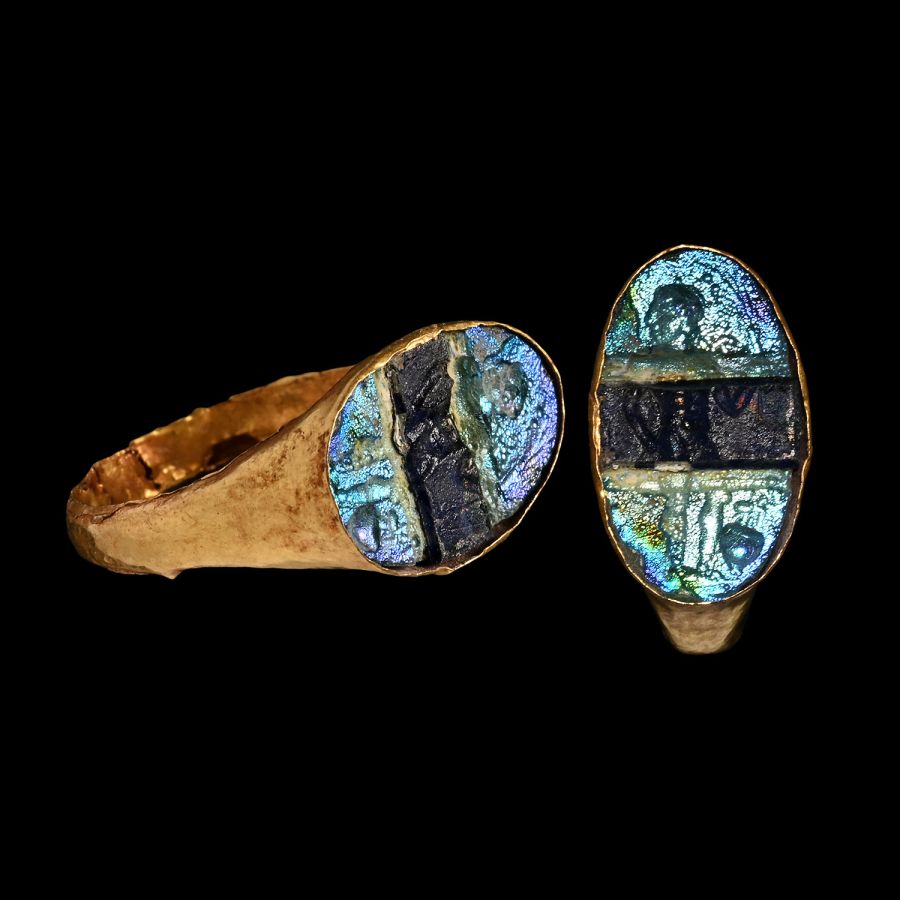
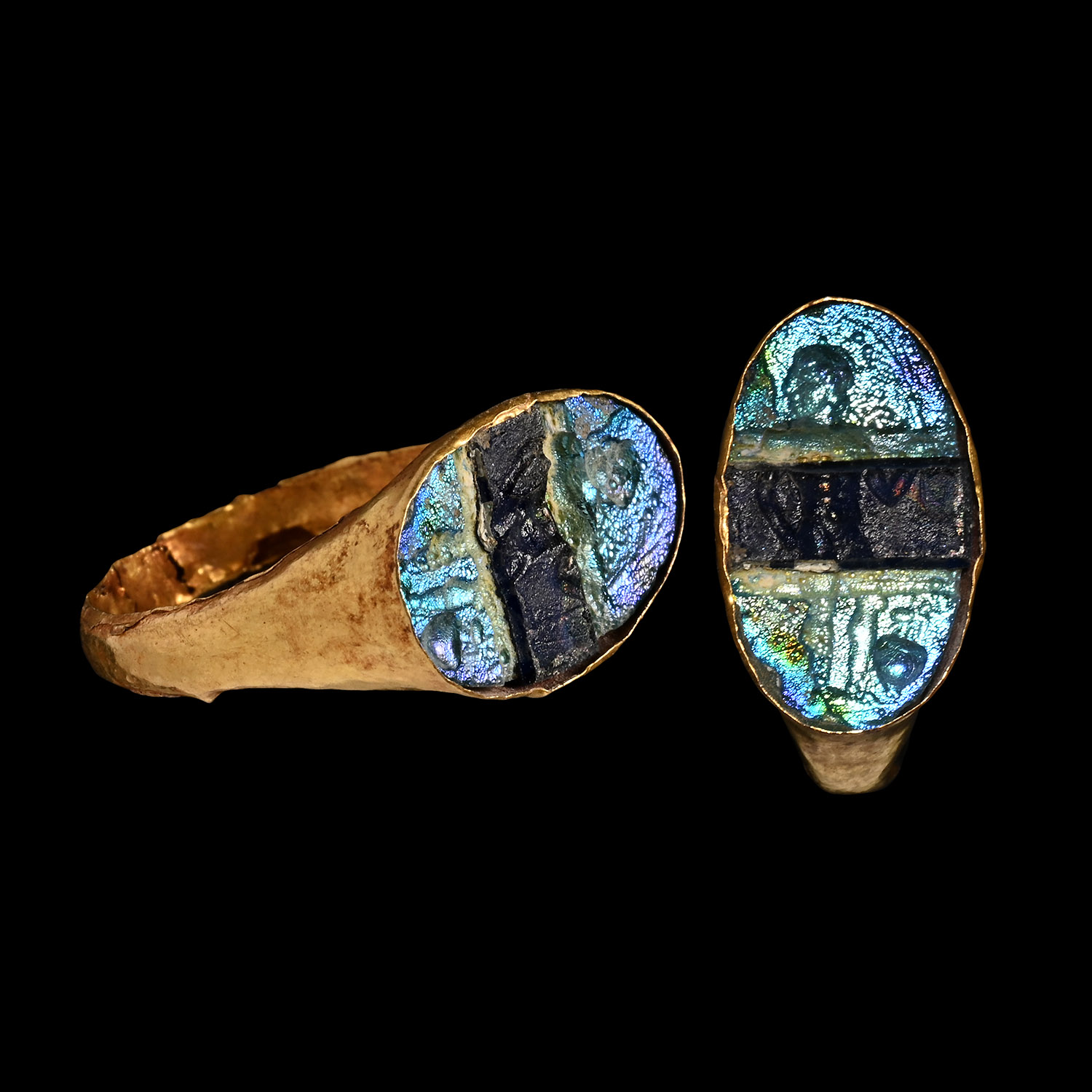
Roman Gold Ring with Banded Glass
1ST CENTURY B.C.
3/4 in. (1.18 grams, 18.29 mm overall, 15.66 mm internal diameter (approximate size British G, USA 3 1/4, Europe 4.92, Japan 4)).
Hollow-formed with ellipsoid bezel, inset panel of banded iridescent glass bearing an image of a nude Greek hero with long hair, the head turned back, carrying branches, an amphora or jug at his feet.
ProvenanceAcquired early 1990s.
Ex private American collection; thence by descent.
Private Swiss collection since 1998.
Cf. Chadour, A.B., Rings. The Alice and Louis Koch Collection, volume I, Leeds, 1994, item 103.
FootnotesThe inset glass bezel is probably archaic Greek or Etruscan and reused in Roman times. The traits of the man point to Archaic Hellenic features, especially the oval eyes and the long hair, and the pointed beard reminiscence of the Achaean heroes.
CONDITIONTimeLine Auctions follows a vetting process to ensure the authenticity and legality of all items, reinforcing our commitment to integrity and responsible trading. Each antiquity, antique, and coin lot undergoes thorough examination by a vetting committee of at least ten external specialists, professional trade association members, scientists, and archaeologists: Our Vetting Process
AUCTIONS:
TimeLine is a leading auction house specialising in antiquities, ancient art, collectables, natural history, coins, medals, and books. Our auctions offer museums, collectors, historians, and enthusiasts the opportunity to acquire unique and historically significant pieces.
-
.jpg)
Goddess Fortuna Gemstone
Roman, circa 2nd century A.D. or laterSold for (Inc. bp): £975
With intaglio standing Fortuna with cornucopia and flowers, amphora at her feet; supplied with a museum-quality impression. 1.2 grams, 16 mm
From the collection of a Swiss gentleman formed in Europe from 1970-1980s; thence by descent from the family in London. -
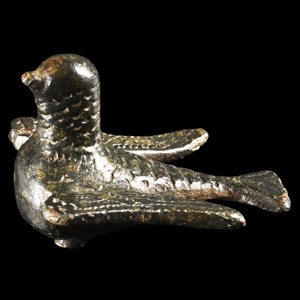
Roman 'Suffolk' Bronze Bird Mount
1st-2nd century A.D.Sold for (Inc. bp): £91
Modelled in the round with wings spread, lines of punched-point feather detailing to the wings and body; attachment lug to the underside. 12.3 grams, 26 mm
Found Suffolk, UK, 1980s. Property of an Essex collector. -
.jpg)
Roman Green Glass Footed Beaker with Trail
4th-5th century A.D.Estimate: £400 - 600 (+bp*)
Opening Bid: £200
Composed of a gently tapering U-shaped body with a more convex upper body, everted rim and domed foot, decorative applied trails to the equator. 72 grams, 10.8 cm high
Fine condition.
Paris collection, 1990s. From an important Paris gallery, France. Ex private Parisian collection.
