
Loading, please wait...
LOT 0088
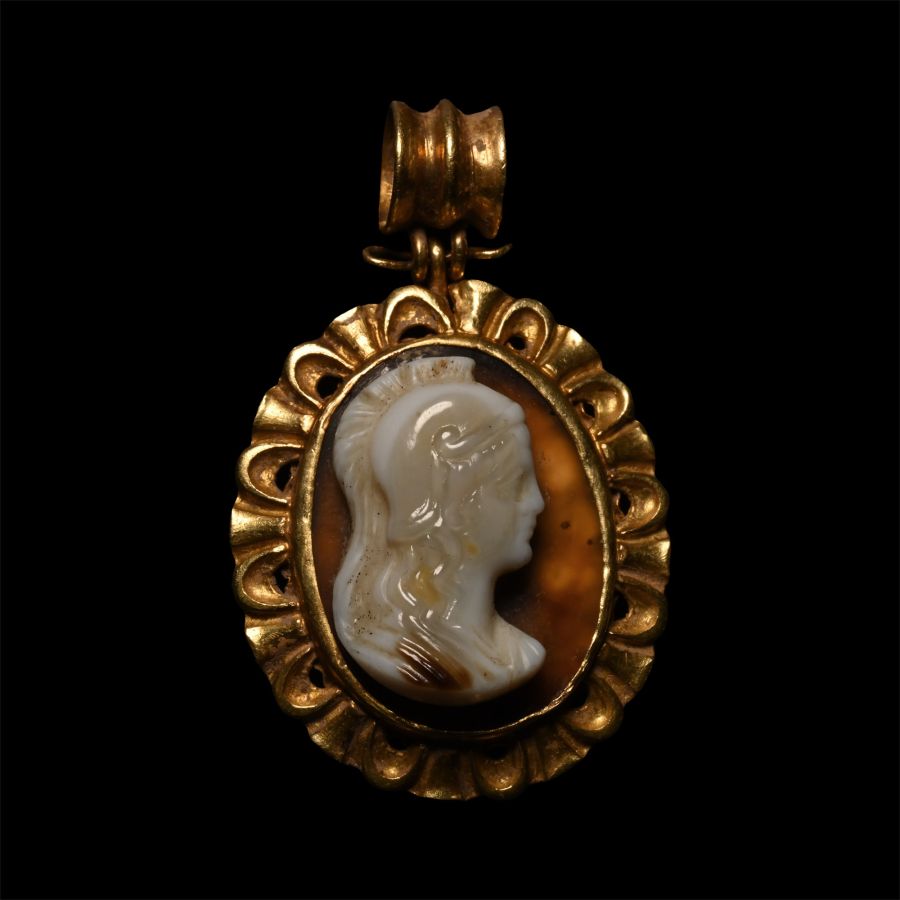
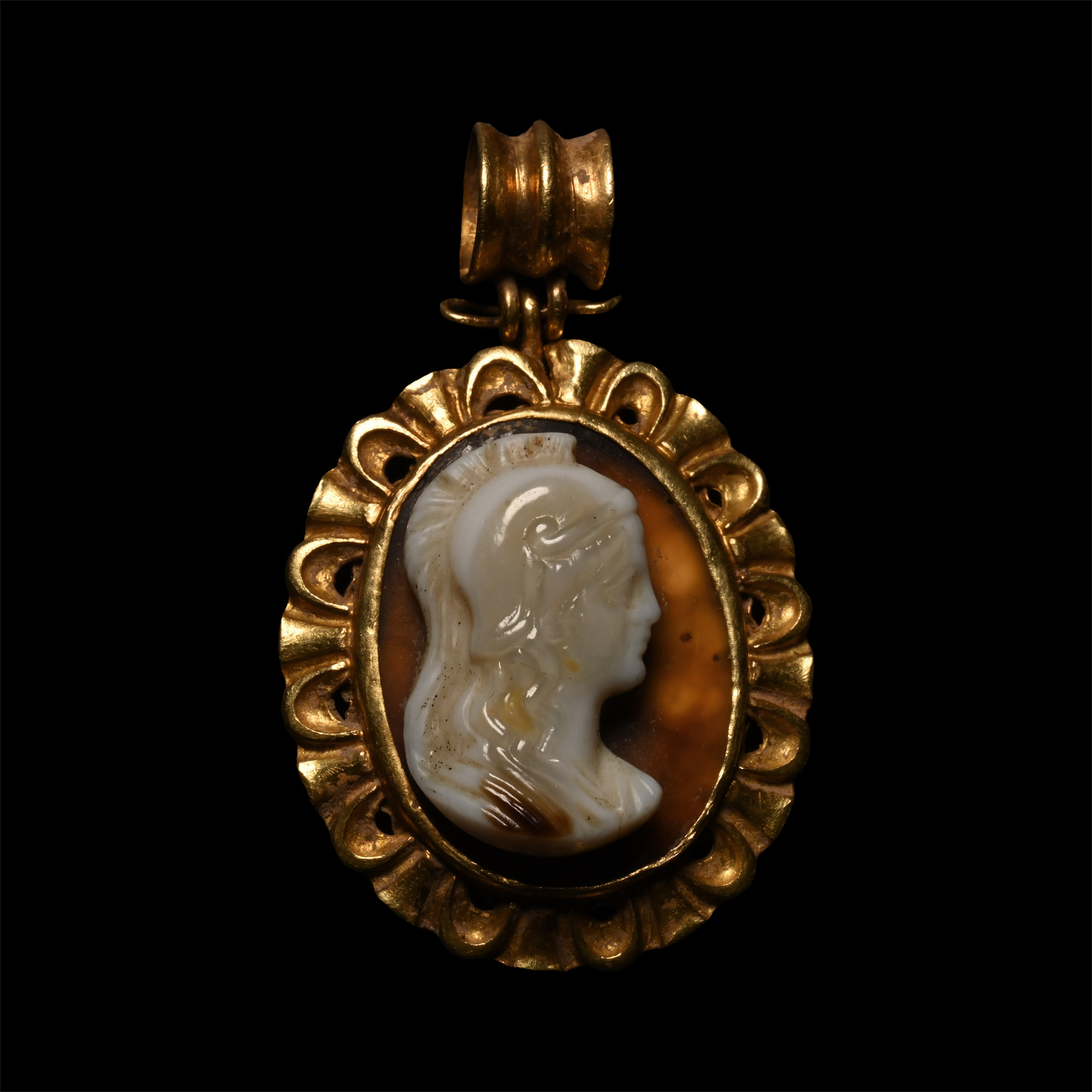
Roman Gold Pendant with Minerva Cameo
2ND-3RD CENTURY A.D.
1 1/2 in. (8.29 grams, 39 mm).
Comprising: ellipsoid gold plaque with egg-and-dart scrolled border, articulating ribbed suspension loop; obverse with inset carved shell cameo of Minerva with crested helmet, long hanks of hair, top of tunic at shoulder.
ProvenanceAcquired in the 1970s.
Acquired on the UK art market.
Private collection, London, UK.
This lot has been checked against the Interpol Database of stolen works of art and is accompanied by a search certificate number no.12522-232023.
This lot has been cleared against the Art Loss Register database, and is accompanied by an illustrated lot declaration signed by the Head of the Antiquities Department, Dr Raffaele D’Amato.
TimeLine Auctions follows a vetting process to ensure the authenticity and legality of all items, reinforcing our commitment to integrity and responsible trading. Each antiquity, antique, and coin lot undergoes thorough examination by a vetting committee of at least ten external specialists, professional trade association members, scientists, and archaeologists: Our Vetting Process
AUCTIONS:
TimeLine is a leading auction house specialising in antiquities, ancient art, collectables, natural history, coins, medals, and books. Our auctions offer museums, collectors, historians, and enthusiasts the opportunity to acquire unique and historically significant pieces.
-
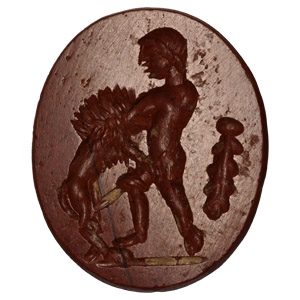
Roman Red Jasper Gemstone with Hercules and Nemean Lion
2nd-3rd century A.D.Sold for (Inc. bp): £364
Ellipsoid in plan with engraved intaglio scene of Hercules advancing on a baseline to grapple with the Nemean lion, club placed to his rear; reverse with legend 'KKK/ЧЧЧ'; supplied with a museum-quality impression. 1.26 grams, 18 mm
From the Fadel family collection, London, UK, 1970s. This lot is accompanied by an illustrated lot declaration signed by the Head of the Antiquities Department, Dr Raffaele D’Amato. -
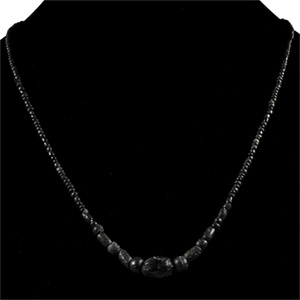
Roman Black Glass Bead Necklace String
1st-4th century A.D. and laterSold for (Inc. bp): £91
Restrung using gently graduating beads, larger beads to the centre with a large barrel-shaped feature bead. 11.4 grams, 48 cm
Acquired 1980-2015. Ex Abelita family collection. This lot is accompanied by an illustrated lot declaration signed by the Head of the Antiquities Department, Dr Raffaele D’Amato. -
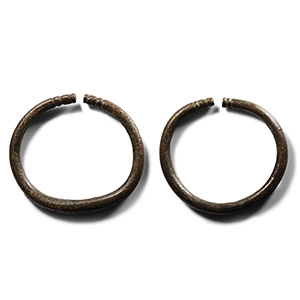
Roman Bronze Military Armillae Pair
1st-4th century A.D.Sold for (Inc. bp): £169
Both with round-section body and grooved finials. 92 grams total, 67.6-72 mm
Ex German art market, 2000s. Acquired from an EU collector living in London. From the collection of Surrey, UK, gentleman. This lot is accompanied by an illustrated lot declaration signed by the Head of the Antiquities Department, Dr Raffaele D’Amato.
