
Loading, please wait...
LOT 0199
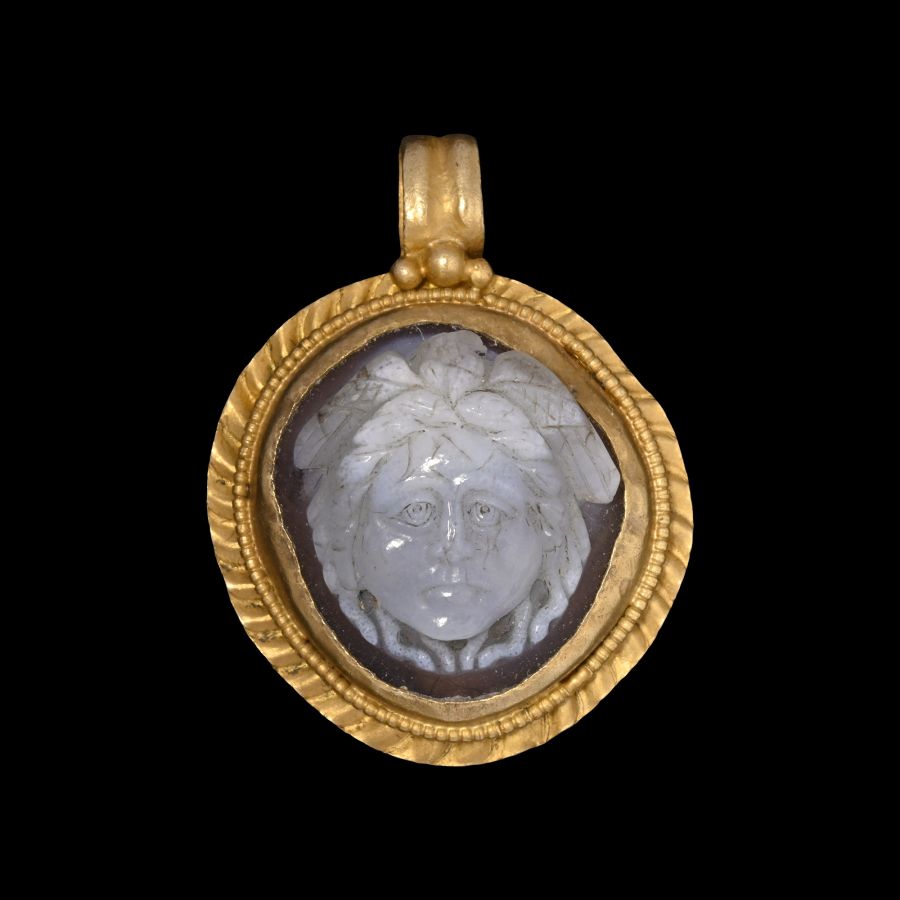
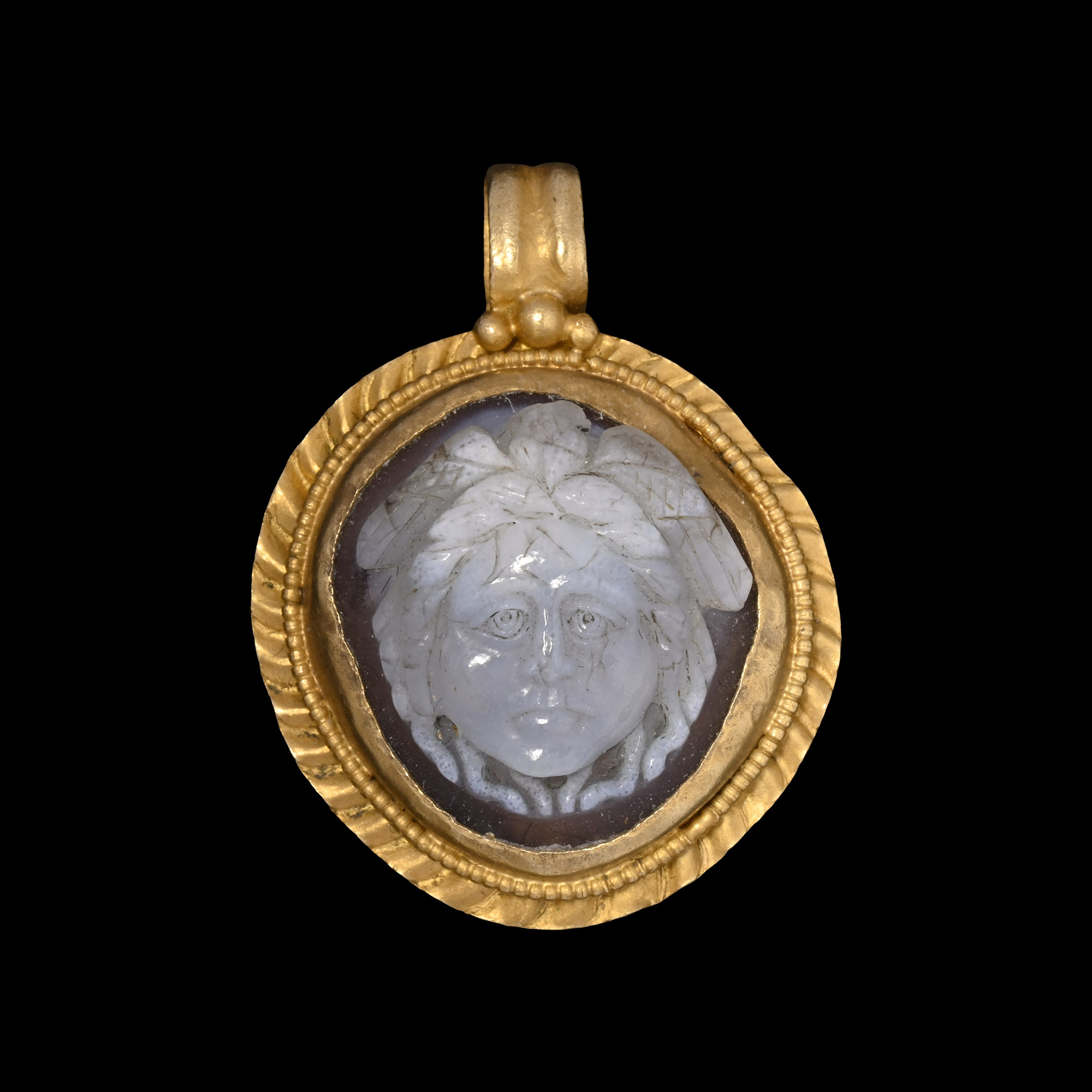
Roman Gold Pendant with Medusa Cameo
2ND-3RD CENTURY A.D.
1 in. (7.33 grams, 28 mm).
A pendant with crimped flange rim, beaded wire collar to the cell and ribbed loop with granules; inset agate cameo gorgoneion mask.
ProvenancePrivate collection, acquired before 1980.
Acquired on the UK art market.
Private collection, England.
This lot has been checked against the Interpol Database of stolen works of art and is accompanied by search certificate number no.13133-249606.
Cf. similar in the collection of the British Museum, London, under accession no.1923,0401.1150.
CONDITIONTimeLine Auctions follows a vetting process to ensure the authenticity and legality of all items, reinforcing our commitment to integrity and responsible trading. Each antiquity, antique, and coin lot undergoes thorough examination by a vetting committee of at least ten external specialists, professional trade association members, scientists, and archaeologists: Our Vetting Process
AUCTIONS:
TimeLine is a leading auction house specialising in antiquities, ancient art, collectables, natural history, coins, medals, and books. Our auctions offer museums, collectors, historians, and enthusiasts the opportunity to acquire unique and historically significant pieces.
-
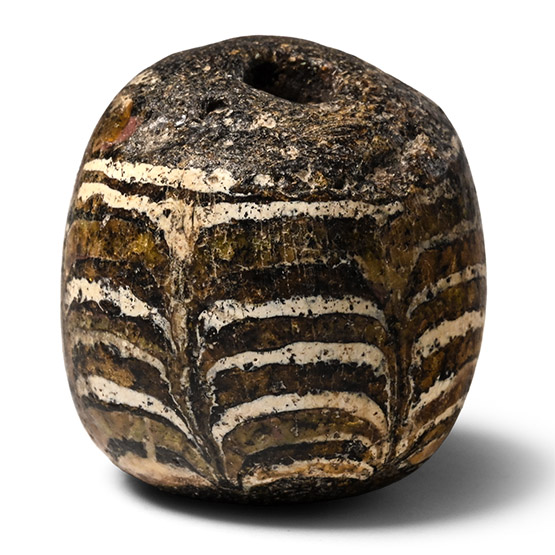
Roman Mosaic Glass Bead
1st-3rd century A.D.Sold for (Inc. bp): £65
Barrel-shaped in profile with bands of marvered feathered trails. 13 grams, 22 mm
London collection, 1979-1983. -
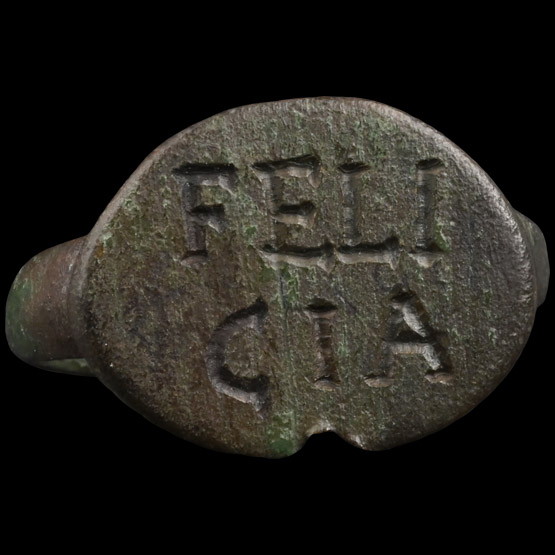
Roman Bronze Ring with FELI CIA
Circa 3rd century A.D.Sold for (Inc. bp): £247
Ellipsoid plaque bezel with incuse legend 'FELI/CIA', the feminine form of felix 'happy' or 'lucky', or possibly a ring given to a woman called FELICIA. 3.05 grams, 20.48 mm overall, 17.87 mm internal diameter (approximate size British M, USA 6, Europe 12.46, Japan 12)
Ex German art market, 2000s. Acquired from an EU collector living in London. From the collection of a Surrey, UK, gentleman. -
.jpg)
Roman Silver Ring with Agate Gemstone with Roman War Ship with Trophy
2nd-3rd century A.D.Estimate: £1,000 - 1,400 (+bp*)
Opening Bid: £500
Comprising a triangular-section hoop with keeled shoulders, an ellipsoid bezel with inset carnelian intaglio with oared ship, trophy of arms at prow, and floral decoration at stern; supplied with a museum-quality impression. 8.48 grams, 29.64 mm overall, 21.60 × 16.35 mm internal diameter (approximate size British O, USA 7, Europe 14.98, Japan 14)
Private collection, before 1975. Private collection, England.
