
Loading, please wait...
LOT 0738
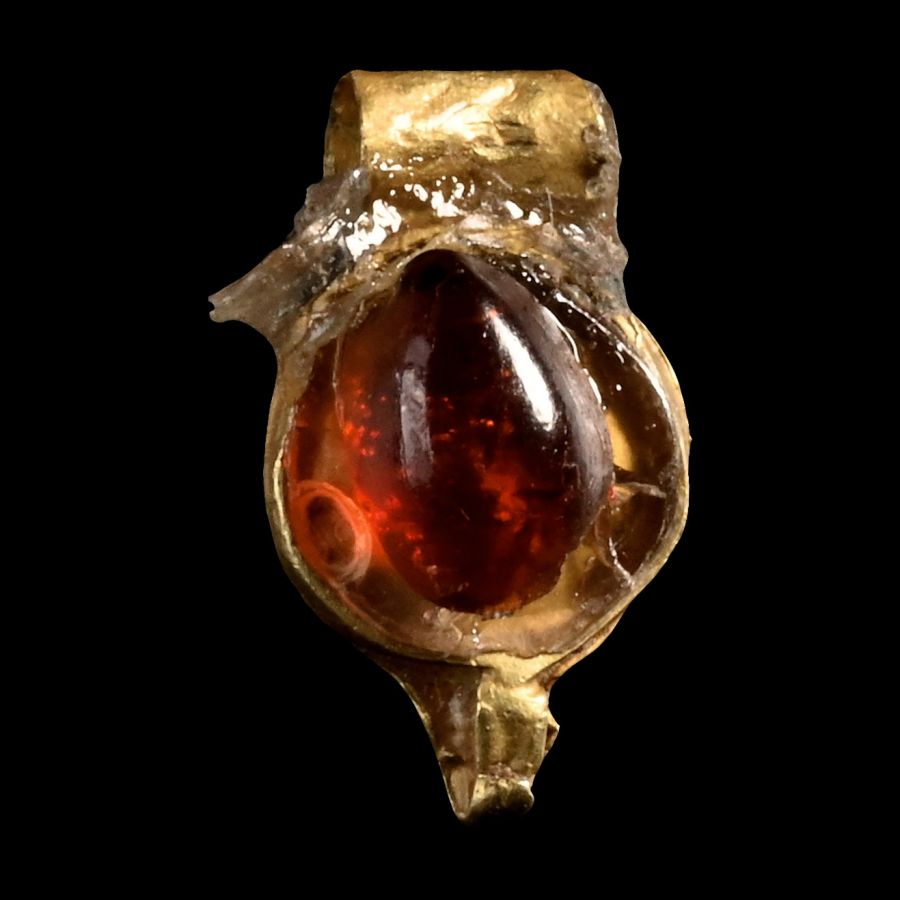
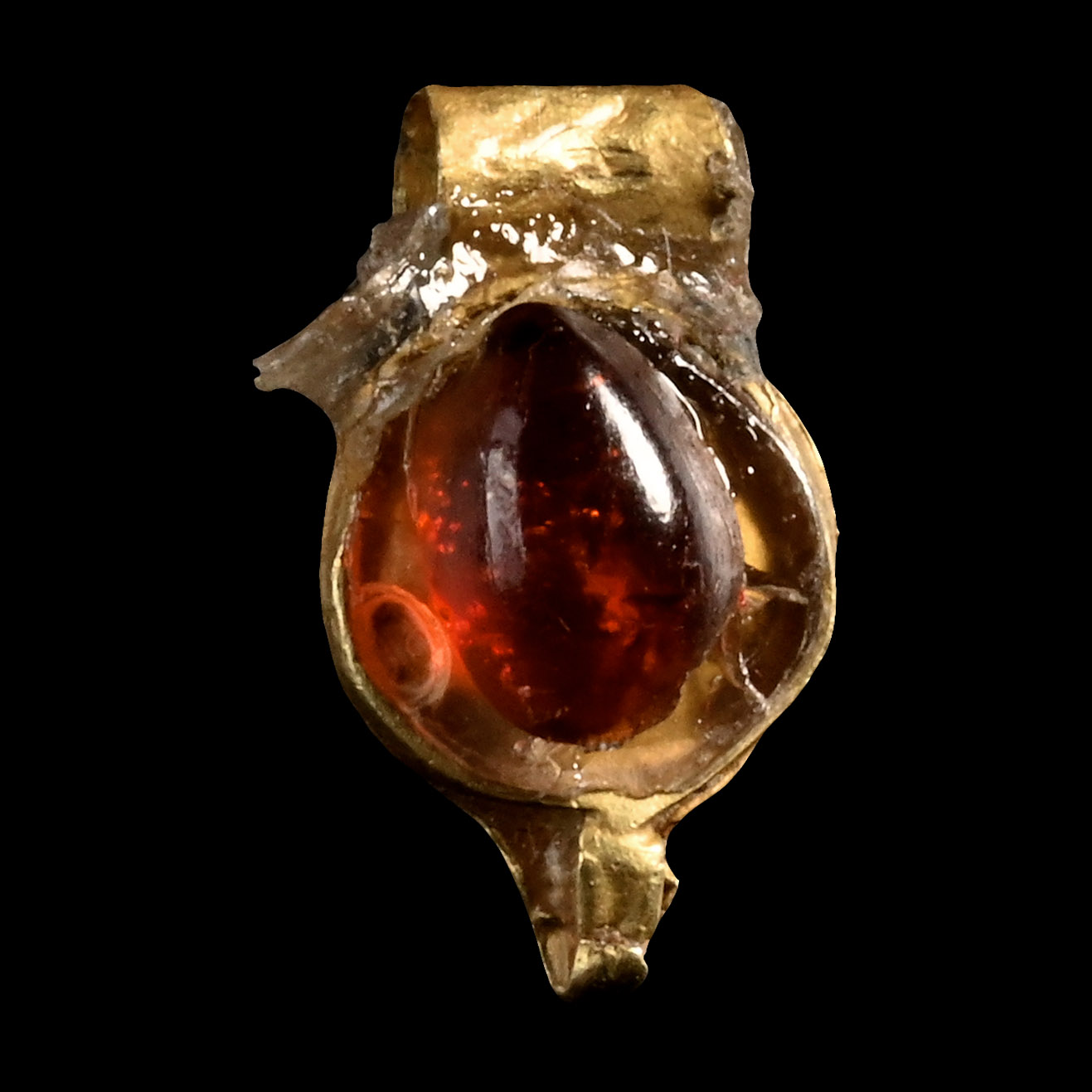
Roman Gold Pendant with Garnet
4TH-5TH CENTURY A.D.
3/8 in. (0.15 grams, 9 mm).
Discoid pendant with cell, inset cabochon garnet, integral loop above. [No Reserve]
ProvenanceFrom the collection of a late Japanese collector, 1970s.
This lot is accompanied by an illustrated lot declaration signed by the Head of the Antiquities Department, Dr Raffaele D'Amato.
For examples of similar pendants in gold and garnet for earrings see Adams, D.N., Late Antique, Migration period and Early Byzantine Garnet Cloisonné ornaments, origin, styles and workshop production, vol.I, text and catalogue, London, 1991, comparative pl.4, nos.1-2.
FootnotesThe object reflect Late Antique/Early Eastern Roman decorative and manufacturing traditions. Flat garnet plates originate with one class of ring-stone intaglios from the Late Hellenistic and Imperial Roman periods, but developed especially in the 4th-6th century, where they preserved the Romano-Greco traditions with the influence of Sassanian and Pontic peoples. They were used for jewellery, weaponry and decorative expensive objects.
CONDITIONTimeLine Auctions follows a vetting process to ensure the authenticity and legality of all items, reinforcing our commitment to integrity and responsible trading. Each antiquity, antique, and coin lot undergoes thorough examination by a vetting committee of at least ten external specialists, professional trade association members, scientists, and archaeologists: Our Vetting Process
AUCTIONS:
TimeLine is a leading auction house specialising in antiquities, ancient art, collectables, natural history, coins, medals, and books. Our auctions offer museums, collectors, historians, and enthusiasts the opportunity to acquire unique and historically significant pieces.
-
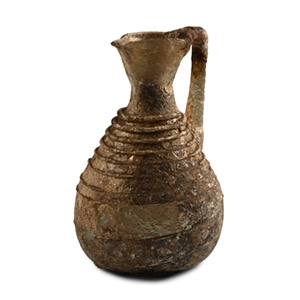
Roman Glass Jug with Trails
4th-5th century A.D.Estimate: £700 - 900 (‡+bp*)
Opening Bid: £250
A small pale yellow collared globular jug with short neck, angular ribbon handle with two narrow prominent ribs, folded upper attachment to the cylindrical neck, several horizontal lines on the globular body, trefoil mouth. 32 grams, 74 mm
with H.A.C., Basel, prior 1999. This lot is accompanied by an illustrated lot declaration signed by the Head of the Antiquities Department, Dr Raffaele D’Amato. This lot is accompanied by an illustrated lot declaration signed by the Head of the Antiquities Department, Dr Raffaele D'Amato.
These globular jugs were typical of the Eastern Mediterranean in the late Roman period. Ornamental threads were decorating the body, and the employment of these jugs was often similar to those of pilgrim flasks, destined to collect oil and water from early Christian sanctuaries. -
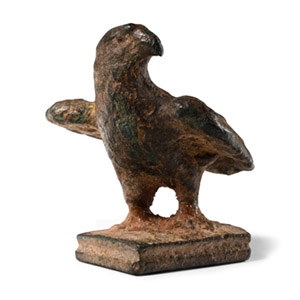
Roman Gilt Bronze Eagle Statuette
2nd-3rd century A.D.Sold for (Inc. bp): £1,170
Modelled in the round on a square base with gusseted sides, standing with head turned and wings spread. 104 grams, 47 mm
Acquired in the mid 1980s-1990s. Private collection, Switzerland, thence by descent. Private collection, since the late 1990s. This lot has been checked against the Interpol Database of stolen works of art and is accompanied by search certificate number no.12239-222315. This lot has been cleared against the Art Loss Register database, and is accompanied by an illustrated lot declaration signed by the Head of the Antiquities Department, Dr Raffaele D’Amato. This lot is accompanied by an illustrated lot declaration signed by the Head of the Antiquities Department, Dr Raffaele D'Amato. -
.jpg)
Roman Gold Ring with Nicolo Mercury Gemstone
2nd-3rd century A.D.Estimate: £2,000 - 3,000 (+bp*)
Opening Bid: £1,100
D-section hoop with flared bezel, set with blue nicolo intaglio bearing a profile bust of a young male wearing a hat, possibly god Mercury. 6.44 grams, 22.32 mm overall, 18.37 mm internal diameter (approximate size British M, USA 6, Europe 12.46, Japan 12)
UK private collection before 2000. Acquired on the UK art market. Private collection, London, UK. This lot has been checked against the Interpol Database of stolen works of art and is accompanied by search certificate number no.12817-240728. This lot has been cleared against the Art Loss Register database, and is accompanied by an illustrated lot declaration signed by the Head of the Antiquities Department, Dr Raffaele D'Amato.
