
Loading, please wait...
LOT 0175
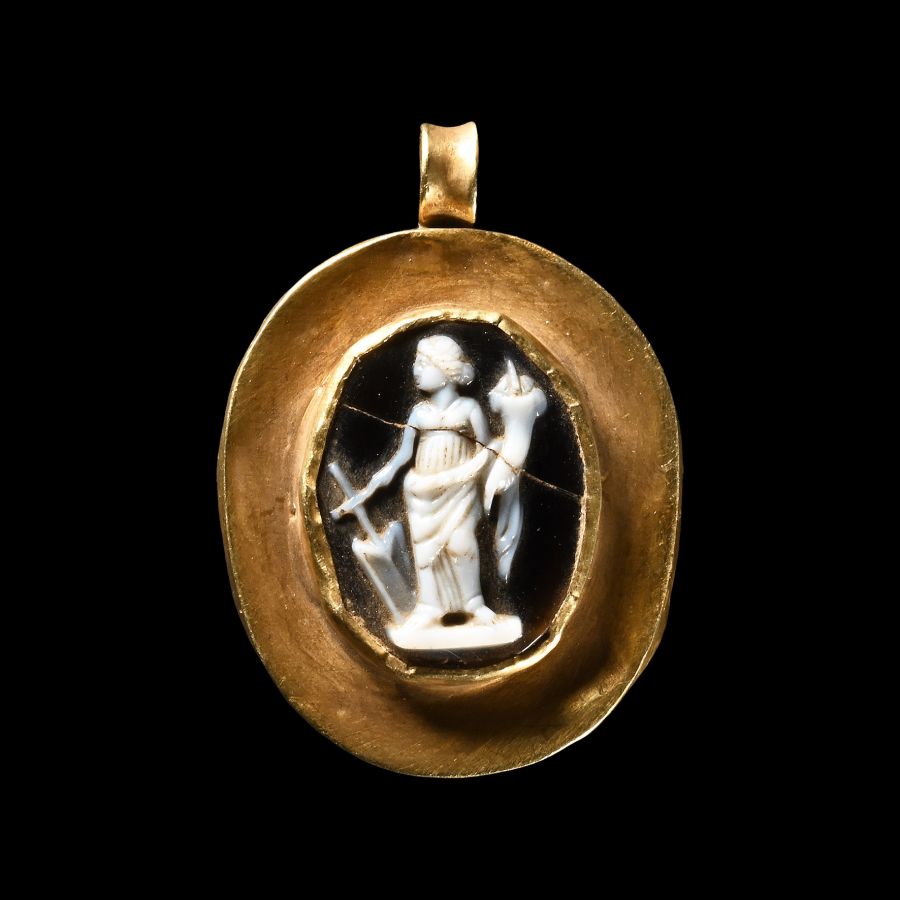
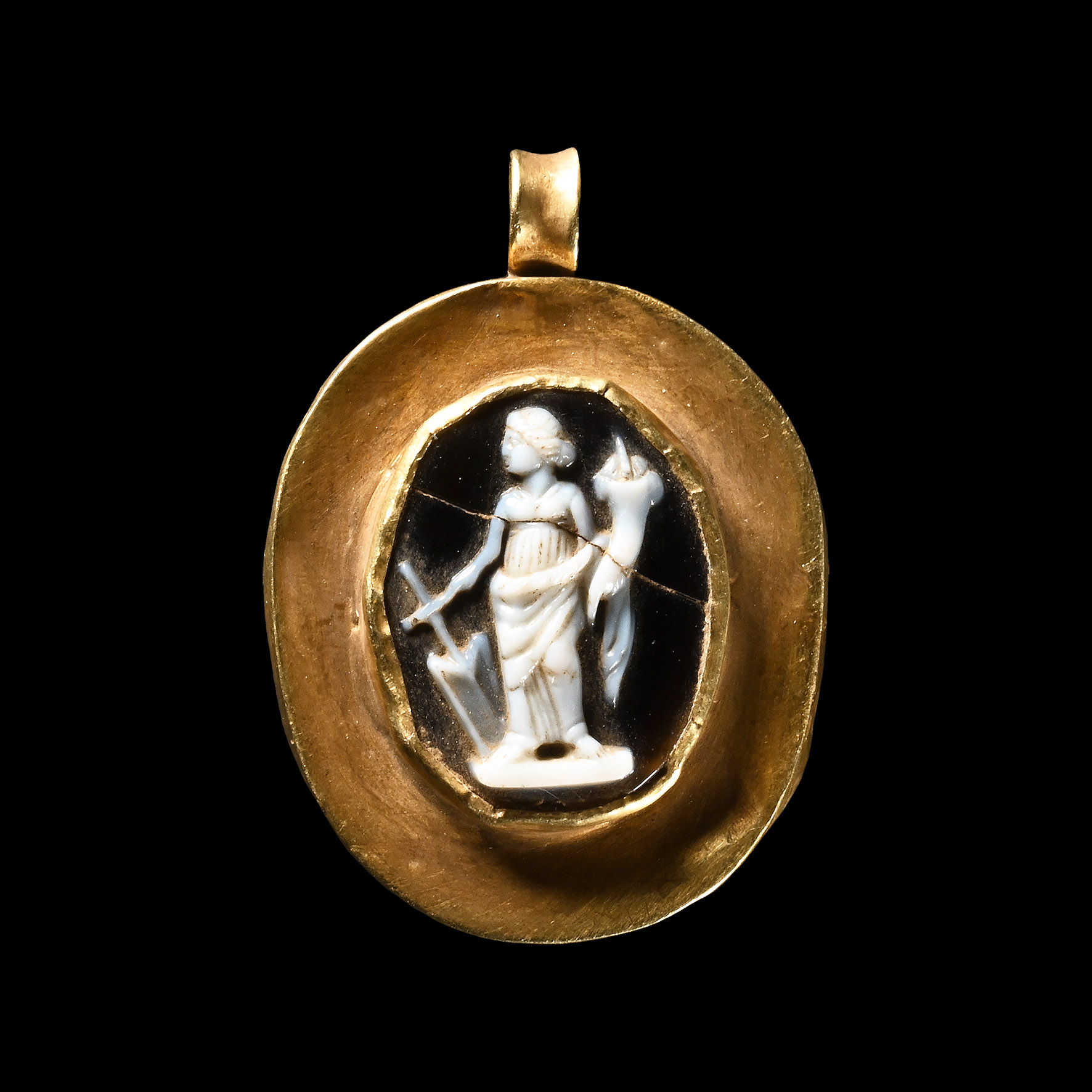
Roman Gold Pendant with Fortuna Cameo
1ST-3RD CENTURY A.D.
1 1/2 in. (8.47 grams, 37 mm).
Hollow-formed plaque with gusseted bale, obverse with irregular cell enclosing a sardonyx disc with reserved figure of Fortuna Redux with cornucopia and rudder.
ProvenanceFrom a private collection formed in the 1990s.
Ex London, UK, gallery.
Cf. similar in the collection of the British Museum, London, under accession no.SLA Intaglios.4.
CONDITIONTimeLine Auctions follows a vetting process to ensure the authenticity and legality of all items, reinforcing our commitment to integrity and responsible trading. Each antiquity, antique, and coin lot undergoes thorough examination by a vetting committee of at least ten external specialists, professional trade association members, scientists, and archaeologists: Our Vetting Process
AUCTIONS:
TimeLine is a leading auction house specialising in antiquities, ancient art, collectables, natural history, coins, medals, and books. Our auctions offer museums, collectors, historians, and enthusiasts the opportunity to acquire unique and historically significant pieces.
-
.jpg)
Roman Carnelian Victory Gemstone
Circa 1st century A.D.Sold for (Inc. bp): £624
With intaglio winged Victory advancing holding a wreath; supplied with a museum-quality impression. 1.26 grams, 16 mm
From the collection of a Swiss gentleman formed in Europe from 1970-1980s; thence by descent from the family in London. -
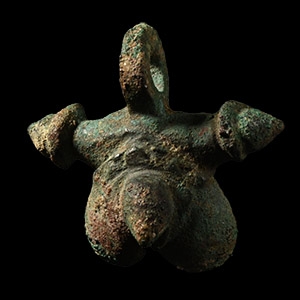
Roman Bronze Phallic Amulet
1st-3rd century A.D.Estimate: £200 - 300 (‡+bp*)
Opening Bid: £100
Comprising male genitals flanked by stubby phalloi above, pierced suspension lug. 19.1 grams, 34 mm
Acquired early 1990s. Ex private American collection; thence by descent. Private Swiss collection since 1998. -
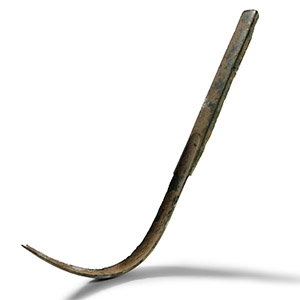
Roman Bronze Strigil with Leaf Design
2nd century B.C.-2nd century A.D.Sold for (Inc. bp): £442
With C-section profile to the blade, rectangular handle with lateral flanges. 44 grams, 22 cm
Acquired early 1990s. Ex private American collection; thence by descent. Private Swiss collection since 1998.
