
Loading, please wait...
LOT 0860
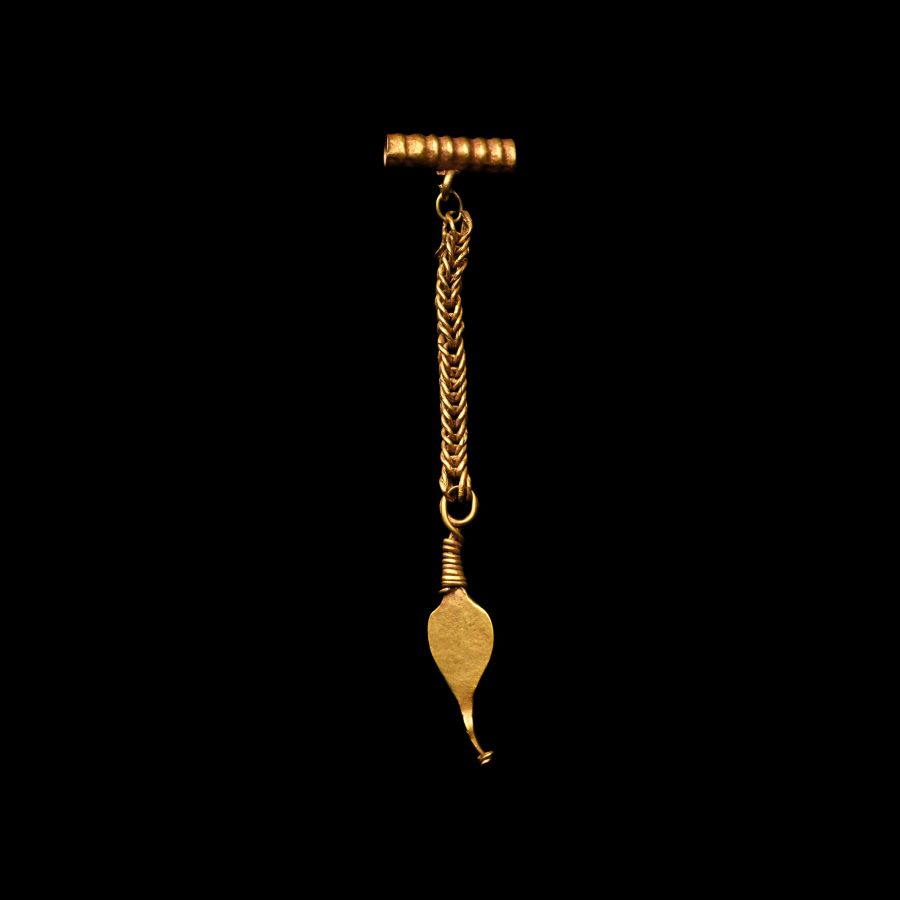
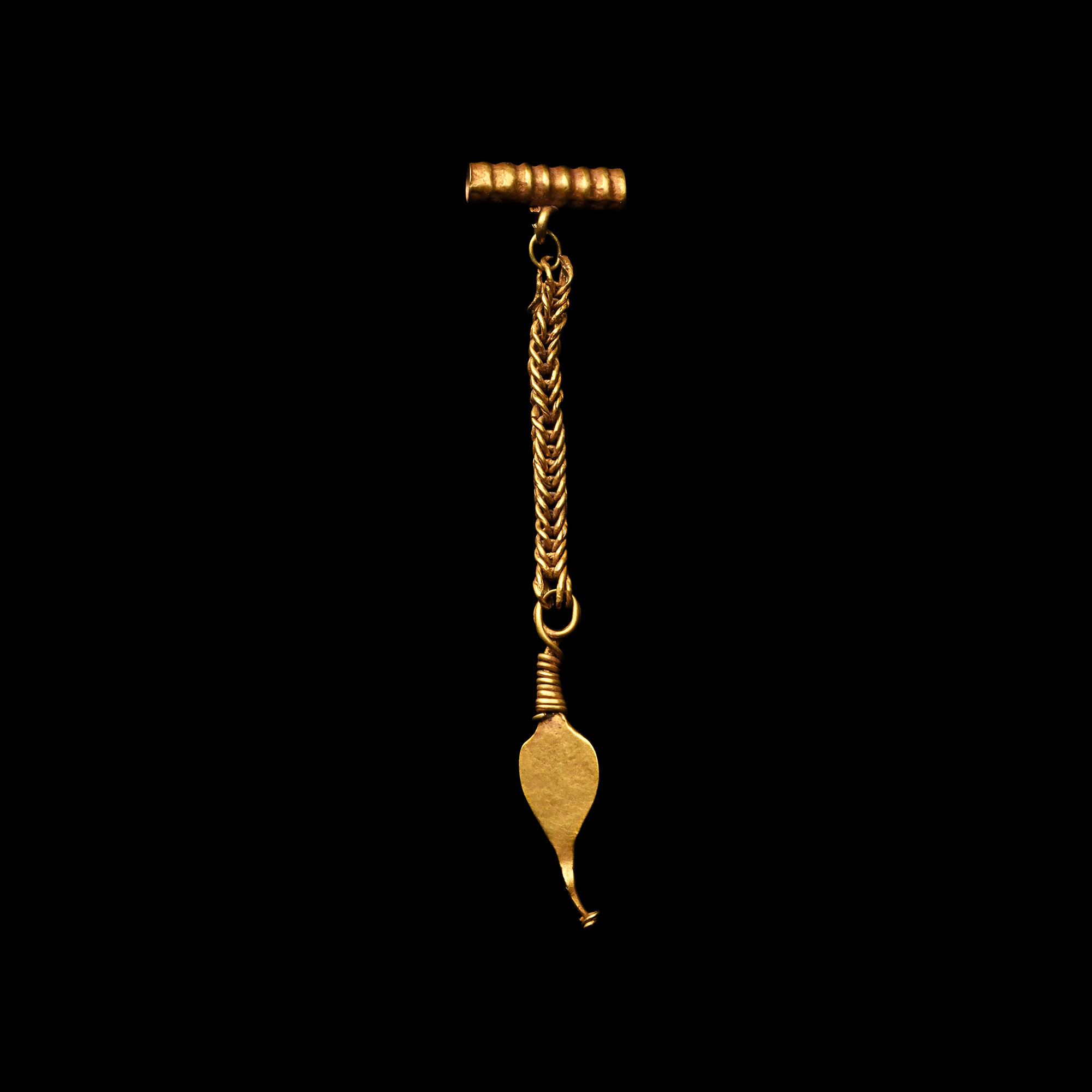
Roman Gold Pendant with Chain
1ST-4TH CENTURY A.D.
1 1/4 in. (2.98 grams, 32 mm).
Tubular bead with short length of trichinopoly chain, ivy-leaf pendant.
ProvenanceFrom the collection of a late Japanese collector, 1970s.
This lot is accompanied by an illustrated lot declaration signed by the Head of the Antiquities Department, Dr Raffaele D'Amato.
TimeLine Auctions follows a vetting process to ensure the authenticity and legality of all items, reinforcing our commitment to integrity and responsible trading. Each antiquity, antique, and coin lot undergoes thorough examination by a vetting committee of at least ten external specialists, professional trade association members, scientists, and archaeologists: Our Vetting Process
AUCTIONS:
TimeLine is a leading auction house specialising in antiquities, ancient art, collectables, natural history, coins, medals, and books. Our auctions offer museums, collectors, historians, and enthusiasts the opportunity to acquire unique and historically significant pieces.
-
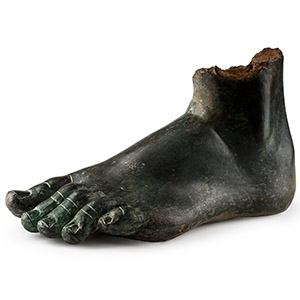
Life-Size Roman Statue Foot of a Young Athlete
1st century B.C.-2nd century A.D.Sold for (Inc. bp): £13,000
Comprising the left foot and ankle with finely modelled anatomical detailing, filled with lead and originally attached to a base from the sole of the foot. 5.73 kg, 22 cm
From a London, UK, collection that was formed the 1980s. Acquired from Alan Darer, Mayfair, London, UK, 2016. From the private collection of a Beckenham, UK, lady. Accompanied by an academic report by Dr Raffaele D’Amato. This lot has been checked against the Interpol Database of stolen works of art and is accompanied by search certificate number no.12783-240373. This lot has been cleared against the Art Loss Register database, and is accompanied by an illustrated lot declaration signed by the Head of the Antiquities Department, Dr Raffaele D'Amato.
The small proportions of the foot could suggest that it originally belonged to a statue of a boy, young god or athlete. One of the possible candidates can be Apollo or Narcissus: many of their statues show a similar position of the left foot (Reinach, 1930, pp.100-104). -
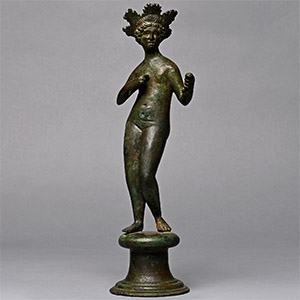
Large Roman Bronze Statue of Venus
1st-2nd century A.D.Sold for (Inc. bp): £7,800
Modelled in the round, the goddess standing nude on a socle base and holding a frond in her extended left hand; right hand with thumb and forefinger extended; crown of oak leaves encompassing her chignon. 996 grams, 27.3 cm
with Sotheby's, New York, 7 December 1973, no.78. Private collection, London. Accompanied by copies of the relevant Sotheby's catalogue pages. Accompanied by an academic report by Dr Raffaele D’Amato. This lot has been checked against the Interpol Database of stolen works of art and is accompanied by search certificate number no.12819-241350. This lot has been cleared against the Art Loss Register database, and is accompanied by an illustrated lot declaration signed by the Head of the Antiquities Department, Dr Raffaele D'Amato.
The Venus Anadyomene shows the birth of the Goddess of Love, conceived in the womb of the sea after the Titan Chronos castrated his father, Uranus, and cast his genitals into the water. Venus was born from the sea, fully grown. In ancient tradition, Aphrodite had her great sanctuary at Paphos, because it was here that she was thought to have risen from the water. Apelles, the great painter, was said to have painted the original, creating the prototype then imitated in paintings, sculptures, and across Graeco-Roman iconography. However, his work is now lost, and from the late 2nd century/early first century B.C. until the late antique period, the Anadyomene appeared in nearly every format imaginable. Like many other naked Aphrodites, the Anadyomene was not posed to conceal the body, but was naked and unashamed, exposing the goddess’ body to the gaze of the viewer. -
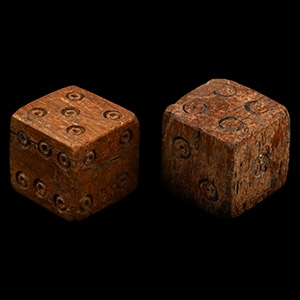
Roman Bone Gaming Dice Pair
1st-4th century A.D.Sold for (Inc. bp): £286
Each cuboid with ring-and-dot markings disposed 1:6, 2:5, 3:4. 9.43 grams total, 14 mm each
Acquired on the UK art market before 2000. Property of an Essex, UK, gentleman. This lot is accompanied by an illustrated lot declaration signed by the Head of the Antiquities Department, Dr Raffaele D'Amato.
